The Story of the Silver Thali: Rajasthani Dining Customs (Floor Seating, Katori, Refills)
Somewhere around the fourth bowl, most first-time guests stop talking.
You are sitting low, on the floor or close
to it. A heavy silver thali sits in front of you, and around its rim, a ring of
small bowls catches the light. Someone you have never met leans in, ladles
something golden into a bowl you thought was already full, and smiles as if you
have just done them a favour by accepting it.
That small scene holds almost every one of
the Rajasthani dining customs worth
knowing. This is the story of how it got that way: the silver thali, the
katori, the low seat and the endless refill, and why a meal in Rajasthan is as
much about how you are treated as what is on the plate.
In
brief: A silver thali is a large round silver plate
holding a full meal in small bowls called katoris. In Rajasthan, the
traditional way to enjoy one is to sit low (on the floor or a low seat), eat
with your right hand, taste each katori in turn and let the host keep refilling
your plate, a custom of loving insistence called manvar. Virasat Heritage
Restaurant serves its unlimited Rajasthani thali in brass or silver, in royal
floor-seating halls. Call +91 73749 99951 or reserve a table.
What Is a Silver Thali, Really?
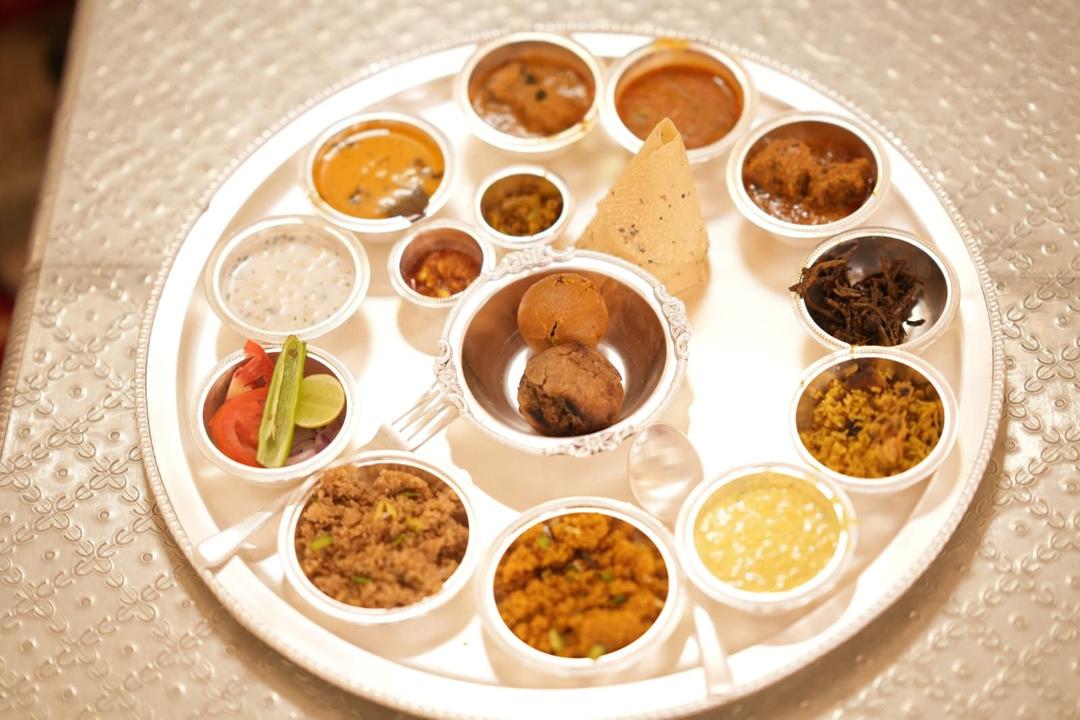
The word thali means "plate", and over time it has come to mean
the meal on it too. When someone in Jaipur says "let's have a thali",
they mean a whole dinner: dal, vegetables, bread, chutney, a sweet, all
arranged on one round tray. The small bowls that hold the wet dishes are called
katoris.
Thalis come in steel, brass, copper and
silver. Steel is for everyday life. Brass is traditional and warm. Silver is
the one you bring out when you want a guest to feel honoured. A silver thali is not about the food
tasting better. It is about the signal: you are the person we are glad is here.
If you want the full anatomy of the plate,
our guide to the Rajasthani
thali in Jaipur walks through what each bowl is.
A Very Old Idea: Where the Thali Comes From
The thali is much older than the
restaurant. Some of the oldest
written descriptions of how a thali is served go back thousands of years.
An ancient Sanskrit text, the Sushruta
Samhita, spends real time on how food should be laid out in front of a diner,
with sweet things on one side and drinks and broths on the other. Another
medieval text, the Manasollasa, describes how nobles at court should be served.
And the Greek envoy Megasthenes, writing about the Mauryan court, described a
king's meal arriving on a large silver tray surrounded by small empty silver
saucers.
So when you sit down to a silver thali with
a ring of silver katoris, you are looking at an arrangement that has been
recognisable for a very long time. Rajasthan, with its courts and its feasts,
simply kept the habit alive.
Why Silver (and Why Brass Too)
In Rajasthan, metal tells a story about
occasion.
•
Brass is the everyday-to-festive choice,
warm in colour and long-lasting.
•
Silver is for guests of honour,
weddings, celebrations and courts. It is the material of generosity.
•
Steel is for the daily kitchen.
At a heritage restaurant, the aim is to
give you the occasion version. Virasat serves its royal thali in brass or
silver, which fits the kind of evening it is meant to be. We are talking about
tradition and ceremony here, not health claims. Ask the team when you book
which one your table will get.
The Katori: Small Bowls, Big Logic
Why not just pile everything on one plate?
Because the katori is clever.
Each bowl keeps its own flavour, so a
spoonful of kadhi doesn't mingle with your ker sangri before you are ready. You
can taste dishes in the order you like. You can see at a glance what is running
low. And the whole thing looks like a small, beautiful map of the meal.
A typical Rajasthani thali might hold dal,
kadhi, gatte ki sabzi, ker sangri, a sweet and a bowl of chaas, with the
breads, baati and rice on the plate itself. Not every thali has the same bowls,
and seasonal dishes change. For a plain-English guide to the dishes you will
meet, see our stories on ker
sangri and dal
baati churma.
Floor Seating: Why You Sit Low
Traditionally, meals in India were eaten
sitting on the floor or on very low stools. The thali itself often rested on a
small raised stand called a chowki or
bajot, so the plate sat just a little
off the ground.
There is a practical logic to this. Sitting
low puts you at ease, brings you close to the food and slows you down. It also
puts everyone at the same level, which in a house with elders, children and
guests matters more than you might think.
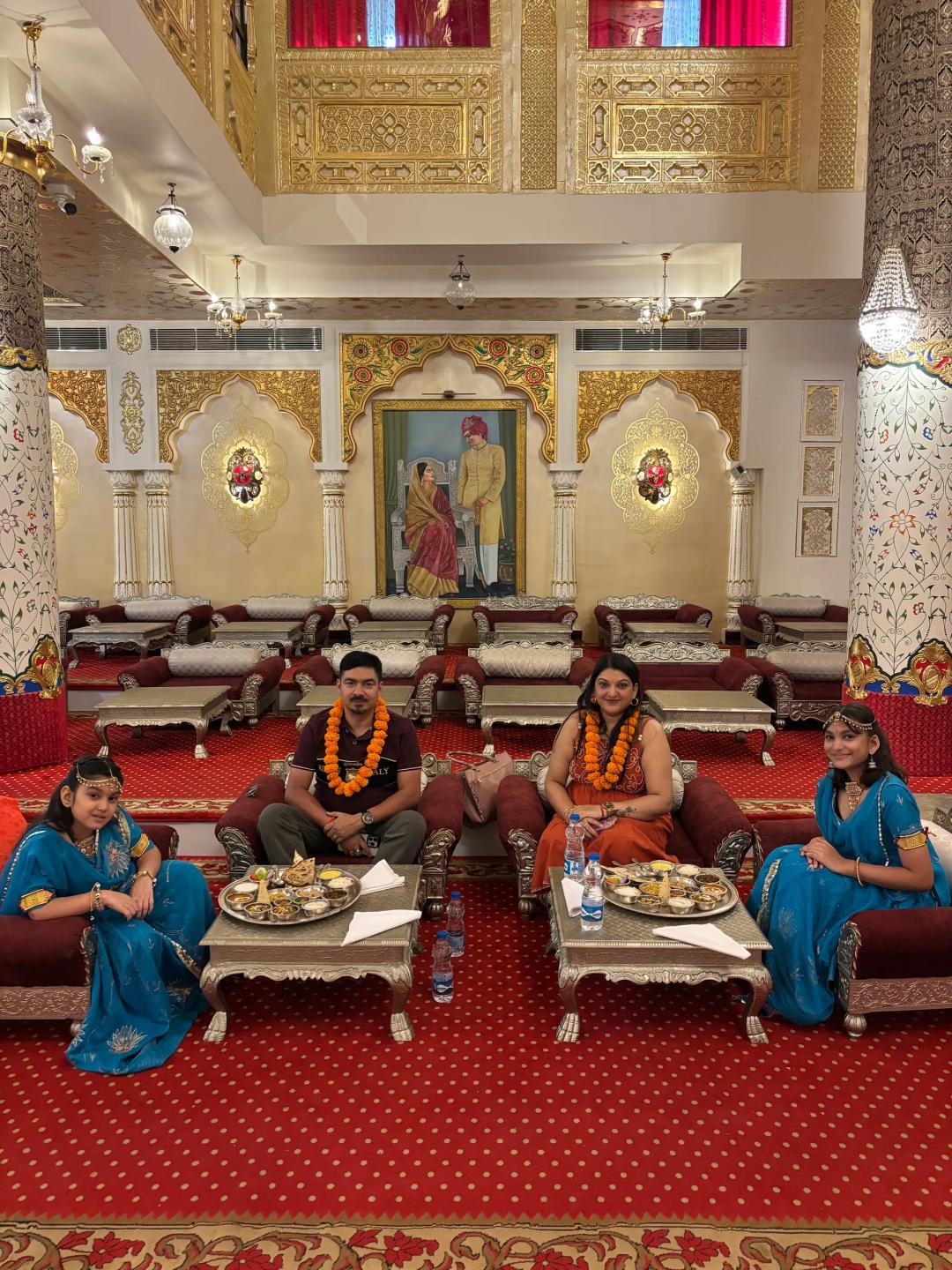
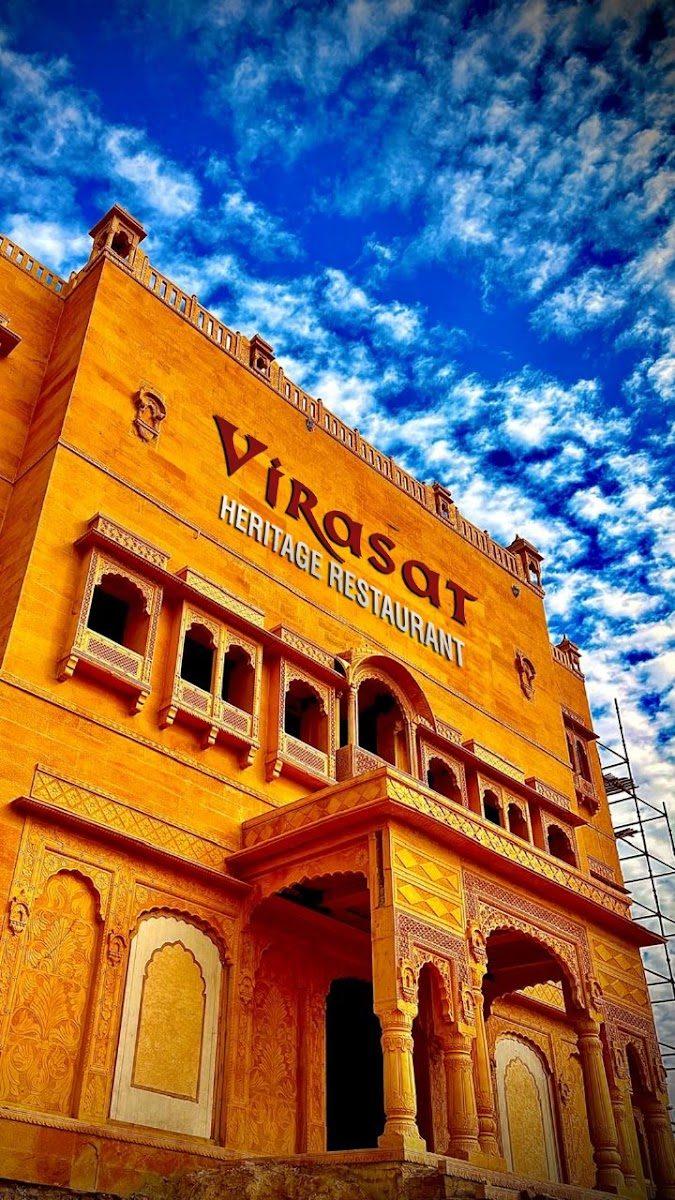
At Virasat, the royal halls use floor-style
seating, in keeping with how a Rajput court would have dined. If sitting on the
floor isn't comfortable for you or someone in your group, mention it when you
reserve and ask about other seating options.
The Right-Hand Rule
In traditional dining, you eat with the
fingers of your right hand, and the left stays out of the way. Cutlery is
optional in most restaurants, so if you would rather use a spoon, nobody minds.
If you want the full experience:
1.
Wash your hands before you
start.
2.
Use your right hand to break
the baati or roti, scoop the dal and eat.
3.
Mix a little of each katori
with your bread, rather than emptying everything onto the plate at once.
4.
Let the churma wait. It is
dessert in disguise.
Refills and the Art of Manvar
Here is the custom that surprises visitors
most. In Rajasthan, a good host doesn't wait for you to ask for more. They
offer. And when you refuse, they offer again.
The tradition has a name: manvar (also spelt manuhar). It is a ritual of care in which hospitality is measured
in second helpings. This
piece on traditional ways of feeding guests in Rajasthan describes the
"delicate dance" between host and guest, with offerings and polite
refusals, until the guest finally says yes. It sits comfortably beside the old
principle of Atithi Devo Bhava, the
idea that the guest is treated like a god.
If you are a visitor, here is how to enjoy
it without being overwhelmed:
•
Say yes to the first refill. It makes
the host happy and shows you are enjoying yourself.
•
Pace yourself. An unlimited thali is a
marathon.
•
Say "bas" when you want to stop. It means "enough", and you can say it with a smile and a
raised palm.
•
Ask for "kam teekha" if you
want less spice. Our first-timer's
guide to eating Rajasthani food covers the phrases and etiquette in detail.
The Silver Thali at Virasat Heritage Restaurant
Now to the practical part. Virasat Heritage
Restaurant is a restaurant in Kukas,
on Delhi Road near Sai Baba Temple, and about 15 minutes from Amer Fort, which
makes it a convenient restaurant near
Amer Fort for a proper thali dinner. Here is how the customs above come
together.
•
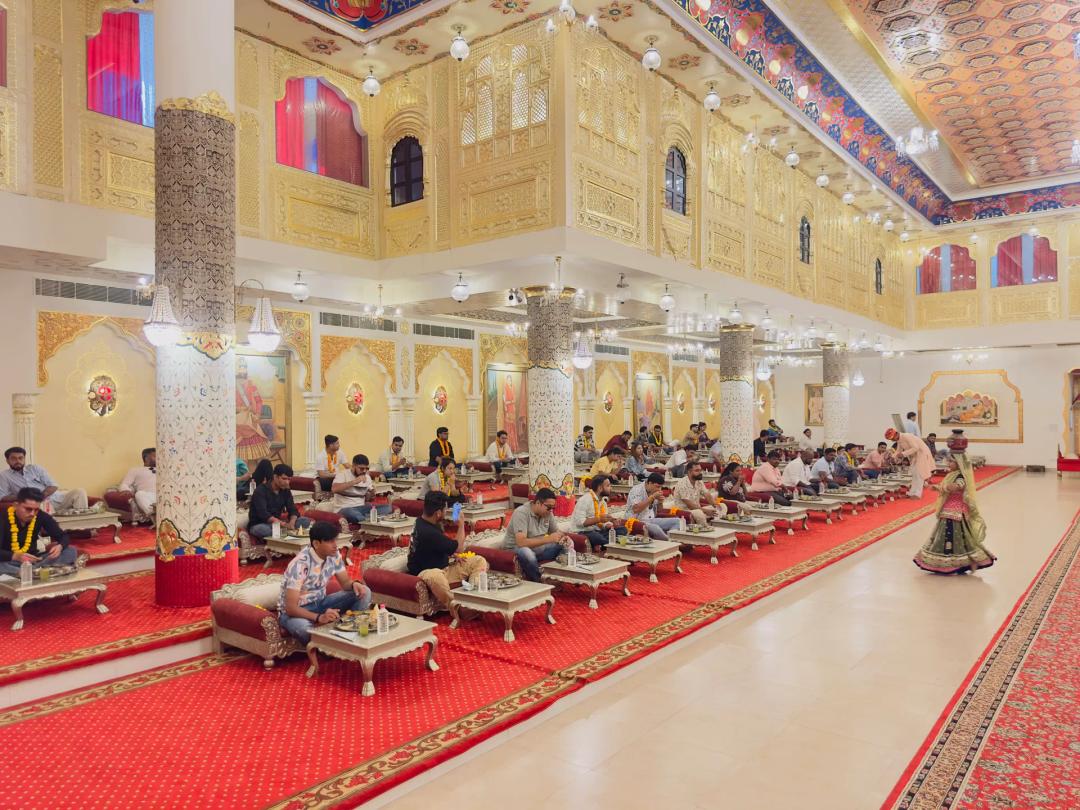
The welcome: a tilak, a garland and the
song Padharo Mhare Des.
•
The seat: royal floor seating in
palace-style halls, with gold-carved jharokhas and painted ceilings.
•
The thali: the unlimited Sampoorna
Rajasthani Thali, served in brass or silver.
•
The service: attendants refill each
katori, in the spirit of manvar.
•
The soundtrack: live folk music and
dance while you eat.
•
The menu: 100% pure vegetarian, with a
Jain thali on request.
The exact dishes rotate with the season, so
check the menu and ask when you
book. If you want to go deeper into the tradition, our guides to royal hospitality
in India and royal
traditions of Jaipur describe the full sequence of a royal welcome.
A Quick Manners Cheat Sheet
|
Do |
Don't |
|
Wash your hands before you eat |
Reach across the thali with your left
hand |
|
Taste each katori |
Pour all the bowls onto one heap of rice |
|
Say yes to the first refill |
Feel guilty about saying "bas"
when you are full |
|
Ask about spice and Jain options when you
order |
Wait until the end to mention a dietary
need |
|
Save the sweets for last |
Waste food. Take what you can finish |
|
Sit comfortably and take your time |
Rush. A thali is meant to be an evening |
Where This Fits Among Jaipur's Dining Options
If you are looking for a heritage restaurant in Jaipur, a traditional restaurant in Jaipur or royal dining Jaipur has to offer, this
is the kind of meal to look for. Our pages on royal
dining in Jaipur and royal
Rajasthani dining in Jaipur explain what to expect. For those who ask about
Rajasthani food Jaipur offers beyond
the thali, or dal baati churma in Jaipur,
see our guide to authentic
Rajasthani food in Jaipur. If you prefer a pure veg restaurant in Jaipur, see the best
vegetarian restaurant in Jaipur, and for a family restaurant in Jaipur with room for kids and elders, see family dining on
the Delhi highway and the Royal Kids Program.
Comparing restaurants in Kukas? See Virasat on
Google Maps (rated 4.0 from about 2,956 reviews).
Questions People Ask About the Thali
What is a silver thali?
A large round silver plate that
holds a full meal in small bowls (katoris). The word thali means both the plate
and the meal.
What is a katori?
A small bowl used to serve wet dishes
such as dal, kadhi, sabzi and sweets, so each dish stays separate on the thali.
Why do Rajasthanis eat sitting on the floor?
It is the
traditional way of dining in India. Sitting low brings you close to the food,
slows the meal down and puts everyone at the same level.
Do I have to eat with my hands?
No. Eating with your
right hand is traditional and many guests enjoy it, but you can use a spoon if
you prefer.
How do I stop the refills?
Say "bas" with a
smile and a raised palm. That is understood and respected.
Is the thali unlimited at Virasat?
According to
Virasat's website, the Sampoorna Rajasthani Thali is served unlimited. Items
change with the season.
Is Virasat's thali served in silver?
Virasat describes
its thali as served in brass or silver. Ask the team when you book.
Is it vegetarian?
Yes, 100% pure vegetarian, with a
Jain thali on request.
Come and Sit Down
The best way to understand the silver thali is to sit in front of one. Reserve a table at Virasat Heritage Restaurant, call +91 73749 99951 or contact the team. For celebrations and groups, send a banquet enquiry. Not sure how to get there? See how to reach Virasat Jaipur.
Related reading
Eco-Friendly Diwali in Jaipur 2026: 12 Green Ideas, a 5-Day Plan and a Royal Diwali Dinner
Diwali 2026 falls on Sunday, 8 November, with Dhanteras on Friday, 6 November. An eco-friendly Diwali in Jaipur means clay diyas instead of plastic lights, natural rangoli, handmade local gifts, folk music instead of loud firecrackers and a festive meal that does not create a mountain of waste. If you would rather spend the evening at a table than in a kitchen, Virasat Heritage Restaurant in Kukas offers a pure vegetarian Rajasthani Diwali dinner in palace-style halls with live folk culture. Jaipur does Diwali better than most cities. The old bazaars glow, the sweet shops run out of mawa kachori by noon and every terrace seems to have its own row of lamps. The one thing the city does not need more of is smoke, noise and plastic. This guide shows you how to keep every bit of the glow and cut most of the mess.
Amer Fort Light and Sound Show: Timings, Tickets and a Dinner Plan
The Amer Fort light and sound show runs every evening below the fort, facing Maota Lake, in two shows: English first, Hindi second. From October to February the English show starts at 6:30 PM and the Hindi show at 7:30 PM, and each lasts about 50 to 55 minutes. Tickets are separate from the fort entry ticket. Plan dinner for after the show, and if you want a proper Rajasthani meal, Virasat Heritage Restaurant is a pure vegetarian restaurant near Amer Fort, about twenty minutes away in Kukas and open until 11 PM. Most people see Amer Fort in daylight, squinting at the sandstone and dodging selfie sticks. The evening version is a different animal: the crowds thin out, the walls glow gold and the story of the Kachwaha rulers is told in light and music on the fort's own face. It is one of the few things in Jaipur that works equally well for couples, families and solo travellers.
Baby Shower Venues in Jaipur: 6 Royal Halls, Garden and Banquet Near Kukas
Picture it: a red carpet, a tilak on the forehead, rose petals on the floor and a hall that glows like a palace. Your family walks in, the mother-to-be is welcomed like a rani, and the party has not even started. That is what a royal baby shower in Jaipur can feel like when the venue does half the work for you. The short version: If you are comparing baby shower venues in Jaipur and want something truly royal, Virasat Heritage Restaurant in Kukas gives you six distinct settings under one roof: four palace-style dining halls, a banquet hall and a garden lawn. Every plate is pure vegetarian, every guest gets a traditional welcome and folk culture is part of the evening. Pick the hall that matches your mood, book early and let the setting carry the theme.
Visit Virasat Heritage Restaurant
Experience the royal dining we write about.