First-Timer's Guide to Eating Rajasthani Food: What to Order, Spice Levels and Etiquette
If you are new to Rajasthani food, start with pyaaz kachori for breakfast, a vegetarian thali for lunch, dal baati churma for dinner and ghewar for dessert. Most dishes are rich rather than painfully hot. Eat with your right hand, say "bas" when you want the serving to stop, and don't be shy about asking for "kam teekha" (less spicy).
Rajasthani food is one of those cuisines that looks intimidating on a menu. Unfamiliar names, red curries, ghee everywhere. The good news is that it's far friendlier than its reputation. This guide is for travellers, from abroad or from another Indian city, who are about to eat their first proper meal in Jaipur and want to do it right.
 Why Rajasthani food tastes the way it does
Rajasthan is a desert state. Water was
scarce and fresh vegetables were not always available, so cooks learned to make
magic from what lasted: gram flour (besan), lentils, dried beans, buttermilk
and ghee. That is why you will see gatte (besan dumplings), ker sangri (desert
beans and berries) and kadhi on almost every thali. Even the famous red chilli,
the Mathania mirch, is prized more for colour and aroma than for raw heat.
Outlook Traveller notes that Mathania chilli adds a distinct flavour and an underlying
sweetness to dishes like ker sangri. Read more in their piece on the history
of the Mathania chilli.
So the first thing to unlearn: Rajasthani
does not automatically mean "very spicy". It means bold, rich and
filling.
What to eat in Jaipur: the order locals actually follow
Most guides give you a list of ten dishes.
Here is the same food, arranged the way a day in Jaipur really unfolds.
Morning: kachori and chai
•
Pyaaz kachori: a crisp, flaky ball
stuffed with spiced onion, served with chutney. Messy, heavy and wonderful.
•
Mirchi vada and samosa: the classic
street breakfast pairing, best with a kulhad of sweet masala chai.
•
Poha or khaman if you want something
lighter.
Afternoon: the thali
A Rajasthani thali is the best single order
for a first-timer because you taste six or seven dishes at once. Expect:
•
Dal baati churma: baati (baked wheat
balls), dal and churma (crumbled, sweetened baati with ghee).
•
Gatte ki sabzi: gram flour dumplings in
a tangy yoghurt gravy.
•
Ker sangri: desert beans and berries,
tangy and slightly bitter.
•
Bajre ki roti with garlic chutney, papad ki sabzi, kadhi, and a sweet at the end.
Evening: chaat and lassi
Wander the bazaars for dahi vada, kulfi, and thick lassi in a clay cup. This is also when
old Jaipur is at its most alive.
Dinner: for the adventurous
•
Laal maas: the famous mutton curry with
Mathania chilli. The red colour comes from the generous use of this local
chilli. Traditionally, it was a hunter's dish of the Rajput courts.
•
Safed maas: a creamy white mutton curry
with no red chilli at all. It relies on white pepper, cashews and yoghurt for a
gentle, rich flavour. This is the one to order if laal maas worries you.
Dessert: always
Ghewar (a honeycomb-textured disc soaked in sugar syrup, especially
popular around the Teej and Raksha Bandhan season), malpua, mawa kachori, churma ladoo, rabdi. Don't skip this part.
Rajasthani food spice levels: a simple meter
Heat varies from kitchen to kitchen, so
treat this as a guide, not a guarantee.
|
Dish |
Spice
(1–5) |
Notes
for first-timers |
|
Dal baati churma |
1–2 |
Rich, not hot. Ghee does the talking |
|
Gatte ki sabzi |
2 |
Tangy and mild, great for beginners |
|
Kadhi |
1–2 |
Cooling, yoghurt-based |
|
Pyaaz kachori |
2–3 |
The chutney adds the kick |
|
Ker sangri |
2–3 |
Tangy, a little bitter, mild heat |
|
Mirchi vada |
3–4 |
Mild chilli, but the filling can surprise
you |
How
to ask for less heat: Say "Thoda kam teekha banana, please" (make it a little less
spicy) or "Mirch kam". For
street food, ask for chutney on the side.
Keep curd, raita, lassi or a sweet
nearby, since water doesn't put out chilli heat but dairy does.
Rajasthani dining etiquette for first-timers
Wash
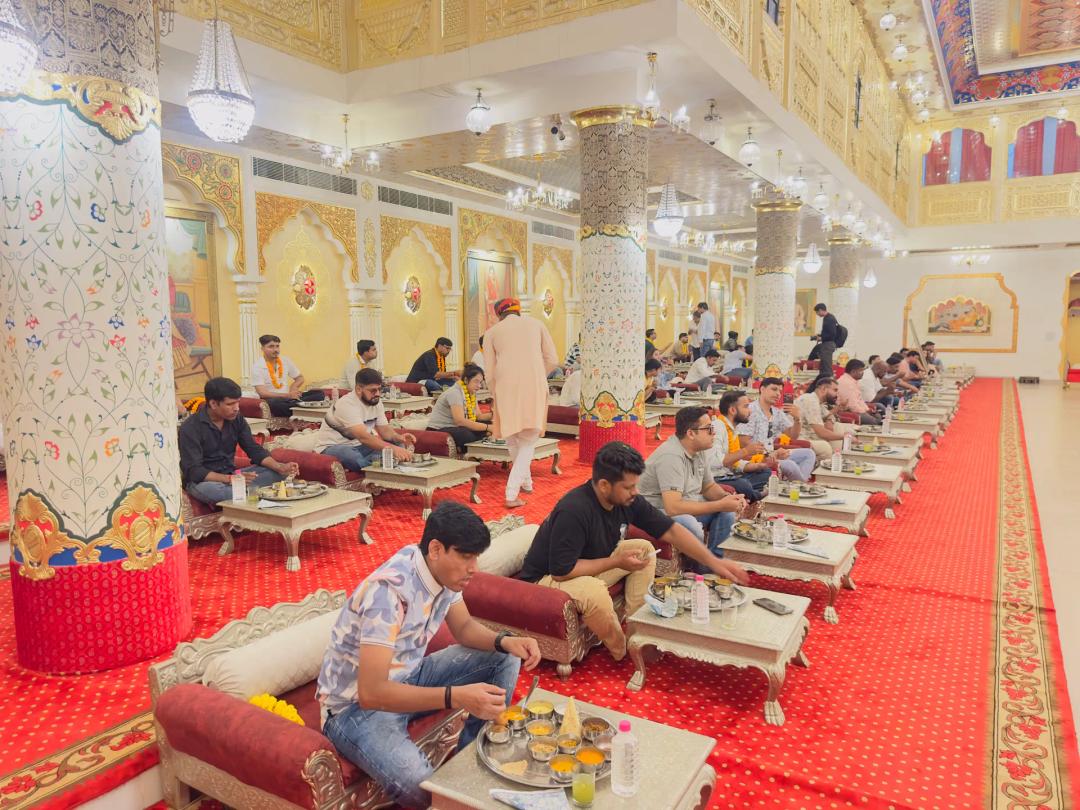
your hands first. Most restaurants have a basin
near the entrance. Traditional meals are eaten with the hands, and only the
right hand is used for eating, as the left is considered unclean. Cutlery is
always available if you prefer it. Nobody will judge you. See Saveur's
guide to eating with your hands in India for a quick how-to.
Let
the server keep serving. In traditional thali
restaurants, staff will keep refilling your plate. When you have had enough,
say "bas" (enough) and
place your hand lightly over the plate.
Respect
the ghee. Extra ghee is part of the hospitality,
not a mistake. If you would rather have less, say so politely when it arrives.
Take
only what you can finish. Wasting food is frowned
upon. Ask for a small portion and come back for more.
Know
how to eat baati. Break it open with your fingers,
pour dal over it, add a spoonful of ghee and mix. Churma is usually enjoyed at
the end as a sweet, though some people mix it into the dal baati. A
step-by-step walkthrough is on Ruchi's
Kitchen.
Share
the table. Dishes are often passed around. Use a
serving spoon, not your own fingers, for shared bowls.
Vegetarian, Jain and dietary needs
Rajasthan is very vegetarian-friendly. Dal
baati churma, gatte ki sabzi, ker sangri and the many kinds of kachori are all
excellent vegetarian options. Jain travellers can ask for food without onion and garlic, and many
Jaipur restaurants will accommodate. For vegan guests, ask for ghee-free or
oil-based preparation, but note that ghee is central to the cuisine, so always
confirm.
Eating safely as a first-timer
•
Choose busy stalls with high
turnover, where food is cooked fresh in front of you.
•
Stick to bottled or filtered
water. Be careful with ice.
•
Ease in: thali on day one,
street food on day two.
•
Carry hand sanitiser and basic
stomach medication.
A better way to start: eat with a local
Reading about food helps, but nothing beats
being handed a hot kachori by someone who has been eating at that same counter
for twenty years. On Virasat's Jaipur Bazaar & Food Walking Tour, our
guides take you through the walled city's lanes to sample samosas, kulfi, lassi
and traditional sweets, while also visiting artisans at work. It's the easiest
way to try many things without guessing which stall is safe or which dish is
mild.
Prefer an active day? Pair your food
experience with a heritage walking tour of Jaipur, a cycling tour or a craft
workshop, and eat your way through the city in between. If you want to go
beyond the city, our responsible village visits show you where ingredients and
home cooking begin.
Planning
more of your trip? Read our guides on the best time to visit Jaipur and
Jaipur's bazaars and shopping.
Frequently asked questions
What should I eat first in Rajasthan?
Start with a
vegetarian thali. It includes dal baati churma, gatte ki sabzi, kadhi and a
sweet, giving you the whole cuisine in one sitting.
Is Rajasthani food very spicy?
Not always. Dishes like
dal baati churma, kadhi and gatte ki sabzi are mild to medium. Laal maas is the
fiery exception, and you can ask for less heat.
Is Rajasthani food vegetarian?
A large part of it is.
Many iconic dishes are vegetarian, though Rajput-style meat dishes like laal
maas also exist. Jaipur has plenty of pure vegetarian restaurants.
How do you eat dal baati churma?
Break the baati, pour dal and ghee over it, mix, and eat with your right hand or a spoon. Have churma as the sweet at the end.
Do people eat with their hands in Rajasthan?
Yes,
traditionally. Use your right hand only. Cutlery is available in most
restaurants if you prefer it.
Is street food in Jaipur safe for tourists?
Yes, if
you choose busy stalls with fresh cooking, drink bottled water and build up
gradually. A guided food walk takes the guesswork out.
What is the best Rajasthani dessert for beginners?
Ghewar or malpua. Both are sweet and not too rich, and easy to share.
Related reading
Eco-Friendly Diwali in Jaipur 2026: 12 Green Ideas, a 5-Day Plan and a Royal Diwali Dinner
Diwali 2026 falls on Sunday, 8 November, with Dhanteras on Friday, 6 November. An eco-friendly Diwali in Jaipur means clay diyas instead of plastic lights, natural rangoli, handmade local gifts, folk music instead of loud firecrackers and a festive meal that does not create a mountain of waste. If you would rather spend the evening at a table than in a kitchen, Virasat Heritage Restaurant in Kukas offers a pure vegetarian Rajasthani Diwali dinner in palace-style halls with live folk culture. Jaipur does Diwali better than most cities. The old bazaars glow, the sweet shops run out of mawa kachori by noon and every terrace seems to have its own row of lamps. The one thing the city does not need more of is smoke, noise and plastic. This guide shows you how to keep every bit of the glow and cut most of the mess.
Amer Fort Light and Sound Show: Timings, Tickets and a Dinner Plan
The Amer Fort light and sound show runs every evening below the fort, facing Maota Lake, in two shows: English first, Hindi second. From October to February the English show starts at 6:30 PM and the Hindi show at 7:30 PM, and each lasts about 50 to 55 minutes. Tickets are separate from the fort entry ticket. Plan dinner for after the show, and if you want a proper Rajasthani meal, Virasat Heritage Restaurant is a pure vegetarian restaurant near Amer Fort, about twenty minutes away in Kukas and open until 11 PM. Most people see Amer Fort in daylight, squinting at the sandstone and dodging selfie sticks. The evening version is a different animal: the crowds thin out, the walls glow gold and the story of the Kachwaha rulers is told in light and music on the fort's own face. It is one of the few things in Jaipur that works equally well for couples, families and solo travellers.

Baby Shower Venues in Jaipur: 6 Royal Halls, Garden and Banquet Near Kukas
Picture it: a red carpet, a tilak on the forehead, rose petals on the floor and a hall that glows like a palace. Your family walks in, the mother-to-be is welcomed like a rani, and the party has not even started. That is what a royal baby shower in Jaipur can feel like when the venue does half the work for you. The short version: If you are comparing baby shower venues in Jaipur and want something truly royal, Virasat Heritage Restaurant in Kukas gives you six distinct settings under one roof: four palace-style dining halls, a banquet hall and a garden lawn. Every plate is pure vegetarian, every guest gets a traditional welcome and folk culture is part of the evening. Pick the hall that matches your mood, book early and let the setting carry the theme.
Visit Virasat Heritage Restaurant
Experience the royal dining we write about.