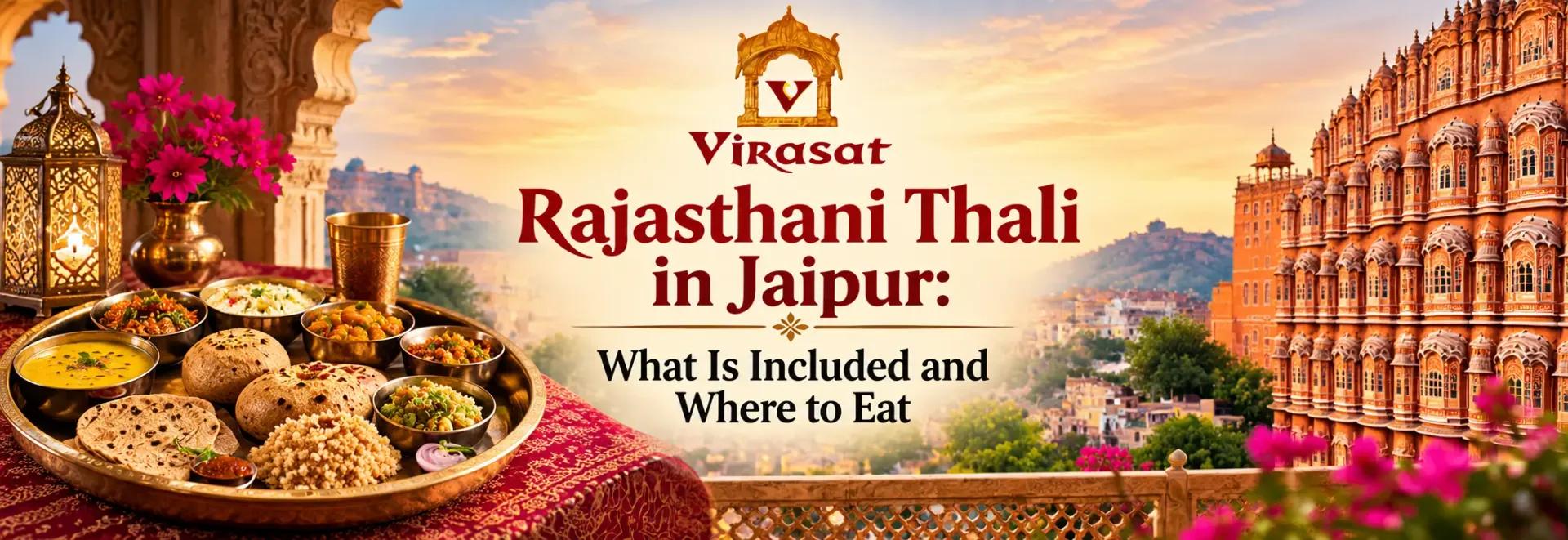
Rajasthani Thali in Jaipur: What Is Included and Where to Eat
Ask almost anyone what they ate in Jaipur, and they'll usually say the
same thing: a Rajasthani thali. It is not the only thing worth eating in
the Pink City, but it is the one meal that explains the whole cuisine, on one
plate, in one sitting.
If you have ever looked at a thali and wondered what is on it, what each
little bowl is, or how you are supposed to eat it, this guide takes you through
it course by course. We will also look at what makes a good thali restaurant
and what to expect at Virasat Heritage Restaurant, where a Rajasthani thali is
served as it might have been at a royal table.
What Is a Rajasthani Thali?
A thali is a large round plate, usually steel, set with a circle of small
bowls called katoris. A Rajasthani thali fills that plate with the
dishes the state is best known for: lentils, baked wheat, gram-flour dumplings,
desert vegetables, fresh breads, chutneys and something sweet to finish.
The cuisine looks the way it does for a reason. Rajasthan is dry, and for
centuries cooks worked with what could be stored and stretched: dried beans and
berries, gram flour, millets, dairy and a generous amount of ghee. Fresh green
vegetables were never guaranteed, so the kitchen learned to build flavour from
spices, curd and clever preserving. Eat a full thali, and you are, in a way,
tasting a map of that history.
Why it is a full meal, not a single dish
Nothing on the plate is there by accident. A tangy kadhi cuts
through the richness of the ghee. A fiery chutney wakes up a mellow dal. A
crisp papad adds crunch next to soft gatte. A thali is designed so that every
bite tastes a little different, which is why one plate can feel like ten meals.
What Is Included in a Rajasthani Thali
The exact line-up changes from kitchen to kitchen and from season to
season, but a traditional Rajasthani thali usually follows this pattern.
Dal, baati and churma
This trio is the heart of the plate. The daal is typically panchmel, a
mix of five lentils, finished with a hot ghee tadka of cumin and red chilli.
The baati is a round of wheat dough baked until the outside turns hard and
golden, then broken open and soaked in ghee. Churma is its sweet
partner: coarsely ground wheat crumbled with ghee and sugar or jaggery, often
with a little cardamom. Together they make dal baati churma, the dish
most closely tied to Rajasthan.
Sabzis: gatte ki sabzi and ker sangri
Gatte ki sabzi is gram-flour dough shaped into small rolls,
boiled, sliced and simmered in a spiced curd gravy. It is soft, tangy and
comforting. Ker sangri is even more distinctive. Ker are small, tart
desert berries and sangri are long dried beans, and together they are cooked
with spices into a dish that is tangy, slightly bitter and unlike anything you
would find in the plains. Depending on the kitchen, you may also get a seasonal
vegetable or a papad sabzi.
Rotis, kadhi, papad and chutneys
Breads change with the weather. Bajra roti, made from pearl millet, is a
winter favourite, while missi roti (gram flour and wheat) and soft
phulkas turn up all year. Alongside come Rajasthani kadhi, a tangy curd
gravy, a crisp papad, pickle, a garlic chutney (lehsun ki chutney) with real
heat, and often a cooling raita.
The sweet finish
A thali ends on something sweet. Churma
is one option. Others include halwa, malpua or, in the monsoon season, ghevar,
the honeycomb-shaped sweet linked with festivals like Teej. Which one lands on
your plate depends on the restaurant and the time of year.
How a Traditional Rajasthani Thali Is Served and
Eaten
Part of the joy is how it arrives. A traditional Rajasthani thali
is served by attendants rather than ordered dish by dish, so the meal unfolds
at the pace of the table.
Floor seating and unlimited refills
In a royal or heritage setting, guests sit on low seats (bajot) with the
thali in front of them. Attendants move around with small pots of dal, sabzi, kadhi
and ghee, topping up your bowls before they are empty. If you want more of
something, just say yes. If you are full, say so politely, and no one will be
offended. Most guests eat with their hands, which suits the baati especially
well.
Tips for first-timers
•
Come hungry, but pace yourself. Food arrives in rounds
and the sweet comes last.
•
Break the baati by hand and pour dal and ghee over it.
Give it a moment to soak.
•
Taste each item on its own before you start mixing.
•
Ask for a refill of what you love, especially the dal
and kadhi.
•
Go slowly with the garlic chutney until you know how
hot it is.
•
Save a little room for the sweet.
Rajasthani Thali in Jaipur: Where to Try It
What to look for in a good thali restaurant
Not every place that says "thali" serves one the same way. A
few signs of a good one: baati that arrives hot, with a crisp crust; ghee you
can actually smell; refills that come without you asking; a real spread of
sabzis, breads and sweets rather than just dal and rice; and dishes that change
with the season. The setting matters too. A thali simply tastes better in a
room that respects the tradition.
The Sampoorna Rajasthani Thali at Virasat
Virasat Heritage Restaurant has been serving Jaipur since 2006, on Delhi
Road at Kukas. Its Sampoorna Rajasthani Thali is served unlimited and
brings together more than 25 delicacies, including dal baati churma, gatte
ki sabzi and ker sangri. You can see what is on offer on the Virasat Thali menu.
The experience begins before the food does. Guests are welcomed with a
tilak, a garland and a traditional Padharo Mhare Des greeting, then
seated on low bajot seats in a darbar hall of gold-carved jharokhas,
hand-painted ceilings and chandeliers, dining in Swarn Mahal. Turbaned attendants serve the thali while folk
musicians and dancers perform. The restaurant is 100% vegetarian and open from
11 AM to 11 PM every day.
Virasat also has other halls, Sheesh Mahal, The Jaipar and Jodhana, each
with its own mood. If your group cannot decide between traditional food and
something more contemporary, our guide to Rajasthani thali vs multi-cuisine dining can help you
pick. For groups and holidays especially, it is a good idea to reserve a table in advance.
Is a Rajasthani Thali Right for You?
If you are vegetarian, you will feel completely at home. At Virasat,
everything is vegetarian, so there is nothing to check or avoid.
If you are travelling with family, a thali is easy to share. Children
usually find something they like in the dal, roti and sweets, and the folk
music and dance keep the table entertained.
If you are with a large group, the thali suits you well. Everyone gets
the same generous spread, and the meal becomes a shared experience rather than
a round of separate orders.
If you eat light, a word of honesty: a thali is rich, and ghee is part of
the point. Go slowly, and skip a second helping of baati if you want room for
the rest. If anyone at your table has dietary needs, tell the team when you
book.
Want to know more about the dishes before you go? Read our guide to traditional vegetarian Rajasthani food.
Frequently Asked Questions
Is a Rajasthani thali always vegetarian?
Traditionally, much of everyday Rajasthani cooking, especially in the
Marwar region, is vegetarian, though some royal Rajput kitchens are also known
for meat dishes. At Virasat, the thali and the whole restaurant are 100%
vegetarian.
How long does a thali meal take?
It is not a quick meal. Give yourself an unhurried hour or more, longer
if you stay to enjoy the folk performances.
How much does a Rajasthani thali cost?
It varies by restaurant and can change over time. Check the current price
for the Virasat Thali on our menu page before you visit.
Is the thali really unlimited?
At Virasat, the Sampoorna Rajasthani Thali is served unlimited. At
other restaurants, it is worth asking before you order.
Can I have a thali at any time of day?
Virasat is open from 11 AM to 11 PM every day. For thali timings on a
specific day, confirm when you book.
Final Thoughts
A Rajasthani thali is more than lunch. It is a way of
understanding a cuisine shaped by the desert: ghee-rich, tangy, generous and
made to be shared. Whether it is your first trip to Jaipur or your fifth,
sitting down to a full thali is the quickest way to taste the city's heritage.
If you would like to experience it for yourself, reserve a table at Virasat and come hungry.