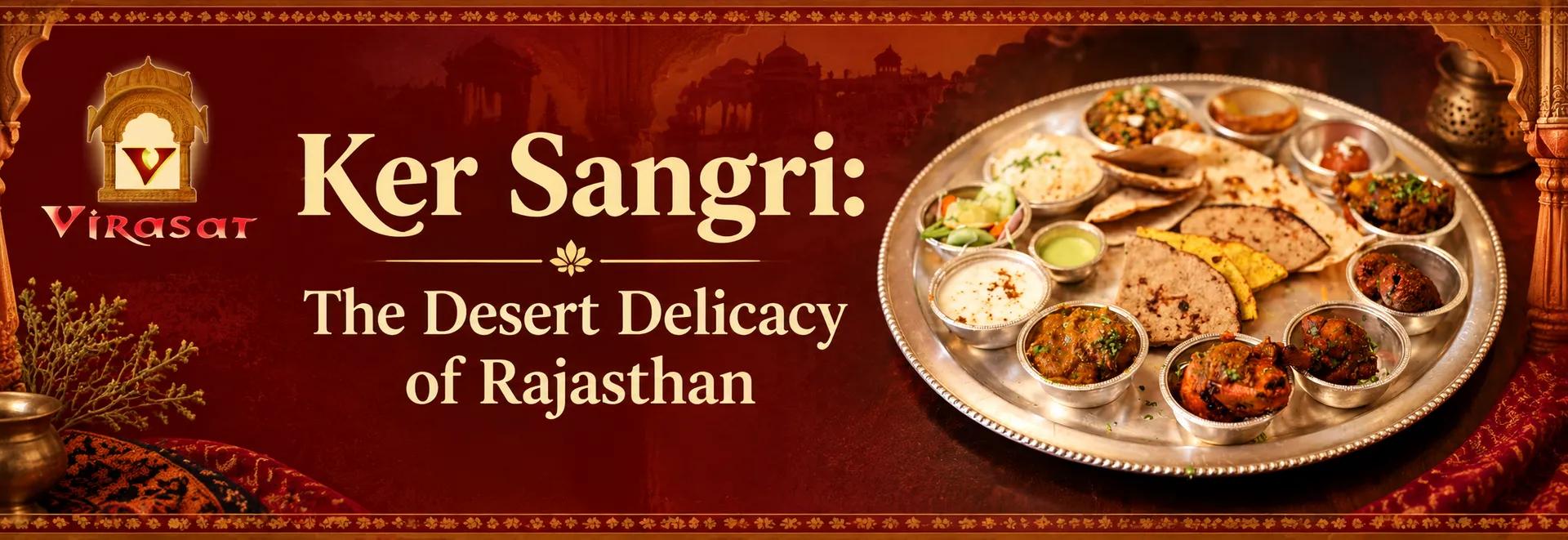
Ker Sangri: The Desert Delicacy of Rajasthan
Picture the moment the thali arrives. A heavy brass plate, a ring of small katoris, and in one of them something dark and glossy, a little wrinkled, shining with oil and red chilli. It sits quietly beside the dal and the baati. Most first-timers glance past it. Rajasthanis don't. They reach for it first.
That is ker sangri, and in Rajasthan it is far more than a vegetable dish. It is the taste people mean when they say they want "asli" Rajasthani food, the plate that smells of the desert, of old kitchens and of a grandmother who never wasted anything. At Virasat Heritage Restaurant in Kukas, it is served on the brass thali under carved jharokhas, with a dhol rolling somewhere behind you, which is exactly where it belongs.
In one line: ker sangri is a tangy, spicy dish of dried desert berries (ker) and bean pods (sangri), cooked in the Marwar way and eaten with hot bajra roti.
What Is Ker Sangri?

Ask ten
Rajasthanis for the soul of their thali and you will get ten arguments: dal
baati churma, gatte ki sabzi, kadhi. But a great many of them will, sooner or
later, say ker sangri. It is a dish from the sandy west of the state, around
Jodhpur, Bikaner and Barmer, made from two things that grow where almost
nothing else does.
Ker Berries and Sangri Beans
|
|
Ker |
Sangri |
|
What it is |
A small,
round, green berry from the thorny desert shrub Capparis decidua |
Long, thin
bean-like pods from the khejri tree, Prosopis
cineraria |
|
When it is
gathered |
Around April
and May |
Around April
and May, picked young |
|
Raw taste |
Sour and
bitter |
Mild and
earthy |
|
In the katori |
The tangy,
chewy bite |
The soft,
bean-like body |
The khejri is so
central to desert life that it is the state tree of Rajasthan. Wikipedia's page on Prosopis cineraria notes that its pods are cooked in bhaaji and
kadhi across the Thar, and Tarla Dalal's glossary
entry on ker explains how the berries are prepared.
Why Ker Sangri Exists: Cooking
in the Thar
There is an old
story that this dish was born in a famine. When nothing else would grow, people
turned to what the desert still offered: sour berries and thin pods that hung
on thorny branches. Whether or not it happened exactly that way, the story
tells you what the dish means. Ker sangri is what desert cooks made out of very
little. It is a dish of resourcefulness that people came to love, and today it
appears at family feasts and on restaurant thalis alike.
The khejri
deserves its own respect. It gives food, fodder and firewood, and Khejarli, a
village near Jodhpur, is remembered for a famous episode of people defending
these trees, as the Wikipedia
entry mentions.
Drying and Preserving
Here is the
clever part. In a land with no refrigerators, a good dish had to keep.
•
Sangri pods are picked young, boiled for
roughly half an hour to forty-five minutes and dried hard in the desert sun.
Stored well, they last through the year.
•
Ker berries are too sour and bitter to
eat fresh, so they are soaked in buttermilk or salted water, washed several
times and then dried.
•
Once dried, both can be cooked in any
season. That is why you can taste ker sangri in a Jaipur dining hall in
October, long after the April harvest.
FarmDidi's
note on traditional ker sangri describes how makers handle the berries.
What Does Ker Sangri Taste
Like?
First-time
guests tend to describe it in the same few ways.
•
Tangy first. The ker has a tart, almost
pickled note, a bit like capers.
•
Then spicy. Dried red chillies and
spices bring the heat.
•
Chewy and soft at once. The ker has a
firm bite. The sangri is tender, like a thin dried bean that has been woken up.
•
Savoury, never sweet. Some cooks add a
pinch of jaggery to tame the tang, but the dish stays savoury.
It is a taste
you might not understand on the first spoonful and crave by the third. If you
love a good pickle, you will probably love it.
How Ker Sangri Is Cooked
What reaches
your thali looks simple, but it is a slow dish. The patience happens long
before the plate arrives. Every family has its own way, yet the path is much
the same.
1.
Wash the dried ker and sangri several
times to remove desert dust.
2.
Soak them in water or thin buttermilk,
often overnight, to soften them and tame the ker's bitterness.
3.
Boil until just tender, then drain and
rinse again.
4.
Temper hot oil or ghee with mustard
seeds, dried red chillies and hing (asafoetida).
5.
Cook the ker and sangri with turmeric,
coriander and dry ginger, adding yoghurt for a gravy version or dry mango
powder for a drier, tangier one.
6.
Finish on low heat until the moisture is
gone and the flavours have settled into the berries.
A common home
ratio is about one part ker to four parts sangri, and the finished dish keeps
for a few days without refrigeration, which made it ideal for travellers. If
you want to try a ker sangri sabzi
recipe at home, Whisk
Affair's ker sangri recipe walks through the soaked, buttermilk and yoghurt
versions step by step.
How to Eat Ker Sangri
In a heritage
dining hall, you eat it the way it has always been eaten: seated low, plate
close, hands ready.
With Bajra Roti or Baati
The classic
partner is a hot bajra roti with a spoon of white butter and a little fiery
garlic chutney. The roti is earthy and plain, and ker sangri supplies the
drama. It is just as good beside a cracked baati and a ladle of dal, or tucked
beside plain parathas as a pickle-like side.
A few small
habits make it better:
•
Tear the roti, scoop a little
ker sangri, and eat them together in one bite.
•
Keep a glass of chaas close.
The buttermilk cools the heat.
•
Pace yourself. Once you know
you love it, ask for more.
To see where it
sits in the wider cuisine, read our guide to Rajasthani
vegetarian dishes and the overview of Rajasthani cuisine on
Wikipedia.
Where to Try Ker Sangri in
Jaipur
The best way to
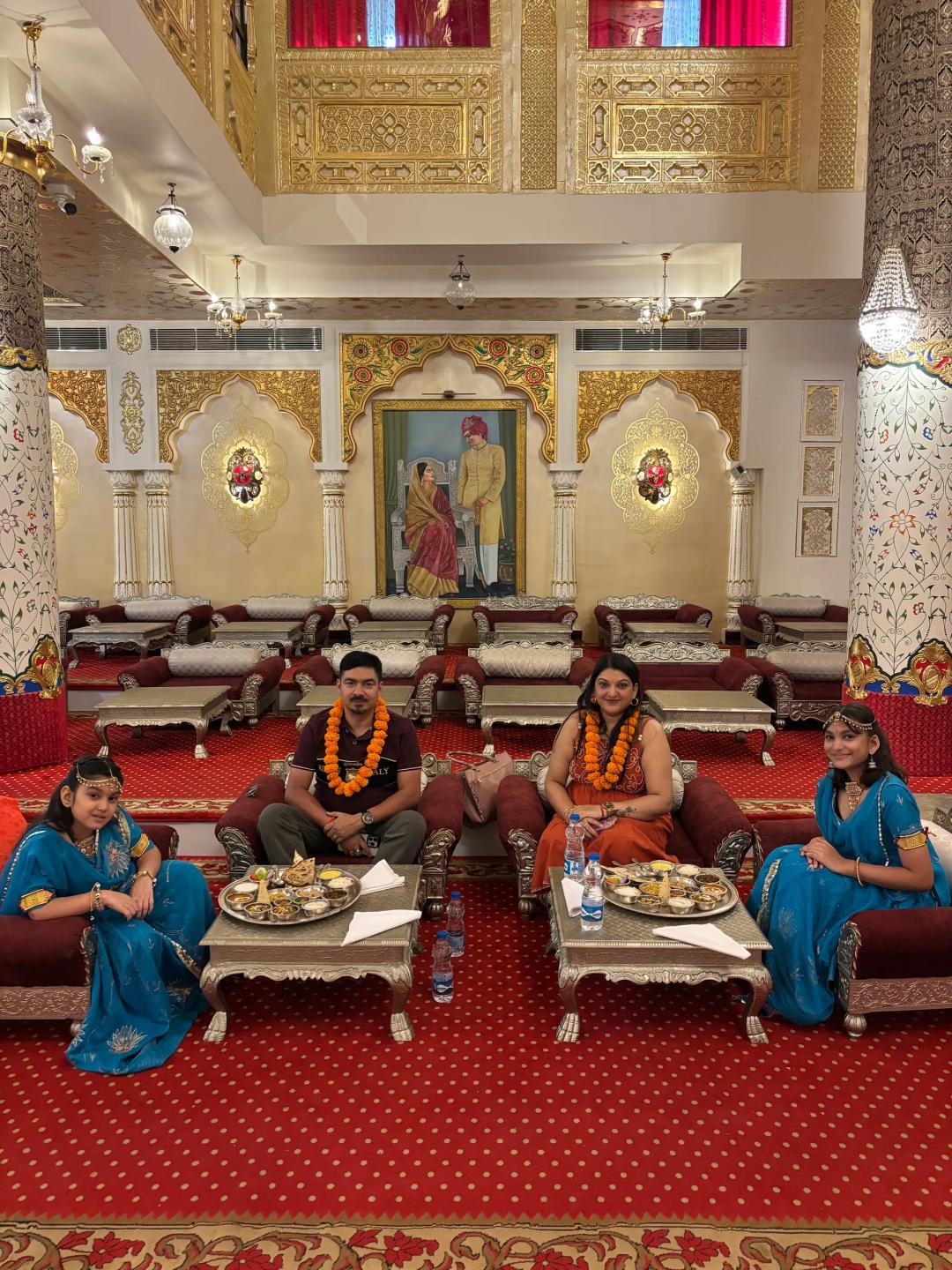
meet this dish is in a place that serves it with its full setting. At Virasat Heritage Restaurant on Delhi
Road, Kukas, the evening begins at the door. A tilak, a garland, the song Padharo Mhare Des. Then you walk into a
hall of gold-carved jharokhas and painted ceilings, sit down on low royal
seating, and the brass thali arrives, with live folk music and dance rising
around you.
You can find ker sangri on the thali in more than
one way:
•
In the unlimited Sampoorna Rajasthani Thali, served with dal baati churma, gatte ki sabzi, kadhi and bajra roti,
and refilled as often as you like.
•
In the Marwadi Thali, priced at ₹1,100
on the current menu, which brings ker sangri together with Jodhpuri chakki ki
sabji and missi roti.
•
À la carte, where it is listed as a
curry of dried desert beans and berries at ₹480.
The food is 100%
pure vegetarian, and Jain preparations are available on request, so tell your
attendant when you order. Prices may change with the season, so confirm when
you book. If you want the Marwar mood to match the flavour, ask about Jodhana, the hall inspired
by western Rajasthan. For more on the cuisine of the city, read about Rajasthani
food in Jaipur.
How to spot a good plate:
the berries should be tender, never rubbery. The tang should be balanced, not
buried in oil. And it should taste of spice and desert, not of sugar.
FAQs
Is ker sangri healthy?
It is
traditionally considered a wholesome dish, since dried berries and pods are
rich in fibre and are often described as a good source of plant protein. The
oil, salt and chillies used in cooking matter as much as the ingredients,
though. This is general information, not medical advice. If you have a health
condition or a dietary restriction, speak to your doctor.
Can I buy it dried?
Yes. Dried ker
and sangri are sold in Jaipur's grocery shops and bazaars and by many online
sellers, either separately or as a mixed pack. Choose clean, well-dried packs,
and be ready to wash and soak them thoroughly before cooking. Ready-made ker
sangri pickle is also widely available.
Is ker sangri vegetarian and
Jain-friendly?
It is a
vegetarian dish. Many versions are cooked with onion and garlic, so if you
follow Jain food rules, ask for a Jain preparation. Virasat offers Jain food on
request.
Come Taste It Where It Belongs
You can read about ker sangri all day, but you only really understand it with a hot roti in one hand, a dhol in the next room and a brass plate in front of you. If you would like to taste it in that setting, reserve a table at Virasat Heritage Restaurant, or call +91 73749 99951. We are open from 11 AM to 11 PM, every day.
Related reading
Eco-Friendly Diwali in Jaipur 2026: 12 Green Ideas, a 5-Day Plan and a Royal Diwali Dinner
Diwali 2026 falls on Sunday, 8 November, with Dhanteras on Friday, 6 November. An eco-friendly Diwali in Jaipur means clay diyas instead of plastic lights, natural rangoli, handmade local gifts, folk music instead of loud firecrackers and a festive meal that does not create a mountain of waste. If you would rather spend the evening at a table than in a kitchen, Virasat Heritage Restaurant in Kukas offers a pure vegetarian Rajasthani Diwali dinner in palace-style halls with live folk culture. Jaipur does Diwali better than most cities. The old bazaars glow, the sweet shops run out of mawa kachori by noon and every terrace seems to have its own row of lamps. The one thing the city does not need more of is smoke, noise and plastic. This guide shows you how to keep every bit of the glow and cut most of the mess.

Amer Fort Light and Sound Show: Timings, Tickets and a Dinner Plan
The Amer Fort light and sound show runs every evening below the fort, facing Maota Lake, in two shows: English first, Hindi second. From October to February the English show starts at 6:30 PM and the Hindi show at 7:30 PM, and each lasts about 50 to 55 minutes. Tickets are separate from the fort entry ticket. Plan dinner for after the show, and if you want a proper Rajasthani meal, Virasat Heritage Restaurant is a pure vegetarian restaurant near Amer Fort, about twenty minutes away in Kukas and open until 11 PM. Most people see Amer Fort in daylight, squinting at the sandstone and dodging selfie sticks. The evening version is a different animal: the crowds thin out, the walls glow gold and the story of the Kachwaha rulers is told in light and music on the fort's own face. It is one of the few things in Jaipur that works equally well for couples, families and solo travellers.

Baby Shower Venues in Jaipur: 6 Royal Halls, Garden and Banquet Near Kukas
Picture it: a red carpet, a tilak on the forehead, rose petals on the floor and a hall that glows like a palace. Your family walks in, the mother-to-be is welcomed like a rani, and the party has not even started. That is what a royal baby shower in Jaipur can feel like when the venue does half the work for you. The short version: If you are comparing baby shower venues in Jaipur and want something truly royal, Virasat Heritage Restaurant in Kukas gives you six distinct settings under one roof: four palace-style dining halls, a banquet hall and a garden lawn. Every plate is pure vegetarian, every guest gets a traditional welcome and folk culture is part of the evening. Pick the hall that matches your mood, book early and let the setting carry the theme.
Visit Virasat Heritage Restaurant
Experience the royal dining we write about.