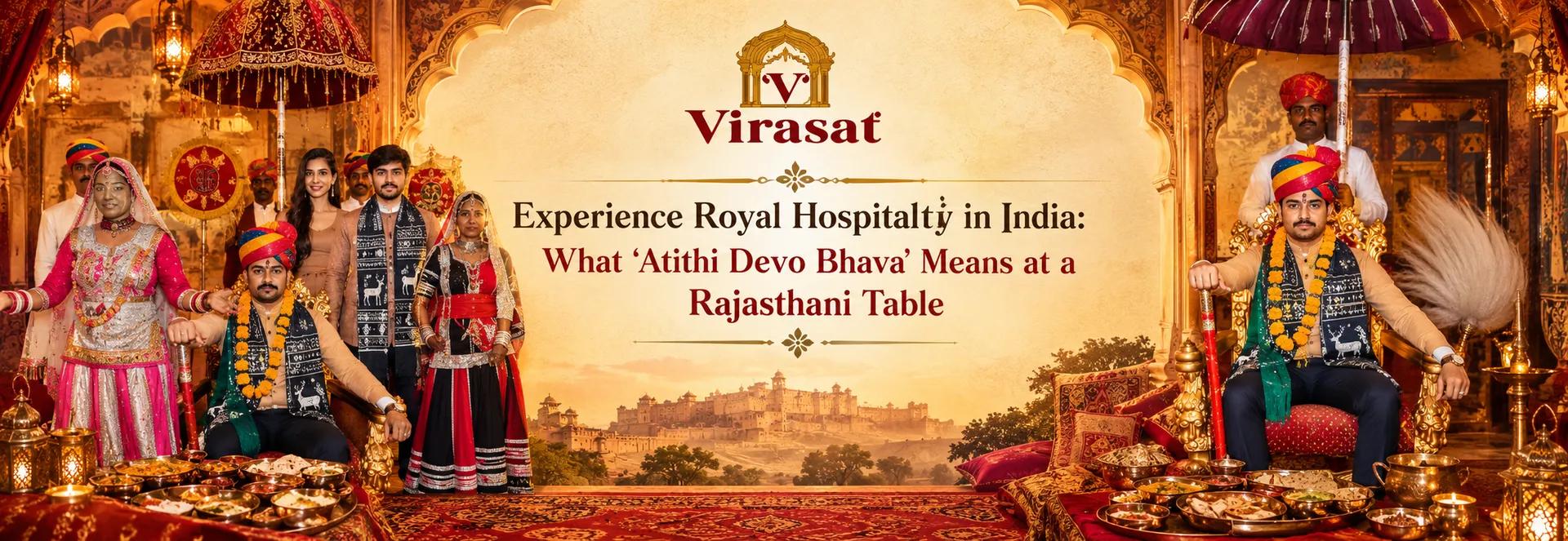
Experience Royal Hospitality in India: What “Atithi Devo Bhava” Means at a Rajasthani Table
To experience royal hospitality in India, go to the place where it
is still practised as a ritual: Rajasthan. The
principle of Atithi Devo
Bhava, “the guest is God”, is performed here through a musical
welcome, tilak and aarti, a feet wash, a safa tied on your head, honoured
seating and a meal served by hand rather than self-served. Virasat Heritage Restaurant in Jaipur offers this
sequence in the evening, and the feet wash is offered to guests who wish to
receive it.
Indian hospitality is famous, but royal hospitality is more
specific. It is a codified set of honours developed in Rajput courts to
receive guests of rank. Today it survives in heritage homes, weddings and a few
heritage dining venues.
This guide explains the rituals, why Rajasthan preserved them, where to
experience them in Jaipur and how to receive them gracefully as a guest.
What Is Royal Hospitality in India?
Royal hospitality in India, as practised in Rajasthan, follows eight
steps: swagat (musical welcome with dhol and “Padharo Mhare Des”), tilak
and aarti, charan dhulai (feet wash), safa bandhai (turban
tying), aasan (honoured seating), bhojan (a thali served
personally and refilled), manoranjan (live folk entertainment) and vidaai
(a farewell with sweets or a small gift). Virasat Heritage Restaurant,
Delhi Road, Kukas, Jaipur, offers this sequence in the evening.
What Are the Rituals of Royal Hospitality in India?
|
Ritual |
Meaning |
|
Swagat |
Musical
welcome: dhol, shehnai and “Padharo Mhare Des” |
|
Tilak and
aarti |
Blessing and
honour at the threshold |
|
Charan dhulai |
Feet wash: the
humility of the host |
|
Safa bandhai |
Turban tying:
the dignity of the guest |
|
Aasan |
Honoured
seating on a gaddi or throne |
|
Bhojan |
A meal served
personally, never self-served |
|
Manoranjan |
Court
entertainment: music and dance |
|
Vidaai |
Farewell with
sweets or a gift |
What Does “Atithi Devo Bhava” Mean?
Atithi Devo Bhava means “the guest is God”. It is an ancient
Sanskrit principle that lies behind Indian hospitality. In Rajasthan the idea
is not just spoken but performed: through the welcome rituals, honoured seating
and a personally served meal. You can read more about the phrase on Wikipedia.
Why Did Rajasthan Preserve These Traditions?
The princely states of Rajasthan
kept their courts and customs for longer than much of India. Desert life also
turned hospitality into a survival ethic, since a traveller refused water could
die. The result is a culture where honouring the guest is both etiquette and
identity. Heritage venues such as Virasat have kept the sequence alive for
travellers since 2006. For the wider customs of the court, read our guide to royal traditions
of Jaipur.
Where Can You Experience Royal Hospitality in Jaipur?
Virasat Heritage Restaurant
is on Delhi Road, near Sai Baba Temple, Kukas, Jaipur, about 15 to 20 minutes
from Amer Fort.
The welcome, feet wash, safa tying, throne seating, served thali and live folk
court are part of the evening in the Swarn Mahal darbar hall.
The experience is scaled up for weddings and groups: see our wedding venue in
Jaipur page for wedding hospitality. To see the full evening,
read the Indian royal
culture experience.
How Should You Receive Royal
Hospitality as a Guest?
1. Accept
the tilak and aarti with folded hands.
2. For
the feet wash, sit, relax and let the host perform it. It is their honour.
3. Allow
the safa to be tied and keep it on until after the photos.
4. Let
the attendants serve and refill. Refusing too quickly is considered formal.
5. Thank
the performers. A smile and applause are the tradition.
When Is the Best Time to Experience Royal Hospitality?
Evenings, all year round. Wedding season, from November to
February, shows the rituals at their grandest, and festival periods bring
seasonal songs and sweets. Looking for more to do after dark? See our list of things to do in
Jaipur at night.
Who Is Royal Hospitality For?
International travellers seeking authentic India, NRI families
reconnecting with tradition, wedding guests and anyone celebrating. Book a table or contact us.
Frequently Asked Questions
What does Atithi Devo Bhava mean?
“The guest is God”: the Sanskrit principle behind Indian hospitality,
performed in Rajasthan through welcome rituals, honoured seating and personally
served meals.
Is the feet-wash ritual real or just for show?
It is a genuine Rajput tradition of honouring guests, still performed at
weddings and in heritage homes. At Virasat it is offered to guests who wish to
receive it.
Can I decline any ritual?
Yes. Every honour is offered, never imposed.
Is royal hospitality only for large groups?
No. Couples and small families receive the same welcome.
Is the thali served or buffet?
Served at the table and refilled. Self-service is not part of royal
hospitality.
How do I reach Virasat?
Virasat is on Delhi Road, Kukas, Jaipur, about 15 to 20 minutes from Amer
Fort and only a few minutes from the resorts in Kukas.
Plan Your Visit to Virasat
Virasat Heritage Restaurant
is on Delhi Road, Kukas, Jaipur, close to Amer Fort. Reserve a table for
the royal thali and live folk performances, send a banquet enquiry for
weddings and group events, or message us on WhatsApp at
Related reading
Things to Do in Jaipur at Night: 12 Unique Evening Ideas
The best things to do in Jaipur at night are a cultural dinner with Rajasthani folk dance, sunset and city views from Nahargarh Fort, the lit-up Jal Mahal and Albert Hall, street food at Masala Chowk, and evening shopping in the old city. For a complete evening in one place, a heritage restaurant in Jaipur like Virasat combines dinner, music, dance and palace-style décor.
Things to Do in Jaipur at Night: 10 Evening Experiences Including a Royal Folk Dinner
The best things to do in Jaipur at night are the Amer Fort sound-and-light show, sunset at Nahargarh Fort, the lit-up Jal Mahal and Hawa Mahal, late shopping in Bapu and Johari Bazaar, rooftop cafés, an evening at Raj Mandir cinema and, the most Rajasthani of all, a royal folk dinner with live music and dance at a heritage restaurant in Jaipur such as Virasat Heritage Restaurant in Kukas.
Taste of Royal Rajasthan: The Dishes, Rituals and Setting of a True Maharaja’s Thali
The taste of royal Rajasthan is a royal Rajasthani thali of dal baati churma, gatte ki sabzi, ker sangri, panchmel dal, bajra and missi roti, lehsun chutney, kadhi, jeera rice, papad, pickles, chaas and desserts such as ghevar, malpua and churma, served unlimited in brass or silver. Virasat Heritage Restaurant on Delhi Road, Kukas, Jaipur serves it daily with live folk music and a royal welcome. Exact dishes rotate with the season.
Visit Virasat Heritage Restaurant
Experience the royal dining we write about.