Myths About Rajasthani Food: Is It Always Spicy, Heavy or Non-Vegetarian? 12 Questions, Answered
Tell someone you are going to Rajasthan, and you will hear the same warnings: 'It is so spicy!', 'It is all ghee!', 'Aren't they all meat-eaters, with the laal maas and everything?' Some of it is true. A lot of it is not. This guide takes the twelve most common beliefs about Rajasthani food, answers each one in a line you can trust and then gives you the story behind the answer.
The Short Answers
•
Is Rajasthani food always spicy? No. It
ranges from mild and comforting (kadhi, gatte in curd gravy) to properly hot
(garlic chutney, mirchi vada, laal maas).
•
Is it always heavy? It is ghee-rich and
filling, but it also includes light dishes such as buttermilk-based raab, dry
dals and millet khichdi, and a thali lets you choose how much you eat.
•
Is it non-vegetarian? Mostly not. Much of Rajasthani cuisine is vegetarian, with a meat tradition from Rajput kitchens alongside it.
Myth vs Fact at a Glance
|
Myth |
The
reality in one line |
|
It is always very spicy |
Spice levels vary widely, from mild to
hot |
|
It is always heavy |
Rich and ghee-heavy, yes, but there are
lighter dishes and you control the portions |
|
It is all non-vegetarian |
A large part is vegetarian, with a
separate meat tradition |
|
It is only dal baati churma |
The cuisine has dozens of dishes beyond
the famous trio |
|
There are no vegetables in the desert |
Rajasthan has its own unique vegetables,
such as ker, sangri and kachri |
|
It tastes the same across Rajasthan |
Each region has its own specialities |
|
Ghevar is a Diwali sweet |
It is traditionally linked with Teej |
|
It is simple village food, not fine
dining |
Royal courts and temples shaped a refined
cuisine called Rajwaadi |
1. Is Rajasthani Food Always Spicy?
No.
Rajasthani food ranges from mild to hot, and many dishes rely on aromatic
spices, dairy and ghee more than chilli.
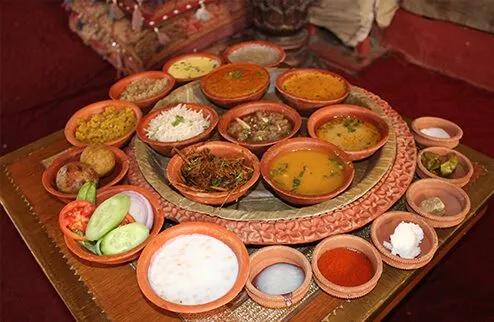
Some dishes are fiery: lehsun (garlic)
chutney is a hot garlic paste, mirchi vada carries the heat of a green chilli, and laal maas is cooked in red chilli gravy. But Rajasthani kadhi (a curd and
gram-flour curry), gatte ki sabzi (gram-flour dumplings in a yoghurt gravy) and
raab (millet cooked in buttermilk) are gentle on the tongue. The royal Rajwaadi
style of cooking, according to the Rajasthani cuisine
page, leans on dry fruits, yoghurt, ghee, saffron, rose water and whole
spices such as cardamom and nutmeg for flavour and aroma. If you do not like
heat, simply say so when you order.
2. Is Rajasthani Food Always Heavy?
Not
always. It is rich and ghee-forward, but the cuisine also has lighter dishes,
and a thali lets you choose how much you eat.
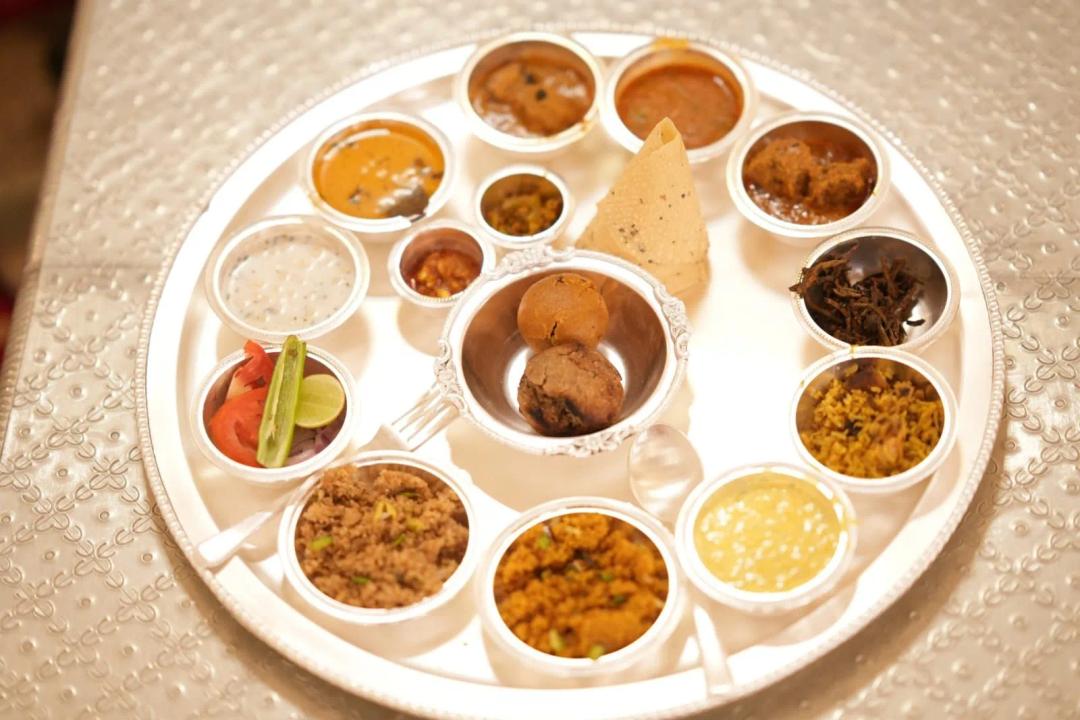
Baati dipped in ghee and a spoonful of
churma are indulgent. But the same table offers dals, kadhi, millet khichdi,
dry preparations such as sukhi dal, and buttermilk-based dishes. A smart way to
eat is to take small portions of everything, finish with chaas and save the
sweets for last. If you have a health condition or a restricted diet, please
speak to your doctor and tell the restaurant what you need.
3. Is Rajasthani Food Non-Vegetarian?
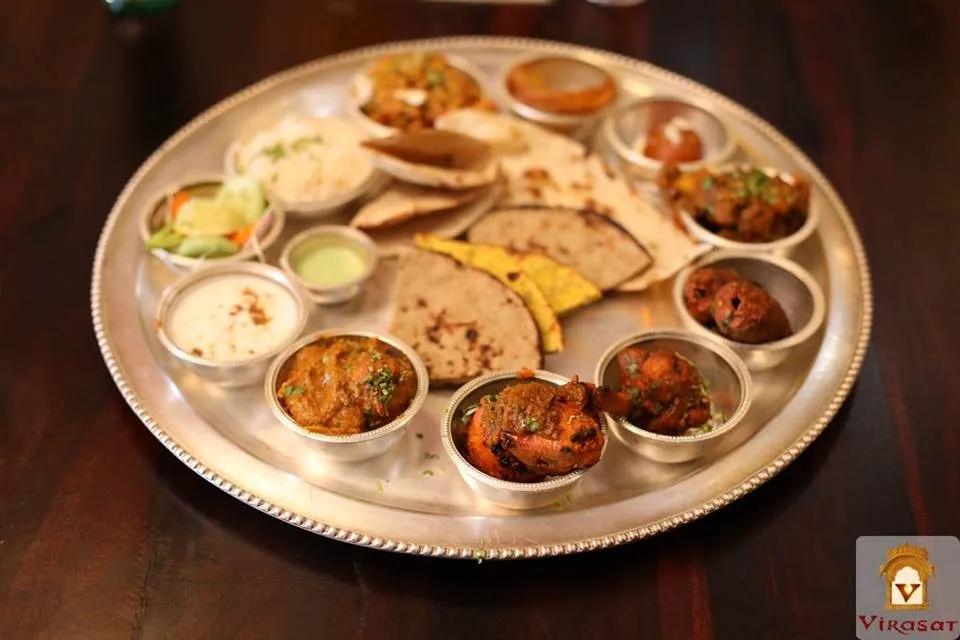
Mostly
not. A large part of Rajasthani cuisine is vegetarian, with a separate meat
tradition from Rajput kitchens.
A 2014 survey by the Registrar General of
India, as cited on Wikipedia, put Rajasthan at 74.9% vegetarians, the highest
share of any Indian state. The same page explains that Brahmins, Jains,
Bishnois and others favoured a vegetarian diet, while the Rajputs traditionally
ate meat, which is why dishes such as laal maas exist next to dal baati churma.
Marwari communities also gave India the idea of the vegetarian 'bhojnalaya'.
The figure comes from an older survey, so treat it as a guide, not as a current
statistic.
4. Is Dal Baati Churma the Only Rajasthani Dish?
No.
It is the most famous dish, but Rajasthani cuisine has dozens of dals, curries,
breads, snacks and sweets.
Panchratna dal (made with five lentils),
gatte ki sabzi, ker sangri, papad ki sabzi, mangodi, pittod, raab, ghaat, bajra
khichdi, launji and chhunda are just a few. You can see a longer list in our
guide to the top
10 must-try Rajasthani dishes in Jaipur.
5. Is Baati a Stuffed Bread With Peas and Onions?
Classic
baati is a hard, baked ball of wheat dough, dipped in ghee. Stuffed versions
exist, but they are variations.
A few travel pages describe dal baati
churma as a bread stuffed with peas and onions, which is a variation, not the
classic. The traditional trio is a baked baati, a panchmel or panchratna dal
and sweet churma made by crumbling baati in ghee and sugar or jaggery. Read the
full story in our guide to dal
baati churma (also spelled dal bati churma).
6. Can a Desert Cuisine Have Vegetables?
Yes.
Rajasthan has its own desert vegetables, such as ker, sangri, gunda, kumatiya
and kachri, besides the usual potatoes, onions and okra.
Ker is a small dried berry, and sangri is a
long bean from the khejri tree. Both are dried and cooked into the famous ker
sangri. Wikipedia lists others, such as guar phali (cluster beans), kachri (a
wild melon) and dried tinda. It also notes greens such as sarson, bathua and
methi. The 'no vegetables' idea comes from the fact that fresh greens are
scarce in the desert, which is exactly why dried and foraged ones became
specialities.
7. Does All of Rajasthan Eat the Same Food?
No.
Every region has its own specialities.
According to Wikipedia, Mewar is known for
paniya churio and jhakolma puri, Bikaner for bhujia and rasgulla, Alwar for its
milk cake, Pushkar for malpua and Jodhpur for mawa lassi. A Jaipur thali, a
Udaipur meal and a Bikaner snack plate can taste quite different.
8. Is Ghevar a Diwali Sweet?
No.
Ghevar is traditionally linked with Teej.
Wikipedia notes that ghevar is offered as
naivedya to Shiva and Parvati during Teej. You may find it in sweet shops at
other times of the year. See the Ghevar
entry on Wikipedia, and read about the real Diwali sweets in our guide to how
Rajasthan celebrates Diwali.
9. Is Rajasthani Food Just Simple Village Food, Not Fine
Dining?
No.
Rajasthan also has a refined royal tradition called Rajwaadi cuisine, shaped by
palace kitchens and temples.
According to Wikipedia, Rajwaadi cooking is
marked by dry fruits, yogurt, ghee, mawa, saffron, kewda and rose water, and
its dishes were sometimes decorated with thin gold and silver foil and served
in silver or golden crockery. That is why a hosted, ceremonial meal in a
palace-style hall feels so natural for this cuisine. If you are looking for royal Rajasthani dining in Jaipur or a fine dining restaurant in Jaipur in the
sense of a hosted, atmospheric meal, see Virasat's page on royal dining
in Jaipur, where the experience includes a tilak-and-garland welcome, a
darbar hall and live folk music.
10. Where Can I Eat Real Rajasthani Food Near Amer Fort?
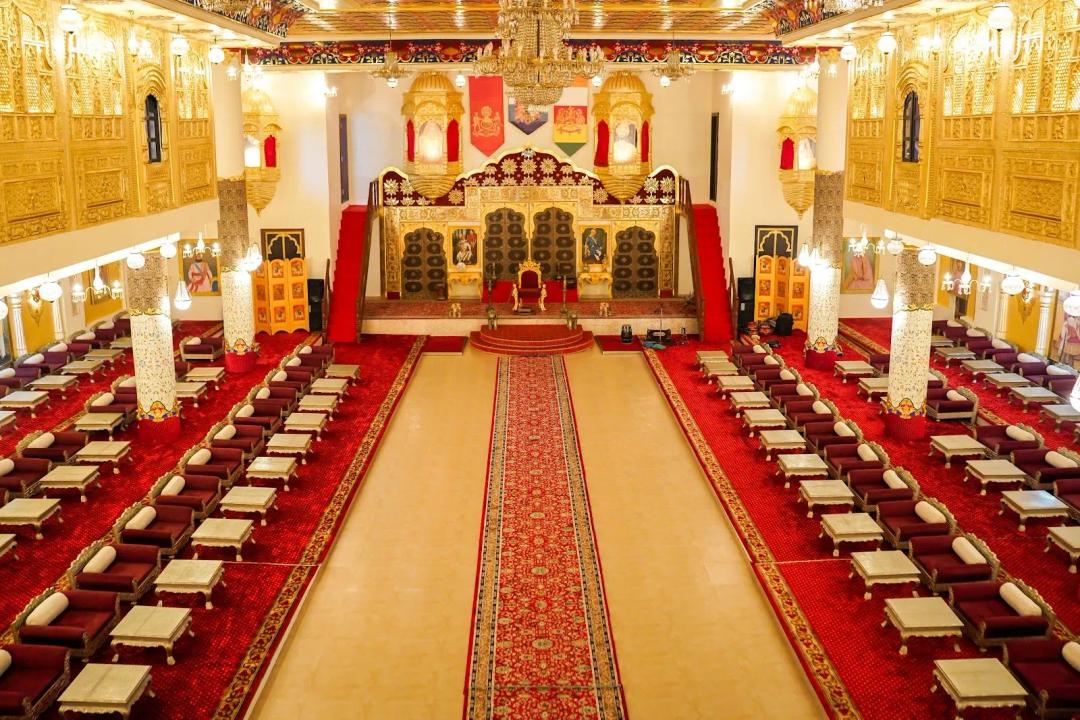
Virasat
Heritage Restaurant on Delhi Road, Kukas serves a full Rajasthani thali about
15 minutes from Amer Fort.
If you are searching for a restaurant near
Amer Fort, you have a few kinds of options: cafes and thali places on the Amer
road, hotel restaurants and heritage dining a short drive away. For Rajasthani
food near Amer Fort, a thali is the easiest way to taste many dishes at once.
Virasat is a 100% pure vegetarian heritage restaurant with an unlimited
Sampoorna Rajasthani Thali and live folk music and dance. For more choices, see
our guide to the best
restaurants near Amer Fort and our page on a Rajasthani
restaurant in Jaipur.
Searching
'restaurant near me' while you are at the fort?
Type 'Virasat Heritage Restaurant Kukas' into Google Maps for live directions
and timings.
11. Is There a Pure Veg Restaurant in Jaipur That Serves
Real Rajasthani Food?
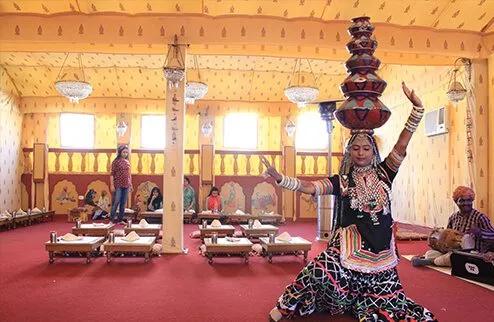
Yes.
Virasat is a 100% pure vegetarian restaurant that serves traditional Rajasthani
food, with a Jain thali available on request.
A pure vegetarian restaurant never serves
meat, fish or egg. At Virasat, the unlimited thali includes dal baati churma,
gatte ki sabzi, ker sangri, kadhi, panchmel dal, bajra, missi and makki rotis
with white butter and lehsun chutney, bajra khichdi, papad, pickles, chutneys,
chaas and sweets such as churma, moong dal halwa, malpua and seasonal ghevar.
See our page on the pure
vegetarian restaurant in Jaipur, the menu and our vegetarian
and Jain food guide for Jaipur.
12. Is There a Family Restaurant in Kukas or Jaipur Where
Children and Elders Are Comfortable?
Yes.
Virasat is a family restaurant in Kukas with several dining halls, parking,
live folk music and a Royal Kids Program for children.
Families looking for a family restaurant in
Jaipur often want three things: seating for the whole group, food that suits
every age and something to keep children engaged. Virasat offers several halls,
the unlimited thali and a children's programme where kids dress up as little
maharajas and maharanis (please check availability). Floor seating is part of
the experience, so please ask the team about chairs or tables if a family
member finds the floor difficult. See our pages on the family
restaurant in Jaipur, the restaurant
in Kukas and the Royal
Kids Program.
Where to Eat Dal Baati Churma in Jaipur
If you want to try dal baati churma (also
written dal bati churma) in Jaipur, look for a restaurant that serves it as
part of a full Rajasthani thali, so you can taste the dal, the baati and the
churma together with gatte, ker sangri and kadhi. At Virasat, dal baati churma
is the centrepiece of the unlimited thali and can also be ordered à la carte.
See our guide to the Rajasthani
thali in Jaipur, and if you are visiting in winter, read about Rajasthani
winter food.
How to Eat Rajasthani Food Like a Pro
1.
Break the baati with your hands, pour
dal over it and add a spoon of ghee.
2.
Take small portions of everything and
ask for refills of what you love.
3.
Tell the server your spice level. It is
perfectly normal to ask for milder food.
4.
Balance the meal. Use chaas to cool the
spice, and a little lehsun chutney goes a long way.
5.
Save space for sweets. Churma, moong dal
halwa and malpua are worth it.
6.
Mention dietary needs early. Jain,
allergy and low-sugar requests are easiest when made at the time of booking.
Virasat Quick Facts
•
Name: Virasat Heritage Restaurant
(Virasat Jaipur)
•
Address: Delhi Road, near Sai Baba
Temple, Kukas, Jaipur, Rajasthan 302028
•
Hours: 11 AM to 11 PM, all days (please
confirm festival-day timings)
•
Food: 100% pure vegetarian; Jain thali
on request
•
Entertainment: Live folk music and dance
with dinner service
•
Distance: About 15 minutes from Amer
Fort; roughly 20 km from Jaipur Junction railway station
•
Approximate cost: Around ₹3,000 for two
(indicative; please confirm when you book)
•
Phone: +91 95877 77817 and +91 73749
99951
Reserve
a table or see our page on the best
restaurant in Jaipur. Prices are listed at the restaurant and on the
booking page.
More Questions, Quickly
Is Rajasthani food healthy?
It includes millets,
lentils and buttermilk, but also a lot of ghee and sweets. Enjoy it in sensible
portions, and speak to a doctor if you have a medical condition.
What is the most famous Rajasthani dish?
Dal baati
churma.
Is Rajasthani food oily?
Many dishes use generous
amounts of ghee and oil. Ask the restaurant if you prefer less.
Do Rajasthanis eat onion and garlic?
Many do, but Jain
and some other communities avoid them. See our guide for vegetarian and Jain
travellers.
Can I get a Jain thali?
Yes, at Virasat, a Jain thali is
available on request. Please mention it when you book.
Is there a restaurant near me for Rajasthani food in Jaipur?
Virasat Heritage Restaurant is on Delhi Road, Kukas, about 15
minutes from Amer Fort. Search for it on Google Maps for directions from where
you are.
Conclusion
Rajasthani food is not one thing. It is
mild and fiery, light and rich, vegetarian and, in its royal kitchens,
non-vegetarian, village-simple and palace-refined. The best way to find out is
to sit down to a thali, ask questions and let the table surprise you.
Reserve your table at Virasat or call +91 95877 77817 to taste the myths for yourself.
Related reading
Eco-Friendly Diwali in Jaipur 2026: 12 Green Ideas, a 5-Day Plan and a Royal Diwali Dinner
Diwali 2026 falls on Sunday, 8 November, with Dhanteras on Friday, 6 November. An eco-friendly Diwali in Jaipur means clay diyas instead of plastic lights, natural rangoli, handmade local gifts, folk music instead of loud firecrackers and a festive meal that does not create a mountain of waste. If you would rather spend the evening at a table than in a kitchen, Virasat Heritage Restaurant in Kukas offers a pure vegetarian Rajasthani Diwali dinner in palace-style halls with live folk culture. Jaipur does Diwali better than most cities. The old bazaars glow, the sweet shops run out of mawa kachori by noon and every terrace seems to have its own row of lamps. The one thing the city does not need more of is smoke, noise and plastic. This guide shows you how to keep every bit of the glow and cut most of the mess.
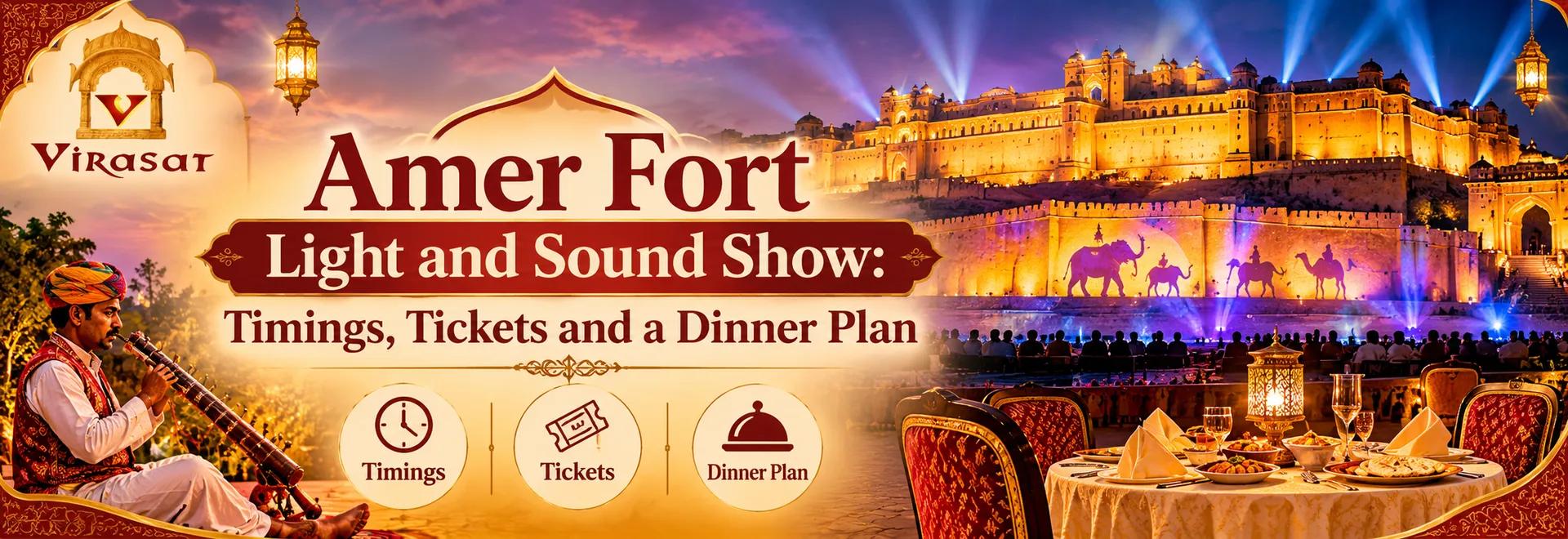
Amer Fort Light and Sound Show: Timings, Tickets and a Dinner Plan
The Amer Fort light and sound show runs every evening below the fort, facing Maota Lake, in two shows: English first, Hindi second. From October to February the English show starts at 6:30 PM and the Hindi show at 7:30 PM, and each lasts about 50 to 55 minutes. Tickets are separate from the fort entry ticket. Plan dinner for after the show, and if you want a proper Rajasthani meal, Virasat Heritage Restaurant is a pure vegetarian restaurant near Amer Fort, about twenty minutes away in Kukas and open until 11 PM. Most people see Amer Fort in daylight, squinting at the sandstone and dodging selfie sticks. The evening version is a different animal: the crowds thin out, the walls glow gold and the story of the Kachwaha rulers is told in light and music on the fort's own face. It is one of the few things in Jaipur that works equally well for couples, families and solo travellers.
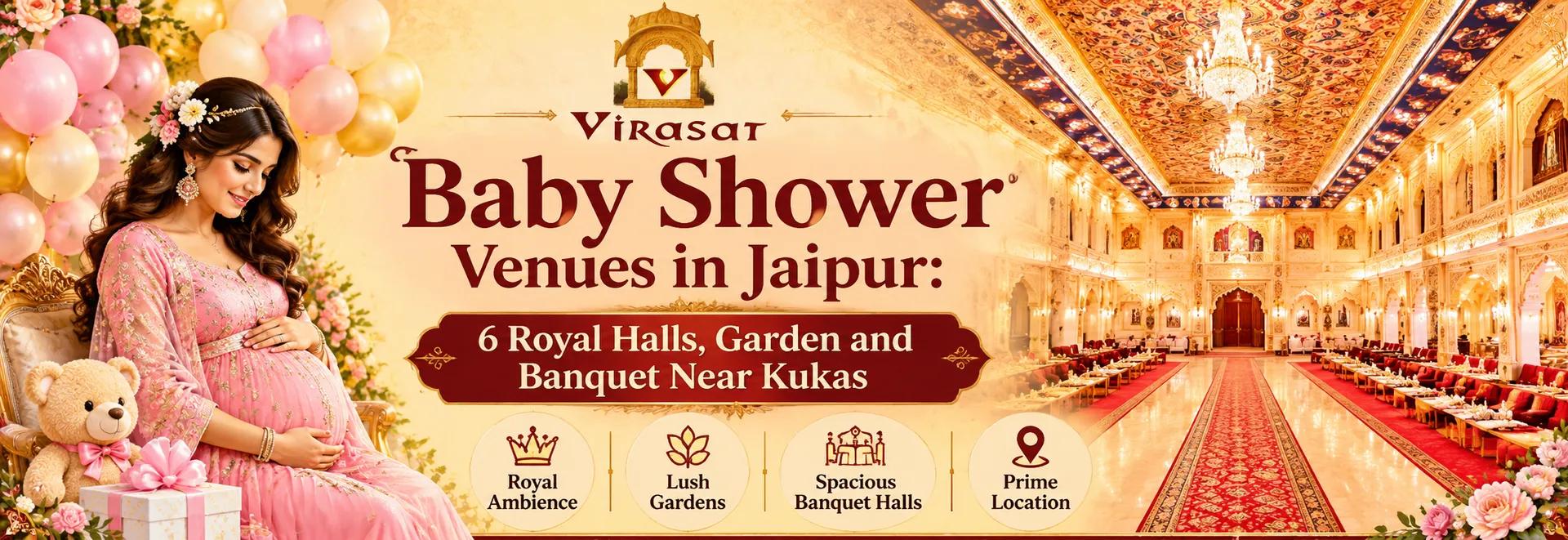
Baby Shower Venues in Jaipur: 6 Royal Halls, Garden and Banquet Near Kukas
Picture it: a red carpet, a tilak on the forehead, rose petals on the floor and a hall that glows like a palace. Your family walks in, the mother-to-be is welcomed like a rani, and the party has not even started. That is what a royal baby shower in Jaipur can feel like when the venue does half the work for you. The short version: If you are comparing baby shower venues in Jaipur and want something truly royal, Virasat Heritage Restaurant in Kukas gives you six distinct settings under one roof: four palace-style dining halls, a banquet hall and a garden lawn. Every plate is pure vegetarian, every guest gets a traditional welcome and folk culture is part of the evening. Pick the hall that matches your mood, book early and let the setting carry the theme.
Visit Virasat Heritage Restaurant
Experience the royal dining we write about.