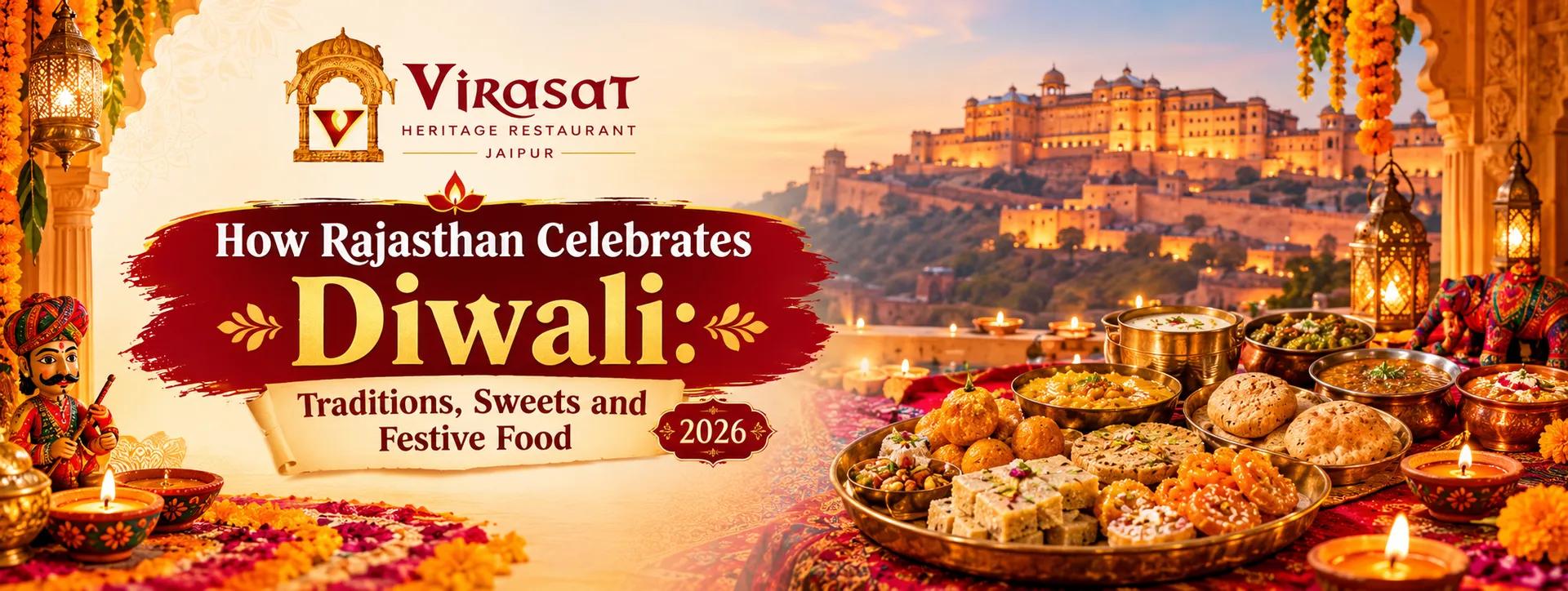
How Rajasthan Celebrates Diwali: Traditions, Sweets and Festive Food 2026
Rajasthan celebrates Diwali with rows of clay lamps, brightly lit bazaars, rangoli and mandana art at the doorstep, Lakshmi Puja at dusk, new account books for traders, a Govardhan Puja and Annakut feast the next day, and plenty of sweets shared between families. Diwali 2026 falls on Sunday, 8 November, so there is still time to experience it in Jaipur.
This guide
explains each tradition, the sweets and festive food Rajasthan is known for,
and how to enjoy a Rajasthani feast in Jaipur during the festival. Customs
differ from family to family and from one region to another, so treat this as a
general guide.
Diwali 2026 in Rajasthan: The
Dates
Main Diwali, the
day of Lakshmi Puja, is on Sunday, 8 November 2026, and Govardhan Puja is on
Monday, 9 November. Diwali
is a five-day festival that starts with Dhanteras and ends with Bhai Dooj.
Lakshmi Puja is performed in the evening at dusk, and the exact muhurat changes
by city, so check a local panchang for Jaipur before you plan your day.
1. Lamps, Lights and
Illuminated Bazaars
Diwali is the
festival of lights, and Rajasthan celebrates it with earthen lamps and strings
of lights on houses, shops and buildings. In Jaipur the old city markets are
decorated for the occasion, and press photos regularly show Johari
Bazar illuminated for Diwali, with homes and buildings decked with lights,
flowers and rangoli.
The weeks before
Diwali are a busy shopping season for lamps, decorations, clothes, gifts and
sweets. Jaipur is a UNESCO
World Heritage city, and its bazaars look their best in the evening. For
more night-time ideas, see our list of things to do
in Jaipur at night.
2. Rangoli and Mandana at the
Doorstep
Before the
evening puja, families draw rangoli at the entrance to welcome guests and the
goddess Lakshmi. In Rajasthan this often takes the form of mandana, a folk
floor and wall art drawn in white, traditionally on a red-ochre or clay base.
Women in many villages renew mandana designs on floors and doorways for the
festival.
Designs vary,
but the idea is the same everywhere: a clean, decorated, welcoming home.
3. Lakshmi Puja in the Evening
The heart of
Diwali is Lakshmi Puja, held at dusk on the main day. Families clean and
decorate their homes, light lamps, worship Goddess Lakshmi (often together with
Lord Ganesha) and offer sweets, which are then shared with family and guests.
Visiting relatives and exchanging gifts and sweets continue through the
festival week.
4. A New Year for Business:
Chopda and Bahi-Khata Puja
For many trading
communities, including Marwari families whose roots lie in Rajasthan, Diwali
marks the start of the business year. Traders worship their new account books,
known as chopda or bahi-khata, and pray for prosperity in the year ahead. It is
one of the reasons Diwali has long been considered the most important festival
for merchants.
5. Govardhan Puja and Annakut
The day after
Diwali is Govardhan Puja, dedicated to Lord Krishna. It is widely observed
across Rajasthan, which has strong Krishna-bhakti traditions, and is often
marked by Annakut, an offering of a large, generous spread of food. In 2026,
Govardhan Puja falls on Monday, 9 November.
The Sweets of a Rajasthani
Diwali
Rajasthani
kitchens prepare sweets and snacks for days before Diwali, and the recipes
differ between Marwar, Mewar, Shekhawati and Hadoti. Rajasthani mithai is rich,
ghee-heavy and made to be shared. These are some of the best known.
•
Churma ladoo: Crushed wheat dough cooked
in ghee and sweetened with jaggery or sugar, shaped into ladoos. It is a
classic at festivals and pujas and travels well.
•
Mawa kachori: A sweet version of the
kachori stuffed with mawa (khoya) and often dry fruits, soaked in sugar syrup. Rajasthani cuisine
lists it as a regional speciality, and Jodhpur is especially known for it.
•
Balushahi: A flaky, doughnut-like sweet
glazed in sugar syrup, and a favourite in Rajasthani sweet shops.
•
Mohanthal: A dense, ghee-rich gram flour
fudge, popular as a festive gift.
•
Malpua with rabri: Soft fried pancakes
served with creamy rabri. Pushkar is known for its malpua.
•
Moong dal halwa: A slow-roasted,
ghee-rich dessert often served on festive and wedding menus.
•
Gujiya: A stuffed pastry traditionally
prepared during celebrations.
What about ghevar? Ghevar is the most famous
Rajasthani sweet, but it is traditionally linked with Teej and Raksha Bandhan
and the Shravan season rather than Diwali itself. You may still find it in
sweet shops and on festive menus at certain times of the year.
What a Rajasthani Festive Meal
Looks Like
A festive
Rajasthani meal is built around dal baati churma, gatte ki sabzi, ker sangri,
kadhi, bajra roti with lehsun chutney, papad, pickles, chaas and a sweet to
finish. The food is cooked in ghee and served with a generous hand, in line
with the guest-first idea of Atithi Devo Bhava. You can read more about the
cuisine in our guides to traditional
vegetarian Rajasthani food and the taste of royal
Rajasthan.
New to the
cuisine? Start with our list of the top
10 must-try Rajasthani dishes in Jaipur, our guide to dal
baati churma and the Rajasthani
thali in Jaipur.
Taste a Rajasthani Festive
Feast at Virasat
If you are in
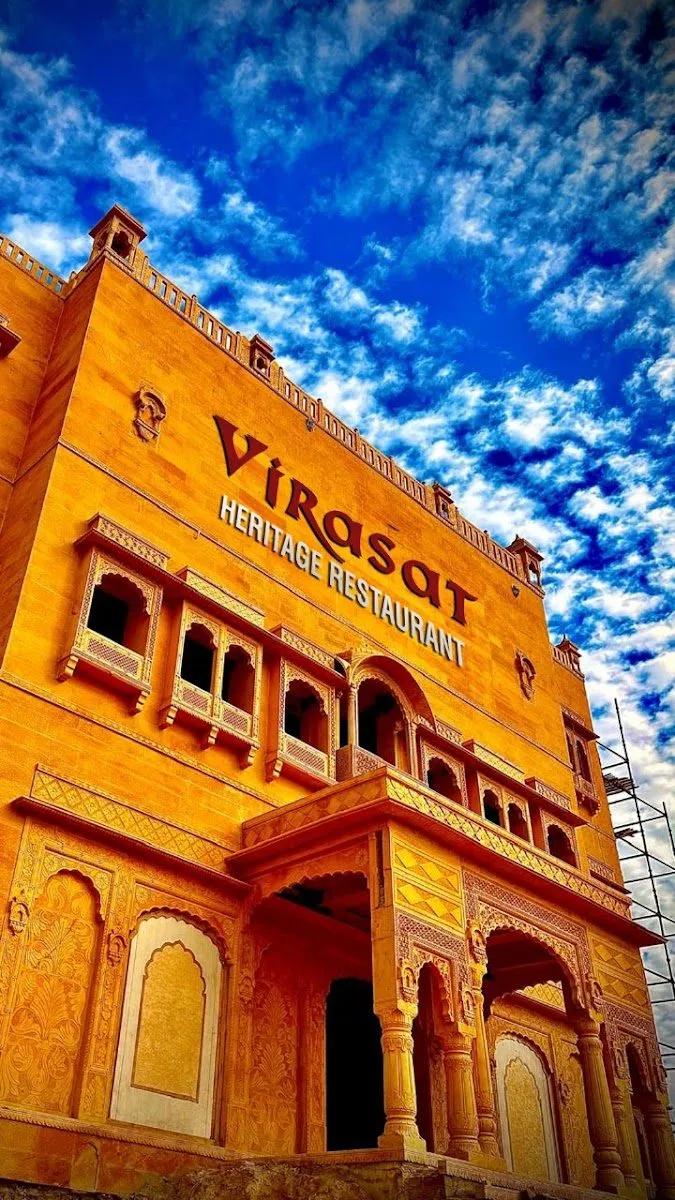
Jaipur for Diwali and want to taste this food in one sitting, Virasat Heritage Restaurant on Delhi
Road, Kukas serves an unlimited, 100% pure vegetarian Sampoorna Rajasthani
Thali in brass. It includes dal baati churma, gatte ki sabzi, ker sangri,
kadhi, breads, chaas and sweets such as churma, moong dal halwa or malpua, and
seasonal ghevar. Items and availability change with the season, so please check
the menu and ask when you book.
Your evening
starts with a royal welcome of tilak, a garland and Padharo Mhare Des, followed
by dinner in a darbar hall with live folk music and dance. Learn about the
customs in our guides to royal hospitality
in India and the culture
of Rajasthan.
Planning your
own festive dinner? See our guides to a Diwali dinner in
Jaipur and a Diwali
family get-together in Jaipur. Virasat is open from 11 AM to 11 PM on
regular days, so please call to confirm festival-day timings.
Tips for Experiencing Diwali in
Jaipur
•
Visit the bazaars in the evening. The
lights are at their best after dusk, but the markets are crowded, so allow
extra time.
•
Check the puja time. Lakshmi Puja is
held at dusk, and the muhurat varies, so check a local panchang.
•
Try regional sweets. Look for sweet
shops that make mawa kachori, balushahi and churma ladoo fresh.
•
Respect family time. Diwali night is a
home festival for many families, so plan restaurant visits and sightseeing
around it.
•
Book dinner early. Diwali 2026 falls on
a Sunday, so reserve your table well in advance.
Frequently Asked Questions
How is Diwali celebrated in Rajasthan?
With earthen lamps and lights, rangoli and mandana at the doorstep,
Lakshmi Puja at dusk, new account books for traders, Govardhan Puja and Annakut
the next day, and the sharing of sweets and gifts.
When is Diwali in 2026?
Sunday, 8 November 2026, with Govardhan Puja on Monday, 9 November.
What is mandana?
Mandana
is a folk floor and wall art of Rajasthan, drawn in white on a red-ochre or
clay base, and often renewed for festivals such as Diwali.
Which sweets are popular for Diwali in Rajasthan?
Churma ladoo, mawa kachori, balushahi, mohanthal, malpua and moong
dal halwa are all well loved, and recipes differ by region and family.
Is ghevar a Diwali sweet?
Ghevar is traditionally associated with Teej and Raksha Bandhan rather than
Diwali, though it is popular across Rajasthan during the festive seasons.
What is Govardhan Puja?
It
is observed the day after Diwali and is dedicated to Lord Krishna. Many
families mark it with Annakut, an offering of a large spread of food.
Where can I eat a Rajasthani festive meal in Jaipur?
Virasat Heritage Restaurant in Kukas serves an unlimited pure
vegetarian Rajasthani thali with live folk music and dance. Please call to
confirm festival-day timings.
Is Rajasthani food vegetarian?
A large part of it is, and Virasat is 100% pure vegetarian, with a
Jain thali available on request.
Conclusion
Diwali in
Rajasthan is a mix of light, family, devotion and food. You can see the lamps
and bazaars in Jaipur, learn about mandana and chopda puja, taste regional
sweets and sit down to a generous Rajasthani feast.
Plan your festive evening. Reserve your table at Virasat or call +91 95877 77817, and taste Rajasthan's festive flavours this Diwali.
Related reading
Eco-Friendly Diwali in Jaipur 2026: 12 Green Ideas, a 5-Day Plan and a Royal Diwali Dinner
Diwali 2026 falls on Sunday, 8 November, with Dhanteras on Friday, 6 November. An eco-friendly Diwali in Jaipur means clay diyas instead of plastic lights, natural rangoli, handmade local gifts, folk music instead of loud firecrackers and a festive meal that does not create a mountain of waste. If you would rather spend the evening at a table than in a kitchen, Virasat Heritage Restaurant in Kukas offers a pure vegetarian Rajasthani Diwali dinner in palace-style halls with live folk culture. Jaipur does Diwali better than most cities. The old bazaars glow, the sweet shops run out of mawa kachori by noon and every terrace seems to have its own row of lamps. The one thing the city does not need more of is smoke, noise and plastic. This guide shows you how to keep every bit of the glow and cut most of the mess.
Amer Fort Light and Sound Show: Timings, Tickets and a Dinner Plan
The Amer Fort light and sound show runs every evening below the fort, facing Maota Lake, in two shows: English first, Hindi second. From October to February the English show starts at 6:30 PM and the Hindi show at 7:30 PM, and each lasts about 50 to 55 minutes. Tickets are separate from the fort entry ticket. Plan dinner for after the show, and if you want a proper Rajasthani meal, Virasat Heritage Restaurant is a pure vegetarian restaurant near Amer Fort, about twenty minutes away in Kukas and open until 11 PM. Most people see Amer Fort in daylight, squinting at the sandstone and dodging selfie sticks. The evening version is a different animal: the crowds thin out, the walls glow gold and the story of the Kachwaha rulers is told in light and music on the fort's own face. It is one of the few things in Jaipur that works equally well for couples, families and solo travellers.
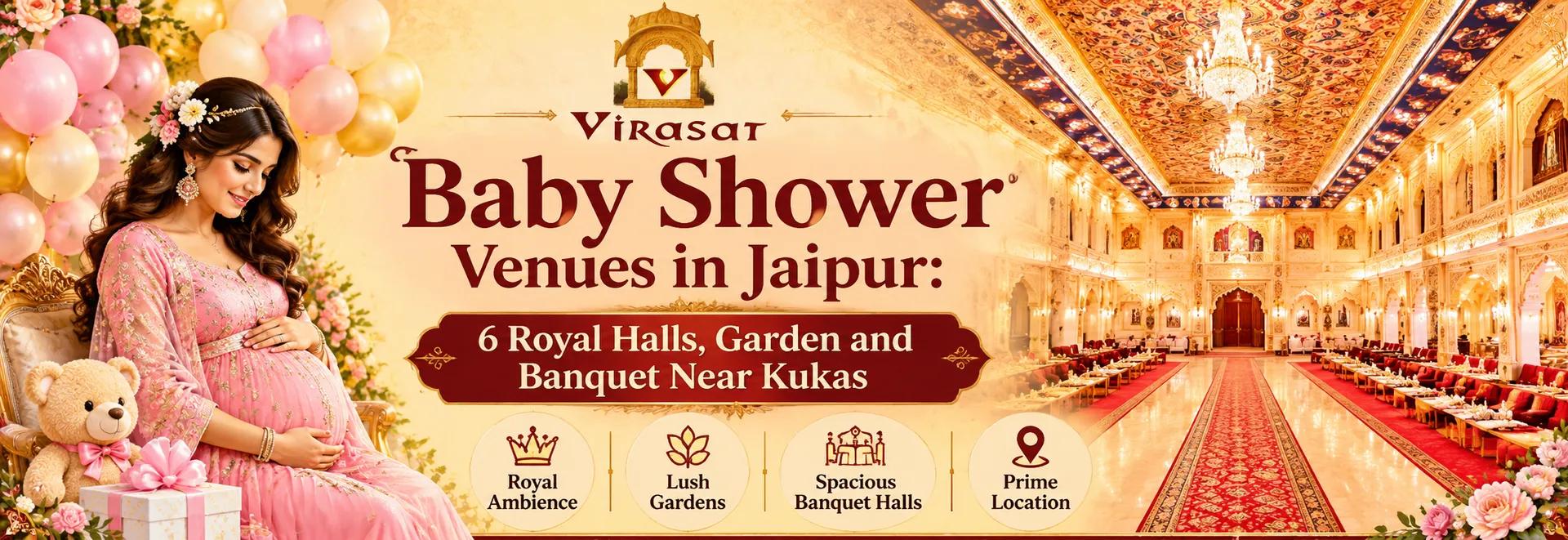
Baby Shower Venues in Jaipur: 6 Royal Halls, Garden and Banquet Near Kukas
Picture it: a red carpet, a tilak on the forehead, rose petals on the floor and a hall that glows like a palace. Your family walks in, the mother-to-be is welcomed like a rani, and the party has not even started. That is what a royal baby shower in Jaipur can feel like when the venue does half the work for you. The short version: If you are comparing baby shower venues in Jaipur and want something truly royal, Virasat Heritage Restaurant in Kukas gives you six distinct settings under one roof: four palace-style dining halls, a banquet hall and a garden lawn. Every plate is pure vegetarian, every guest gets a traditional welcome and folk culture is part of the evening. Pick the hall that matches your mood, book early and let the setting carry the theme.
Visit Virasat Heritage Restaurant
Experience the royal dining we write about.