Vegetarian and Jain Food in Jaipur: A Friendly, Complete Guide for Travellers
26 October 2026
Picture this. You have just landed in
Jaipur; you are hungry, and someone at the hotel says, 'Oh, you will love the
food here; it is a vegetarian paradise!' Wonderful. Then, at the first
restaurant, the waiter asks, 'Sir, normal ya Jain?' and suddenly you are not
sure what to say.
Don't worry. This guide is the friend you
wish you had at that table. It explains what the words on the menu actually
mean, which Rajasthani dishes are easiest to enjoy as a vegetarian or a Jain,
how to order without any stress and where the surprises hide.
The Quick Answer
Jaipur
is one of India's easiest cities for vegetarian and Jain travellers. Much of Rajasthani cuisine is vegetarian; many classic dishes can
be made without onion and garlic if you ask, and several restaurants offer a
Jain thali. The golden rule is simple: say 'Jain' (or 'no onion, no garlic, no
potato') at the start of the order, not at the end. At Virasat Heritage Restaurant in Kukas,
everything is 100% pure vegetarian, and you can request a Jain thali.
Virasat
First, Let's Decode the Words
India has a lot of 'vegetarians', and not
all of them eat the same way. Here is a cheat sheet.
Word
What
it usually means
What
to double-check
Vegetarian
No meat or fish; eggs vary
A restaurant may serve both veg and
non-veg
Pure veg
A restaurant that never serves meat, fish
or eggs
Whether egg-free baking is part of the
menu
Eggless
No eggs, often for cakes and desserts
Whether the kitchen uses eggs elsewhere
Vegan
No animal products at all, including
milk, ghee, curd and honey
Ghee and paneer are everywhere in
Rajasthan, so ask
Satvik
Simple, fresh food, often without onion
and garlic
Strictness varies from family to family
Jain
Strict vegetarian, no onion, garlic,
potato and other root vegetables, no honey
Rules vary a little by family and
tradition
According to Wikipedia's article on
Jain vegetarianism, Jain food excludes meat, fish, eggs, alcohol and honey,
and it also avoids root and underground vegetables such as potatoes, onions and
garlic, so that the whole plant is not uprooted and tiny organisms in the soil
are not harmed. Many Jains also follow chauvihar, which means not eating after
sunset. The same article notes that these limits pushed cooks in Gujarat and
Rajasthan to invent clever flavours without the usual bases.
One handy way to think about it: satvik usually means no onion and garlic,
and strict Jain food goes further and also leaves out potatoes and other root
vegetables.
Why Jaipur Is Such a Happy Place for Vegetarians
Rajasthan is a dry land, and traditional
kitchens learned to make magic from what lasts: lentils, gram flour, millets,
curd, dried berries and beans and plenty of ghee. That is why dal baati churma,
gatte ki sabzi and ker sangri, three of the state's most famous dishes, are
vegetarian.
To be honest, Rajasthan has a meat
tradition too. Laal maas, a fiery mutton curry, is famous in Rajput cuisine.
But in a city like Jaipur, you can eat extremely well without ever going near
it. For a deeper look at the cuisine, see the Rajasthani cuisine
entry on Wikipedia and our guide to traditional
vegetarian Rajasthani food.
Your Rajasthani Dish Cheat Sheet
Dish
Vegetarian?
Jain-friendly?
What
to ask
Dal baati churma
Yes
Usually
'Dal without onion and garlic tadka,
please'
Gatte ki sabzi
Yes
Often made Jain, a classic
'No onion, no garlic in the gravy'
Ker sangri
Yes
Often
Ask about the tadka and oil
Rajasthani kadhi
Yes
Often
'Without onion and garlic in the tadka'
Bajra roti and missi roti
Yes
Yes
Usually simple, with ghee or butter
Papad ki sabzi
Yes
Often
Ask about the gravy base
Pyaaz kachori
Yes
No
The filling is onion
Mirchi vada
Yes
Usually not
The filling is typically potato
Dal kachori
Yes
Maybe
Ask about the filling and the oil
Ghevar, malpua, moong dal halwa
Yes
Usually
Ask about silver leaf and toppings if you
care
Chaas and lassi
Yes
Practices vary
Some Jains avoid fermented foods, so
follow your own rules
1.Say it first. Tell the server before you
look at the menu: 'Jain food, please' or 'No onion, no garlic, no potato.'
2.Be specific. 'Jain' means different
things to different people, so list what you avoid. Include potato, ginger,
root vegetables and honey if they matter to you.
3.Ask about the tadka. Most surprises are
in the tempering, the final spice-and-oil step.
4.Ask about the kitchen. If you are
strict, ask whether the dish is cooked separately.
5.Say thank you. A smile goes a long way,
and kitchens remember polite guests.
Phrases
that work (English and Hinglish):
•'I eat Jain food. No onion, no
garlic, no potato.'
•'Pyaaz, lehsun aur aloo bilkul
nahi.'
•'Kya yeh Jain banaya ja sakta
hai?'
•'Is dish mein shahad (honey) ya
ande (eggs) to nahi hain?'
The Hidden-Ingredient Watchlist
A few things surprise even experienced
vegetarians.
•Onion and garlic in the base. Gravies,
dal tadkas and chutneys often start with them.
•Potato in snacks. Mirchi vada, samosas
and many fillings contain potato.
•Shared oil. Street stalls often fry
onion items and other snacks in the same oil.
•Honey. It sometimes appears in desserts,
dressings and drinks.
•Silver leaf (vark) on sweets. Some
strict vegetarians prefer to ask about it.
•Cheese. If you avoid animal rennet, ask
about the cheese in pizzas and pastas.
•Ghee, curd, paneer. Everywhere, and a
problem if you are vegan.
•Asafoetida (hing). A common flavour in
Jain cooking, used in place of onion and garlic.
Mind the Clock: The Sunset Rule
Many Jains do not eat after sunset. That
matters for planning, because sunset in Jaipur is as early as about 5:30 PM in
December and after 7 PM in summer. If you follow the rule, plan your main meal
at lunch or early evening, and check with the restaurant about timings in
advance. Virasat opens at 11 AM, which makes a late-morning or afternoon thali
easy to plan, and an early dinner works well in winter. Please ask the team
about your timings.
virasat
Where to Eat in Jaipur as a Vegetarian or Jain Traveller
Jain
bhojanshalas and temple kitchens. Near Jain temples
and pilgrimage sites, there are bhojanshalas that serve simple Jain meals,
usually before sunset. One local pilgrim's guide mentions meals at places such
as Sanganer and Padampura, but timings and prices change, so call ahead. See
this guide
to Jain temples in Jaipur if you are combining a temple visit with your
meals.
Rajasthani
thali restaurants. Many offer a Jain version on
request, so ask when you book.
Sweet
shops and snack stalls. Wonderful for kachori,
jalebi and lassi, but be careful about onion, potato and shared oil if you are
Jain.
Hotel
breakfasts. Most buffets have fruit, idli, poha and
parathas. Ask which items contain onion or potato.
Heritage
dinners. If you want a Rajasthani meal with a bit
of theatre, that is where Virasat comes in.
Eating at Virasat Heritage Restaurant
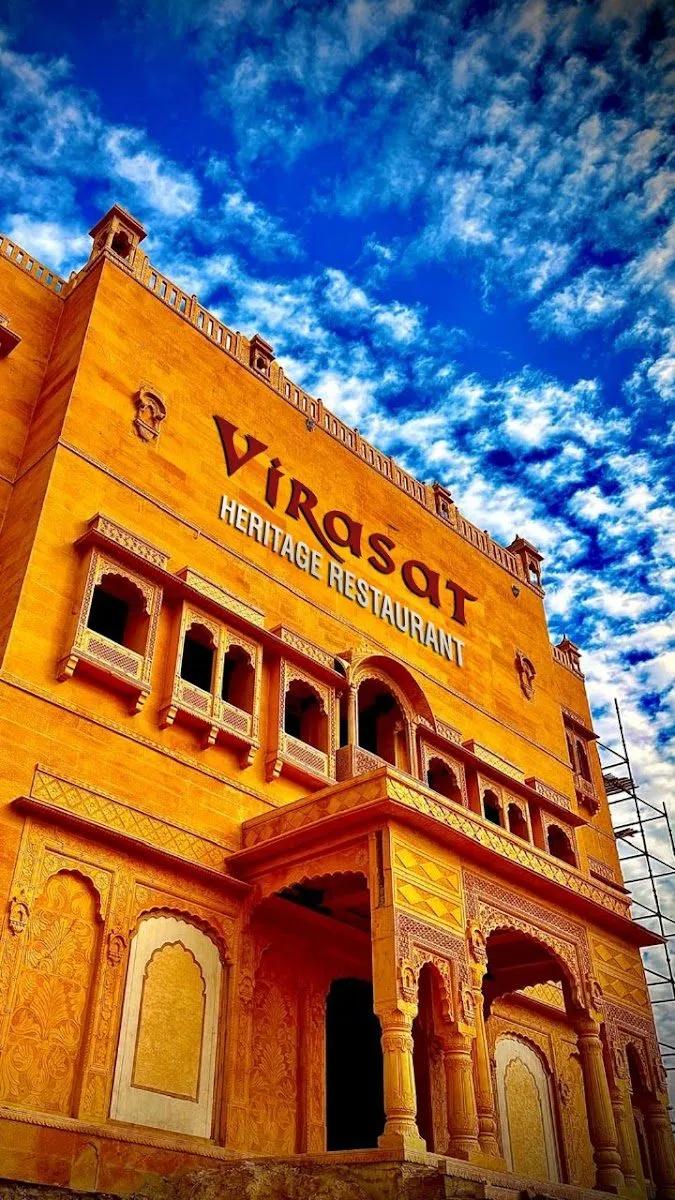
Virasat Heritage Restaurant
Everything at Virasat is 100% pure
vegetarian, which means you can order without checking every dish for meat,
fish or egg. The restaurant is on Delhi Road in Kukas, about 15 minutes from
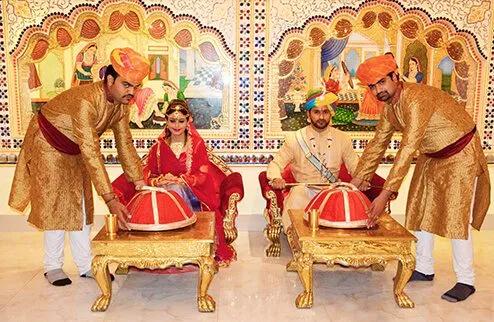
Amer Fort. You are welcomed with tilak, a garland and a Padharo Mhare Des
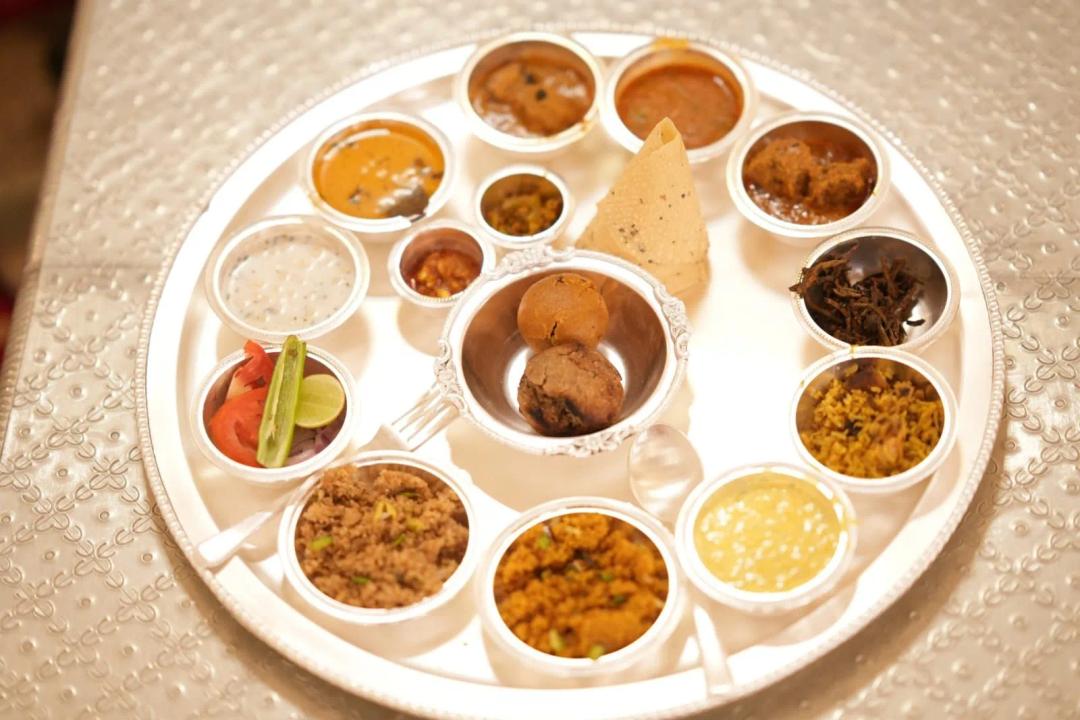
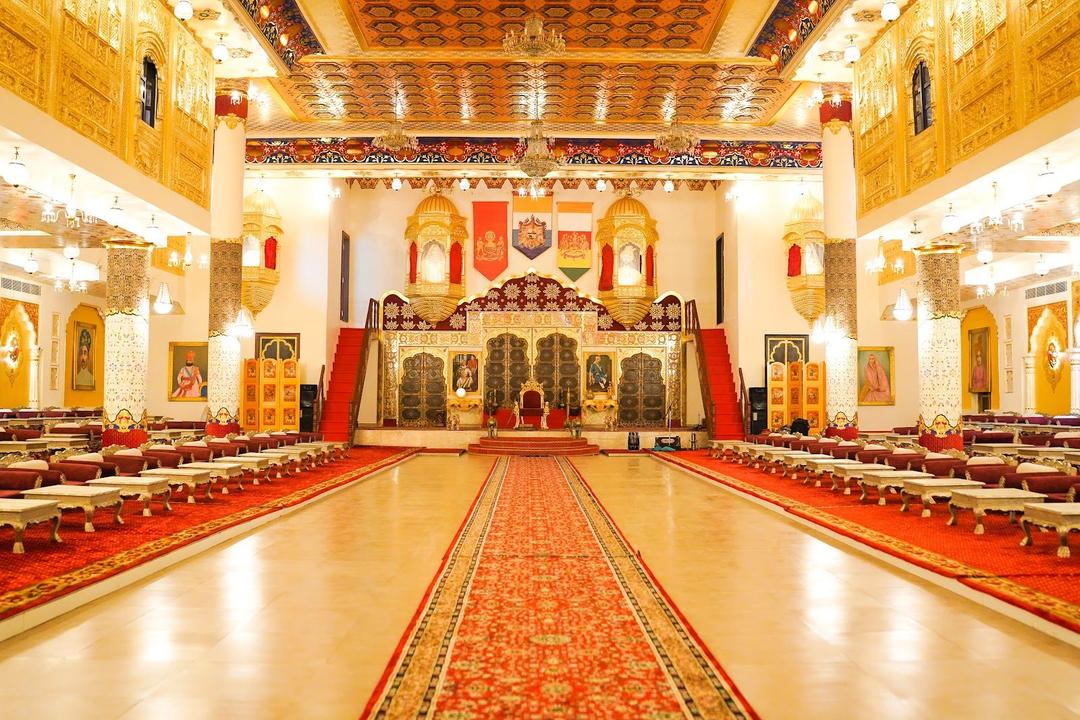
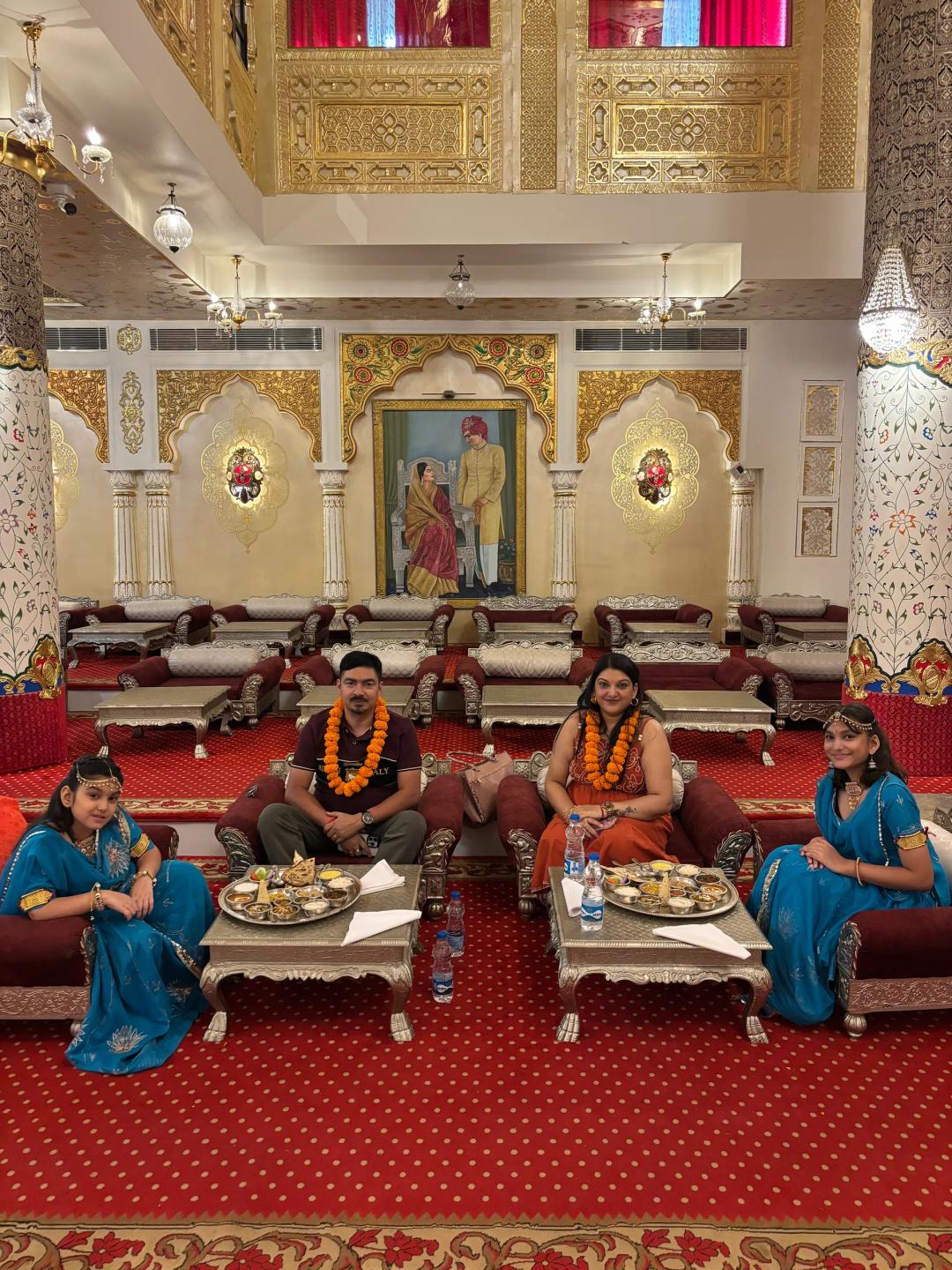
greeting, seated in a palace-style darbar hall and served an unlimited
Sampoorna Rajasthani Thali in brass, with live folk music and dance during
dinner service.
For
Jain guests: A Jain thali with no onion and no
garlic is available on request. Jain customs vary, so please tell the team
exactly what you avoid, such as potato, root vegetables or honey, and ask what
can be arranged. Mention it when you book, not when you sit down.
For
vegetarian guests: The thali brings dal baati
churma, gatte ki sabzi, ker sangri, kadhi, panchmel dal, bajra, missi and makki
rotis with white butter and lehsun chutney, rice or bajra khichdi, papad,
pickles, chutneys, chaas and sweets such as churma, moong dal halwa, malpua and
seasonal ghevar. See the Virasat menu
and our page on the pure
vegetarian restaurant in Jaipur. Items and availability change with the
season.
For
vegan guests: Traditional Rajasthani cooking uses
ghee, curd and paneer in many dishes, so please ask the team what can be made
without them.
•Address: Delhi Road, near Sai Baba
Temple, Kukas, Jaipur, Rajasthan 302028
•Hours: 11 AM to 11 PM, all days (please
confirm festival-day timings)
•Food: 100% pure vegetarian; Jain thali
on request
•Entertainment: Live folk music and dance
with dinner service
•Distance: About 15 minutes from Amer
Fort; roughly 20 km from Jaipur Junction railway station
•Approximate cost: Around ₹3,000 for two
(indicative; please confirm when you book)
•Phone: +91 95877 77817 and +91 73749
99951
Frequently Asked Questions
Q. Is
Jaipur good for vegetarians?
Ans. Yes. Much of
Rajasthani cuisine is vegetarian, and pure vegetarian restaurants are easy to
find.
Q.Can
I get Jain food in Jaipur?
Ans.Yes. Many restaurants
offer a Jain thali or Jain preparation on request. Say it at the start of your
order, and be specific about what you avoid.
Q.What
does Jain food exclude?
Ans.Jain food excludes meat,
fish, eggs, alcohol and honey, and avoids root vegetables such as potatoes,
onions and garlic. Many Jains also avoid eating after sunset.
Q.What
is the difference between Jain and satvik food?
Ans.Satvik food usually leaves out onion and garlic. Strict Jain food also leaves
out potatoes and other root vegetables.
Q.Which
Rajasthani dishes are easy to make Jain?
Ans.Dal baati
churma, gatte ki sabzi, ker sangri, kadhi, bajra roti and many sweets can be
prepared without onion and garlic. Please confirm each dish with the
restaurant.
Q.Is
pyaaz kachori Jain?
Ans.No. The filling is made with
onion.
Q.Is
Virasat pure vegetarian?
Ans.Yes. Everything is 100%
pure vegetarian, and a Jain thali is available on request.
Q.Does
Virasat have vegan options?
Ans.Rajasthani cooking uses
ghee, curd and paneer widely. Please ask the team what can be prepared without
them.
Q.Can
I eat before sunset at Virasat?
Ans.Virasat opens at 11
AM, so a lunch or afternoon visit is possible. Please confirm your timings in
advance.
Q.Do I
need to tell the restaurant in advance about Jain requirements?
Ans.Yes, it helps a lot. Mention it when you book and again on arrival.
Conclusion
Eating vegetarian or Jain in Jaipur is one
of the easiest and happiest food adventures in India, as long as you say what
you need clearly and early. Order a thali, ask about the tadka, plan your meals
around the sun if you follow that rule and let the city feed you with its
famous generosity.
Ready for a meal where everything is
vegetarian and the staff understands? Reserve your table at Virasat and
mention your Jain request, or call +91 95877 77817. If you have more questions,
see our FAQ.