Rajasthani Winter Food: 15 Warming Dishes to Eat in Jaipur This Season
Rajasthani winter food is built around bajra (pearl millet), ghee, jaggery, sesame seeds and edible gum: bajra roti with garlic chutney, bajra khichdi with ghee, warm bajra or gond raab, ker sangri, kachori and mirchi vada on a cold evening, and sweets such as gond ladoo, til ladoo, gajak, lapsi and moong dal halwa. In Jaipur the season runs from about November to February, with temperatures falling to around 9°C at night in December, and it is the best time of year to eat a full Rajasthani meal.
This guide
separates the dishes that are truly winter specialities from the ones eaten all
year, explains how each is eaten and tells you what to order if you are in
Jaipur this season, including what you can find at Virasat Heritage Restaurant in Kukas and
what you will have to look for elsewhere.
Why Rajasthani Food Changes in
Winter
Rajasthan is an
arid state, and traditional cooking relies on grains, lentils, gram flour,
curd, dried vegetables and ghee. When the cold arrives, kitchens shift: bajra
replaces wheat in many homes, jaggery replaces sugar, and sesame, gond (edible
gum), groundnuts and warming spices such as ginger, garlic and black pepper
become more prominent. These foods are traditionally regarded as warming and
energy-giving, which is why they are served when nights are cold. Please treat
this as culinary tradition, not medical advice, and speak to a doctor or
dietitian if you have a health condition or a restricted diet.
For the wider
story of the cuisine, see the Rajasthani cuisine
entry on Wikipedia, and our guides to traditional
vegetarian Rajasthani food and the taste of royal
Rajasthan.
Winter Food at a Glance
|
Dish |
What it is |
Winter-only or year-round? |
Where to try it |
|
Bajra roti
with lehsun chutney |
Thick pearl
millet flatbread, eaten with ghee and garlic chutney |
Year-round,
but a winter staple |
Rajasthani
restaurants, thalis, homes |
|
Bajra khichdi |
Pearl millet
cooked with lentils, served with a generous spoon of ghee |
Winter
favourite |
Rajasthani
restaurants and homes |
|
Bajra raab |
A warm
porridge-like drink of roasted bajra flour, ghee, jaggery and ajwain |
Winter |
Mostly home
kitchens |
|
Gond raab |
A warming
drink or breakfast of gond, ghee and jaggery |
Winter |
Mostly home
kitchens |
|
Ker sangri |
Dried desert
berries and beans cooked with spices |
Year-round,
often paired with bajra roti in winter |
Rajasthani
thalis |
|
Methi bajra
puri |
A fried bread
made with bajra flour and fresh fenugreek leaves |
Winter |
Homes, some
restaurants |
|
Rabodi |
A dish made
from dried buttermilk and bajra flour |
Often winter |
Homes |
|
Pyaaz kachori |
Flaky fried
pastry stuffed with spiced onion |
Year-round,
best on a cold evening |
Sweet shops
and snack stalls |
|
Mirchi vada |
Stuffed green
chilli fried in gram flour batter |
Year-round,
best on a cold evening |
Snack stalls,
restaurants |
|
Gond ladoo |
Edible gum,
wheat flour, ghee, dry fruits and jaggery |
Winter
tradition, often made in big batches in November |
Homes, sweet
shops |
|
Til ladoo and
chikki |
Sesame and
jaggery sweets |
Winter, linked
to Makar Sankranti |
Sweet shops,
homes |
|
Gajak |
Crisp sesame
and jaggery sweet |
Winter |
Sweet shops |
|
Lapsi |
A sweet
porridge-style dish made with broken wheat |
Winter |
Homes, some
sweet shops |
|
Moong dal
halwa |
Slow-roasted,
ghee-rich lentil dessert |
Winter
favourite, also served at festivals and weddings |
Rajasthani
thalis, sweet shops |
|
Gajar ka halwa |
Carrot
dessert, a North Indian winter favourite |
Winter |
Sweet shops,
restaurants |
One common mix-up: Ghevar
is Rajasthan's most famous sweet, but it is traditionally linked with Teej and
Raksha Bandhan, not winter. You may still find it in shops at certain times of
the year. See the Ghevar entry
on Wikipedia.
The Winter Dishes, Explained
1. Bajra Roti With Lehsun
Chutney
A thick, rustic
flatbread made of pearl millet flour, best eaten hot with a spoon of ghee or
white butter and a sharp garlic (lehsun) chutney. It is dense and filling, and
it pairs especially well with ker sangri, kadhi and gatte ki sabzi.
2. Bajra Khichdi
Soft, comforting
and served with a generous spoonful of ghee. In many homes, a hot bowl of bajra
khichdi is the first meal people reach for when the temperature falls.
3. Bajra Raab and Gond Raab
Raab is a
Rajasthani warming drink or porridge, made from roasted flour (bajra, makki or
wheat) or gond, with ghee and jaggery. It is thin enough to drink and rich
enough to eat for breakfast. It is more often a home preparation than a
restaurant item, so ask local families or small eateries if you want to try it.
4. Ker Sangri
Ker (small dried
berries) and sangri (long beans from the khejri tree) are foraged in the desert
and cooked with spices. The result is earthy and tangy, and it is a winter
favourite with bajra roti.
5. Methi Bajra Puri
A puffed, fried
bread made with pearl millet flour and fresh fenugreek leaves. The slight
bitterness of methi balances the earthy bajra.
6. Rabodi
Made from dried
buttermilk and bajra flour, rabodi is cooked into a thick gravy and eaten with
bajra or makki roti.
7. Pyaaz Kachori and Mirchi
Vada
These are
Jaipur's best-known street snacks, and they taste better in cold weather. Eat
them hot, with tamarind or mint chutney and a glass of tea. Pyaaz kachori is
spicy-sweet and flaky, while mirchi vada is crisp and stuffed with potato. Read
about them in our list of the top
10 must-try Rajasthani dishes in Jaipur.
8. Gond Ladoo
The classic
Rajasthani winter ladoo, made with edible gum fried in ghee, whole wheat flour,
dry fruits and jaggery. Families often make it in big batches in November and
eat one a day through the cold months.
9. Til Ladoo, Chikki and Gajak
Sesame and
jaggery sweets are made across India around Makar Sankranti in mid-January. In
Rajasthan, gajak, a crisp sesame-and-jaggery sweet, is especially popular.
10. Lapsi
A sweet made
from broken wheat cooked in ghee and jaggery, often served at festivals and
family occasions in winter.
11. Moong Dal Halwa
A slow-roasted,
ghee-rich dessert that appears on festive and wedding menus and is a winter
favourite. It is part of the thali dessert selection at Virasat.
12. Gajar ka Halwa
A North Indian
winter dessert that is also widely eaten in Jaipur's sweet shops when red
carrots are in season.
13. Dal Baati Churma
Strictly a
year-round dish, but a winter meal of crisp baati, hot dal and sweet churma in
ghee is hard to beat. See our guide to dal
baati churma.
14. Rajasthani Kadhi
A tangy
curd-and-besan curry that pairs with bajra roti and khichdi, and a staple of
any winter thali.
15. Masala Chaas and Chai
Buy a hot cup of
chai in the morning and chaas with your thali, since the spices and the
sourness help cut through the richness of a ghee-heavy meal.
Build a Warming Rajasthani
Thali
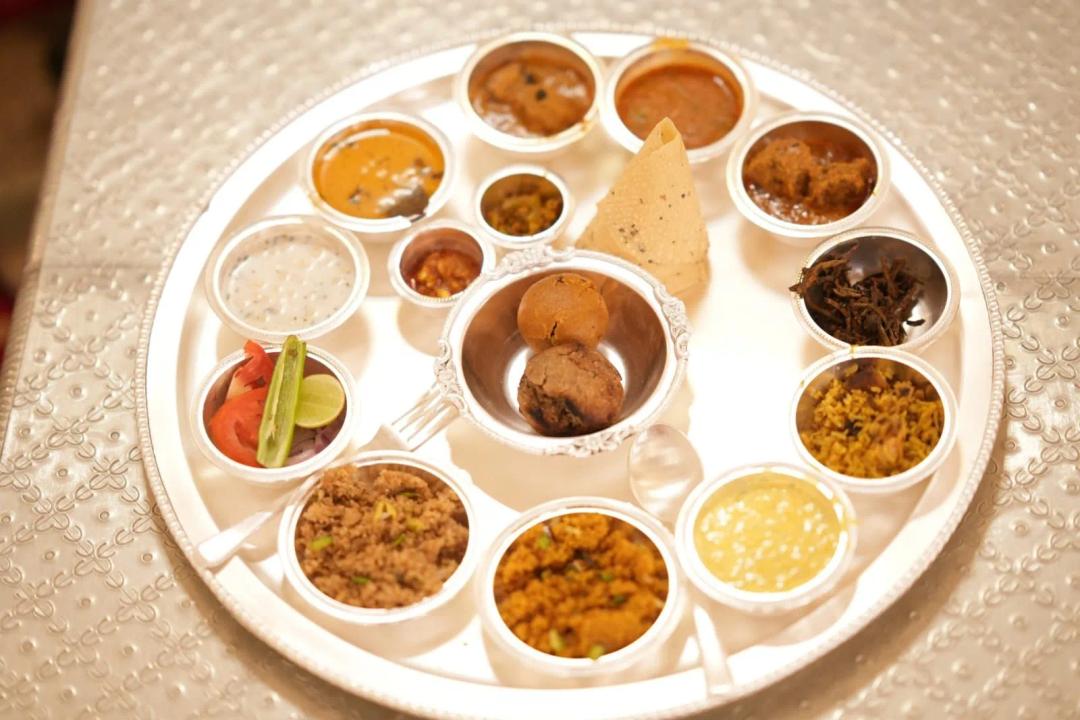
A winter plate
usually follows a simple pattern. Choose one item from each group.
|
Group |
Pick |
|
Bread |
Bajra roti
with ghee, or missi roti |
|
Main |
Ker sangri,
gatte ki sabzi or dal baati |
|
Comfort |
Kadhi or bajra
khichdi |
|
Sharp |
Lehsun chutney
and pickles |
|
Sweet |
Churma, moong
dal halwa or malpua |
|
Drink |
Masala chaas,
or chai afterwards |
For a full
breakdown of each item, read our guide to the Rajasthani
thali in Jaipur.
Where to Eat Rajasthani Winter
Food in Jaipur
•
Snack stalls and sweet shops: For pyaaz
kachori, mirchi vada, jalebi, gajak, til sweets and seasonal halwa.
•
Home kitchens: For raab, gond ladoo and
many winter-only dishes. Ask local friends or homestays if they can share a
meal.
•
Rajasthani restaurants and thalis: For a
full meal in one sitting.
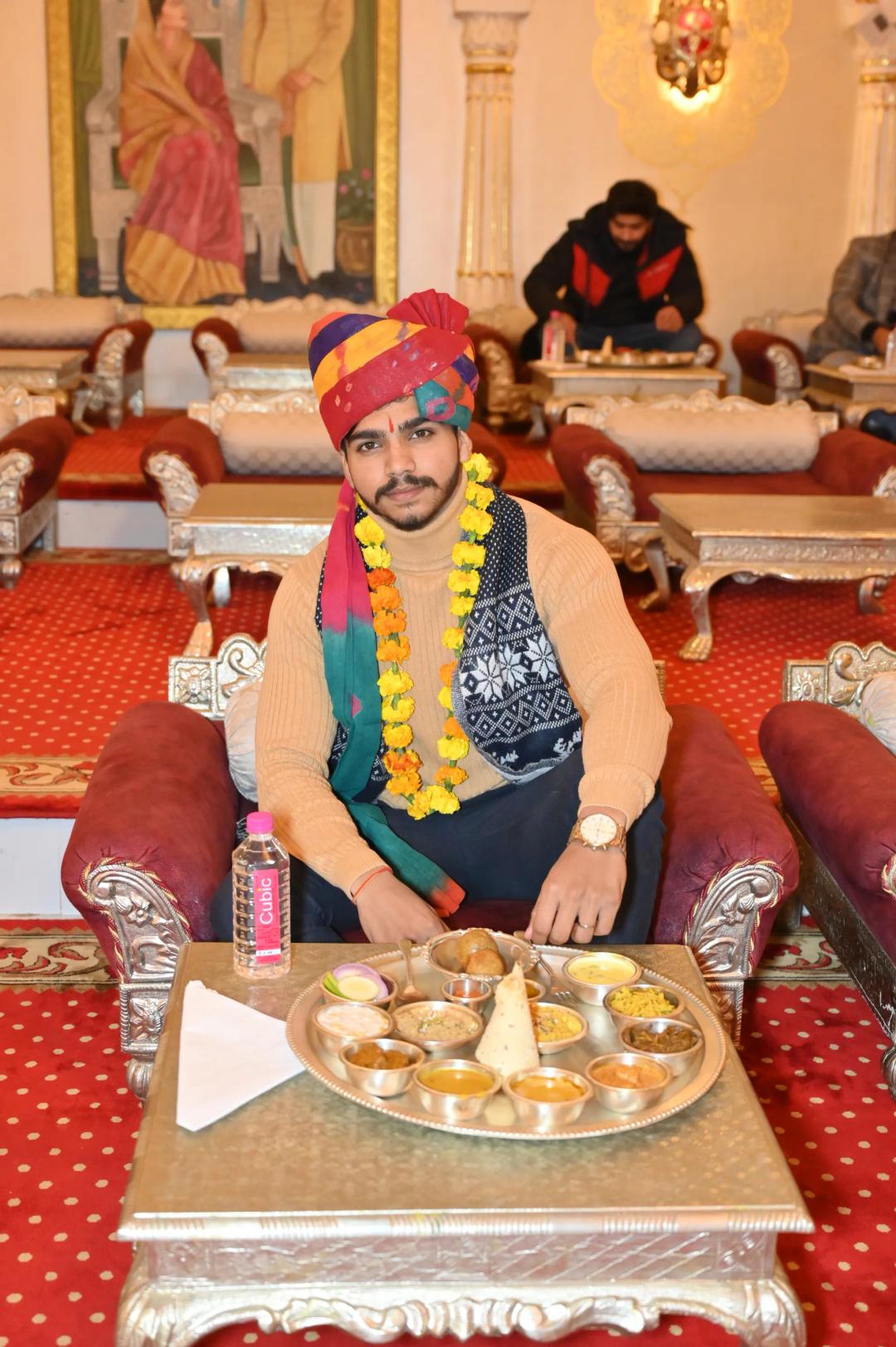
At Virasat Heritage Restaurant, you can eat a full Rajasthani winter meal in a darbar hall. The
unlimited Sampoorna Rajasthani Thali includes dal baati churma, gatte ki sabzi,
ker sangri, kadhi, panchmel dal, bajra, missi and makki rotis with white butter
and lehsun chutney, bajra khichdi, papad, pickles, chutneys, chaas and sweets
such as churma, moong dal halwa, malpua and seasonal ghevar. The à la carte
list adds pyaaz kachori and mirchi vada. Items and availability change with the
season, so see the Virasat menu
and ask when you book. Virasat does not list raab, gond ladoo or gajak on its
regular menu, so look for those in homes and sweet shops.
Everything at
Virasat is 100% pure vegetarian, and a Jain thali is available on request. Read
about our pure
vegetarian restaurant in Jaipur and our Rajasthani
restaurant in Jaipur.
A Rajasthani Food Calendar for
the Cold Months
|
Time |
What is happening |
What to eat |
|
November |
The first cold
days; many homes start their winter batches |
Gond ladoo,
bajra khichdi, bajra roti |
|
December |
Christmas week
and peak tourist season |
A Rajasthani
thali, kachori and mirchi vada on cold evenings |
|
Late December |
New Year week |
A festive
dinner; see our guide to a New Year
Eve dinner in Jaipur |
|
Mid-January |
Makar
Sankranti |
Til-gud
sweets, til ladoo, gajak |
|
February |
The end of
winter |
Kachori, halwa
and the last of the cold-weather dishes |
If you are
visiting at Christmas, see our guides to a Christmas
dinner in Jaipur, the Christmas
holidays itinerary for Jaipur and the Christmas
to New Year 7-day plan. For the best months to travel, see the best time to visit
Jaipur.
Tips for Eating Winter Food in
Jaipur
•
Expect ghee. Winter food is rich, so
share dishes and eat slowly.
•
Ask about spice. Garlic chutney and
chilli can be sharp. Ask for a milder version if you prefer.
•
Eat it hot. Kachori, vada and bajra roti
are at their best straight from the stove.
•
Drink warm. Chai and chaas are a good
balance to heavy dishes.
•
Mention dietary needs. If you follow a
Jain diet or have allergies, tell the restaurant when you book.
•
Book dinner early in December. Peak
season fills up quickly.
Virasat Quick Facts
•
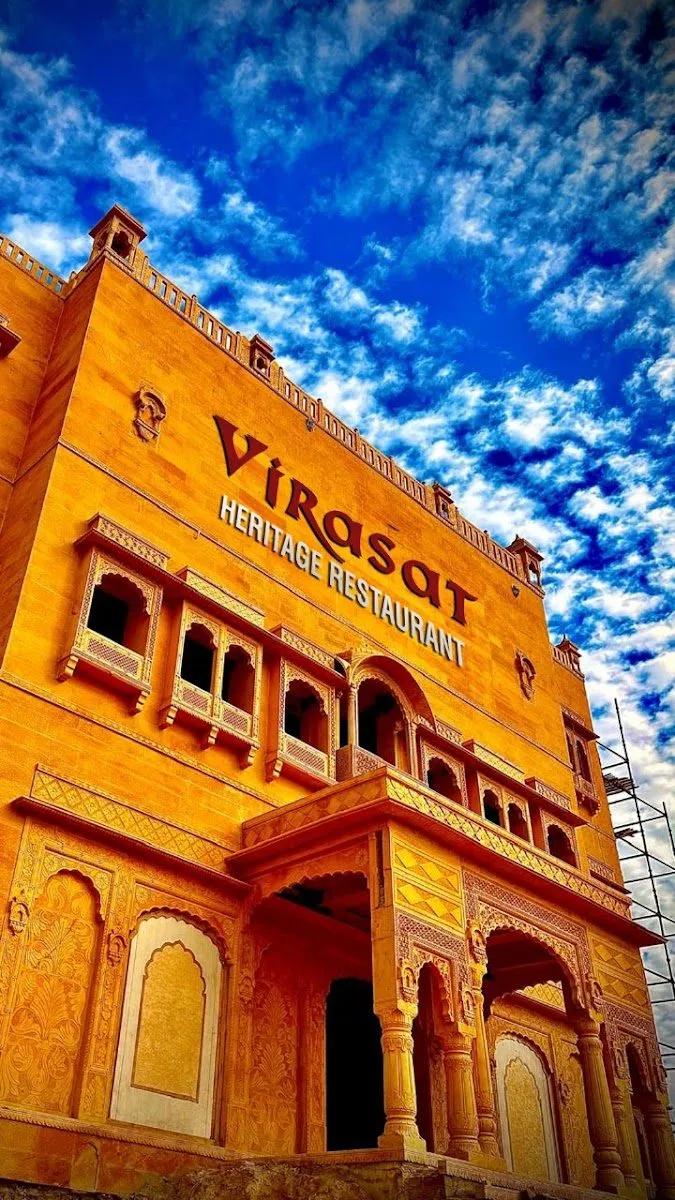
Name: Virasat Heritage Restaurant
(Virasat Jaipur)
•
Address: Delhi Road, near Sai Baba
Temple, Kukas, Jaipur, Rajasthan 302028
•
Hours: 11 AM to 11 PM, all days (please
confirm festival-day timings)
•
Food: 100% pure vegetarian; Jain thali
on request
•
Entertainment: Live folk music and dance
with dinner service
•
Distance: About 15 minutes from Amer
Fort; roughly 20 km from Jaipur Junction railway station
•
Approximate cost: Around ₹3,000 for two
(indicative; please confirm when you book)
•
Phone: +91 95877 77817 and +91 73749
99951
Reserve a table, or see our page
for a restaurant
in Kukas. Prices are listed at the restaurant and on the booking page.
Frequently Asked Questions
What is Rajasthani winter food?
It is food built around bajra (pearl millet), ghee, jaggery, sesame
and edible gum, such as bajra roti, bajra khichdi, raab, gond ladoo, til sweets
and gajak.
Which grain do Rajasthanis eat in winter?
Bajra (pearl millet) is the classic winter grain in Rajasthan,
eaten as roti, khichdi and raab.
What is raab?
Raab is a
warm porridge-like drink made from roasted flour (such as bajra, makki or
wheat) or gond, cooked with ghee and jaggery. It is a traditional winter
breakfast.
What is gond ladoo?
A
winter ladoo made with edible gum, whole wheat flour, ghee, dry fruits and
jaggery. Many families make it in November.
Is ghevar a winter sweet?
No. Ghevar is traditionally associated with Teej and Raksha Bandhan, although
you may see it at other times of the year.
What should I eat in Jaipur in winter?
Try a Rajasthani thali with bajra roti, ker sangri and kadhi, snack
on pyaaz kachori and mirchi vada, and end with moong dal halwa, gajak or a til
sweet.
Does Virasat serve bajra roti and bajra khichdi?
Yes, bajra roti with lehsun chutney and bajra khichdi are part of
the Rajasthani menu, and the thali also includes ker sangri and kadhi.
Availability changes by season, so please ask when you book.
Is Rajasthani food spicy?
It can be, especially garlic chutney and chilli dishes, but many dishes are
mild. Ask your server for your preferred spice level.
Is Rajasthani winter food vegetarian?
Most of it is, and Virasat is 100% pure vegetarian, with a Jain
thali available on request.
Where can I try raab and gond ladoo in Jaipur?
They are mostly home preparations and sweet-shop items. Ask local
families, homestays and traditional sweet shops. They are not on Virasat's
regular menu.
Conclusion
Rajasthani
winter food is simple, warm and generous: a hot bajra roti with a spoon of
ghee, a spoonful of ker sangri, a bowl of kadhi and something sweet to finish.
Plan a full thali dinner in Jaipur this season, and look for the small,
seasonal things (gond ladoo, raab, gajak) in homes and sweet shops along the
way.
Reserve your table at Virasat or call +91 95877 77817 to enjoy a warm Rajasthani winter dinner.
Related reading
Eco-Friendly Diwali in Jaipur 2026: 12 Green Ideas, a 5-Day Plan and a Royal Diwali Dinner
Diwali 2026 falls on Sunday, 8 November, with Dhanteras on Friday, 6 November. An eco-friendly Diwali in Jaipur means clay diyas instead of plastic lights, natural rangoli, handmade local gifts, folk music instead of loud firecrackers and a festive meal that does not create a mountain of waste. If you would rather spend the evening at a table than in a kitchen, Virasat Heritage Restaurant in Kukas offers a pure vegetarian Rajasthani Diwali dinner in palace-style halls with live folk culture. Jaipur does Diwali better than most cities. The old bazaars glow, the sweet shops run out of mawa kachori by noon and every terrace seems to have its own row of lamps. The one thing the city does not need more of is smoke, noise and plastic. This guide shows you how to keep every bit of the glow and cut most of the mess.
Amer Fort Light and Sound Show: Timings, Tickets and a Dinner Plan
The Amer Fort light and sound show runs every evening below the fort, facing Maota Lake, in two shows: English first, Hindi second. From October to February the English show starts at 6:30 PM and the Hindi show at 7:30 PM, and each lasts about 50 to 55 minutes. Tickets are separate from the fort entry ticket. Plan dinner for after the show, and if you want a proper Rajasthani meal, Virasat Heritage Restaurant is a pure vegetarian restaurant near Amer Fort, about twenty minutes away in Kukas and open until 11 PM. Most people see Amer Fort in daylight, squinting at the sandstone and dodging selfie sticks. The evening version is a different animal: the crowds thin out, the walls glow gold and the story of the Kachwaha rulers is told in light and music on the fort's own face. It is one of the few things in Jaipur that works equally well for couples, families and solo travellers.
Baby Shower Venues in Jaipur: 6 Royal Halls, Garden and Banquet Near Kukas
Picture it: a red carpet, a tilak on the forehead, rose petals on the floor and a hall that glows like a palace. Your family walks in, the mother-to-be is welcomed like a rani, and the party has not even started. That is what a royal baby shower in Jaipur can feel like when the venue does half the work for you. The short version: If you are comparing baby shower venues in Jaipur and want something truly royal, Virasat Heritage Restaurant in Kukas gives you six distinct settings under one roof: four palace-style dining halls, a banquet hall and a garden lawn. Every plate is pure vegetarian, every guest gets a traditional welcome and folk culture is part of the evening. Pick the hall that matches your mood, book early and let the setting carry the theme.
Visit Virasat Heritage Restaurant
Experience the royal dining we write about.