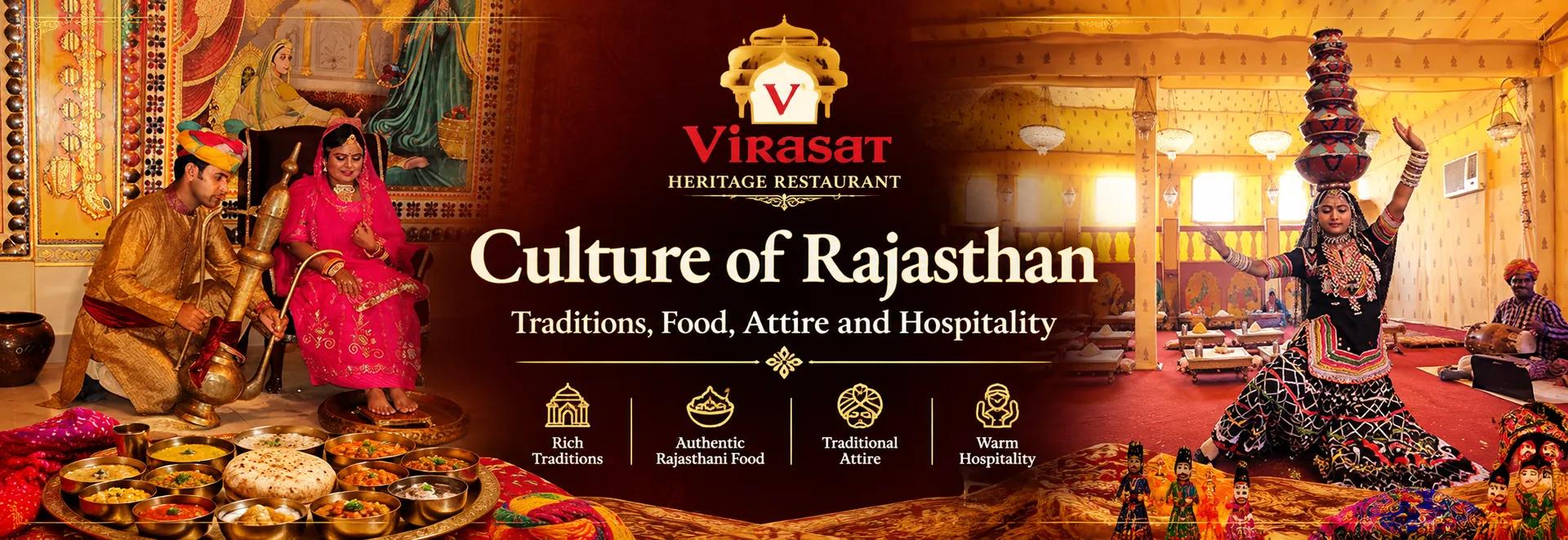
Culture of Rajasthan: Traditions, Food, Attire and Hospitality
An Introduction to the Culture
of Rajasthan
The culture of
Rajasthan is the way of life of India's desert and Aravalli heartland: royal
Rajput and Marwari heritage, a cuisine built for dry weather, bright turbans
and ghagras, folk music kept alive by hereditary musicians, festivals such as
Teej, Gangaur and Pushkar Fair, and a guest-first code of hospitality known as
Atithi Devo Bhava.
Geography
explains most of it. With little water, long summers and trade caravans
crossing the Thar, communities learned to cook with ghee and gram flour instead
of fresh vegetables, wear colours that stand out against sand, and treat every
traveller as someone to feed and protect. That practical logic is why
Rajasthani culture feels so consistent, whether you meet it in a Jodhpur lane,
a Jaisalmer haveli or a Jaipur kitchen.
It also has
global recognition. The walled city of Jaipur became a UNESCO World Heritage
Site in 2019, and the Kalbeliya songs and dances of Rajasthan joined UNESCO's
list of intangible heritage in 2010. But most of what makes the state special
is not a monument. It is what people do every day, and that is what this guide
covers: food, dress, music, dance, festivals, crafts, language and hospitality,
followed by practical ways to experience it all in Jaipur. Last updated October
2026.
The Culture of Rajasthan at a
Glance
|
Element |
What defines it |
Typical examples |
|
Food |
Dry-climate cooking with ghee, gram
flour, lentils and dairy |
Dal baati churma, gatte ki sabzi, ker
sangri, |
|
Dress |
Bright, layered clothing that varies by
region and community |
Ghagra choli odhni, angrakha, safa
(turban), bandhani |
|
Music |
Oral tradition kept by hereditary
musicians |
Manganiyar and Langa singers, sarangi,
kamaicha, khartal |
|
Dance |
Community-based performance |
Ghoomar, Kalbeliya, Kachchhi Ghodi,
Chari, Terah Taali |
|
Festivals |
Seasonal, devotional and trade-linked |
Teej, Gangaur, Pushkar Fair, Holi, Makar
Sankranti |
|
Crafts |
Textile, metal, clay and miniature art |
Block printing, blue pottery, Phad
painting, lac bangles |
|
Hospitality |
Guest treated as a blessing |
Water first, shared thali, turban or
odhni as a gift |
Food and Dining Traditions
What is
Rajasthani food known for? It is known for rich, long-lasting dishes made with
ghee, gram flour, lentils, millets, dairy and dried desert produce such as ker
and sangri. The cuisine grew out of scarcity, so every ingredient is made to
last and every meal is made to be shared.
The classics are
dal baati churma (baked wheat balls with spiced lentils and a sweet crumble),
gatte ki sabzi (gram flour dumplings in yoghurt gravy), ker sangri (desert
berries and beans), bajra roti with garlic chutney and laal maas, the fiery
mutton curry of Rajput hunting kitchens, traditionally coloured with Mathania
chillies. Each city adds its own signature: pyaaz kachori and ghewar in Jaipur,
mirchi vada and mawa kachori in Jodhpur, bhujia in Bikaner. Millets like bajra
and jowar, once seen as village food, are now back on menus as people look for
local, slow-digesting grains.
Vegetarian heritage
A large part of
Rajasthani cooking is vegetarian, shaped by Jain and Vaishnav communities and
the Marwari trading families who travelled for months with food that did not
spoil. In place of water, cooks used milk, buttermilk and ghee. Gram flour
replaced fresh vegetables, and spices such as asafoetida and dried mango powder
added depth. This is why a plate of gatte or kadhi can feel as satisfying as
any meat dish. To see how these recipes are still prepared in a heritage
kitchen, read about Rajasthani
food traditions.
Eating on the floor
Traditional
dining in Rajasthan is a social ritual. Guests sit on the floor in a row, a
thali or leaf plate is set before each person, and the host walks along serving
each dish in turn. Hands are used instead of cutlery, ghee is poured over the
baati, and a second helping is offered whether you asked or not. Meals usually
end with something sweet and a glass of buttermilk.
The point of the
ritual is not speed. It is attention. Someone is watching your plate, and that
care is the first lesson in Rajasthani hospitality.
Traditional Dress and Jewellery
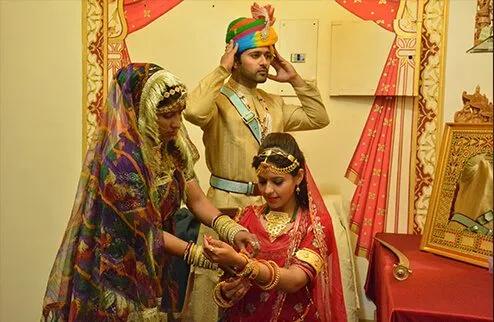
What is the traditional dress of Rajasthan? Women wear a ghagra (long skirt), choli
(blouse) and odhni (long scarf), while men wear an angrakha or kurta with a
dhoti or churidar and a turban called a safa or pagri. The colours are
deliberate: saturated reds, yellows, oranges and pinks stand out against a pale
desert and suit festive occasions.
Textiles matter
as much as the silhouette. Bandhani (tie-dye) and leheriya (wave-pattern
dyeing, linked with the monsoon) are worn for Teej and weddings, block-printed
cottons from Sanganer and Bagru suit everyday wear, and mirror work, gota patti
and zari embroidery add weight to bridal clothing. A popular local saying notes
that water changes every few kos and speech every few more; clothing follows
the same rule, and a trained eye can place a person's region and community from
their turban or odhni.
The turban
deserves its own mention. Its colour, wrap and size can signal region, occasion
and standing, and offering one to a guest is a mark of honour. Jodhpuri coats
and bandhgala jackets, now common in formal Indian menswear, began in
Rajasthan's royal courts.
Jewellery
Jaipur is known
for gemstones, kundan and meenakari, while rural and tribal communities favour
heavy silver. Traditional pieces include the borla (forehead ornament), nath
(nose ring), bajuband (armlet), payal (anklet) and stacks of lac bangles from
Jaipur's bazaars. Thewa, a fine technique that fuses gold onto coloured glass,
comes from Pratapgarh. Many pieces are tied to marriage, protection or social
status, which is why jewellery is worn for meaning as much as for decoration.
Folk Music and Dance
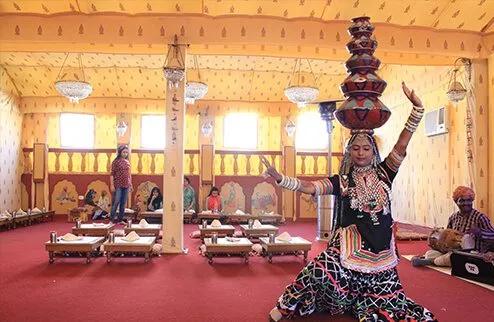
What are the
famous folk dances of Rajasthan? The best known are Ghoomar, Kalbeliya,
Kachchhi Ghodi, Chari, Terah Taali and Bhavai, each tied to a community, an
occasion or a livelihood. Together with folk music, they are the most visible
part of the culture of Rajasthan.
Music here is a
family inheritance. The Manganiyars and Langas of the western desert are
hereditary musicians who learned songs orally, often as court and patron-family
performers, and their repertoire travels from Jaisalmer and Barmer to concert
stages abroad. Their instruments are distinctive: the kamaicha and sarangi
(bowed strings), algoza (double flute), dholak and nagara (drums) and the
khartal, a pair of wooden clappers played at remarkable speed. The Rajasthan
International Folk Festival at Mehrangarh Fort in Jodhpur, usually held in
autumn, is the best-known stage for these artists.
The dances are
just as varied:
•
Ghoomar: women in wide ghagras
spin in slow circles, a dance linked with weddings and festivals
•
Kalbeliya: sinuous,
snake-inspired movement in black costumes, inscribed by UNESCO in 2010
•
Kachchhi Ghodi: dancers in
horse costumes mimic a ride, often seen at celebrations
•
Chari and Terah Taali:
balancing brass pots on the head, or striking cymbals tied to the body
•
Kathputli: not a dance but a
puppet tradition, with hand-carved figures and folk narration
A live
performance with dinner is one of the simplest ways to meet Rajasthani folk
music without leaving Jaipur. Check the programme in advance, since the format
changes by venue and season.
Festivals and Fairs
Which are the
main festivals of Rajasthan? Teej, Gangaur and Pushkar Fair lead the list,
along with Holi, Diwali, Makar Sankranti and regional events such as the Desert
Festival in Jaisalmer and the Camel Festival in Bikaner. Most follow the lunar
calendar, so exact dates change every year; confirm them on the official
Rajasthan Tourism calendar before planning.
|
Festival |
Usually
held |
Where
it is best seen |
What
to expect |
|
Makar Sankranti |
January |
Jaipur |
Kite flying from rooftops, til-gud sweets |
|
Camel Festival |
January |
Bikaner |
Camel races, decorated animals, folk acts |
|
Desert Festival |
February |
Jaisalmer |
Turban tying, folk music, desert sports |
|
Gangaur |
March to April |
Jaipur, Udaipur |
Processions, Gauri idols, women in
festive dress |
|
Teej |
July to August |
Jaipur |
Green clothes, swings, henna, ghevar |
|
Pushkar Fair |
October to November |
Pushkar |
Livestock trade, folk acts, lake rituals |
Teej, Gangaur, Pushkar
Teej welcomes
the monsoon. Women dress in green, apply henna, sing on flower-decked swings
and share sweets such as ghevar. Jaipur's Teej procession, with decorated
palanquins and folk artists, is a long-standing city event.
Gangaur arrives
in spring and honours Goddess Gauri (Parvati). Married women pray for their
husbands and unmarried girls for a good partner, while richly dressed Gauri
idols are carried through the streets in procession.
Pushkar Fair
began as a livestock market near the sacred Pushkar lake and still draws camel
and horse traders. Today it is also a cultural gathering with music, sport and
ritual bathing, and it is the clearest place to see rural and spiritual
Rajasthan meet. Across all of these, festivals work as the state's calendar of
food, colour and community.
Art, Handicrafts and Language
Crafts are where
the culture of Rajasthan becomes something you can hold. Sanganer and Bagru are
known for hand block printing, Jaipur for blue pottery and lac bangles,
Bhilwara and Shahpura for Phad scroll painting, Nathdwara for Pichwai paintings
and Kishangarh for miniature art, including the famous Bani Thani portrait
style. Jaipur's mojari and jutti footwear, Makrana marble work and Pratapgarh
thewa jewellery complete the picture. Most of these are family trades that pass
from parent to child.
Language is just
as layered. Hindi is the official language, while Rajasthani is spoken in
dialects such as Marwari, Mewari, Dhundhari (around Jaipur) and Hadoti. A few
phrases go a long way: Khamma Ghani is a respectful greeting, and Padharo Mhare
Des is the classic welcome that means "come to my land."
Rajasthani Hospitality: Atithi
Devo Bhava
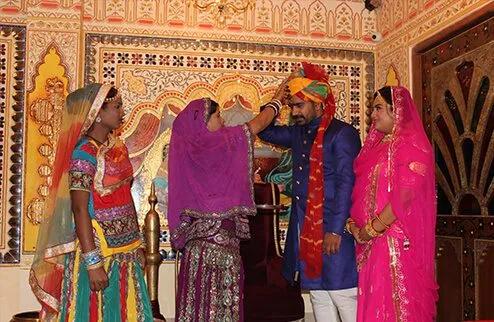
What does Atithi
Devo Bhava mean? It is a Sanskrit phrase, from the Taittiriya Upanishad,
meaning "the guest is equal to God." In Rajasthan it is not a slogan
but a habit, and it is the reason hospitality sits at the centre of the culture
of Rajasthan.
The roots are
practical. In a desert, a traveller without water or shelter was in real
danger, so offering both was a duty and a matter of honour. That instinct
survives in everyday gestures:
•
Water is offered the moment you
sit down, before any question is asked
•
A tilak, garland or rose-petal
welcome greets guests at weddings and heritage venues
•
The host serves each dish
personally and insists on one more helping
•
A turban or odhni is presented
to honour a guest
•
Farewells come with sweets,
blessings and an invitation to return
Royal courts
turned this into a ceremony. A darbar welcomed guests with music, formal seating
and elaborate meals, and heritage hotels and restaurants in Jaipur still borrow
that style. Ordinary families keep the same custom in a simpler form, and you
are likely to find both versions equally sincere.
Experience Rajasthani Culture
in Jaipur
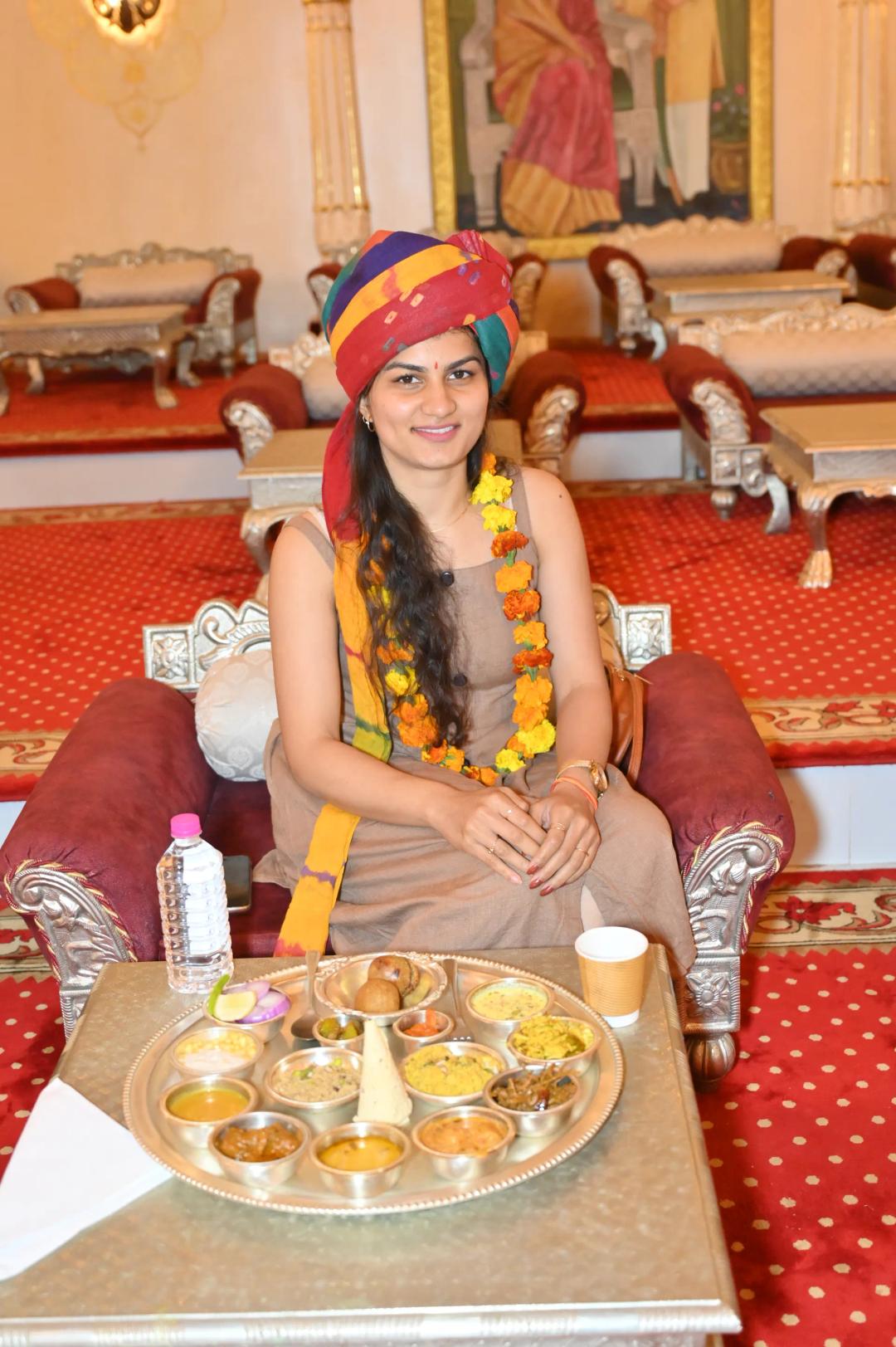
Where can you
experience Rajasthani culture in Jaipur? In the old city's bazaars, at
block-printing workshops in Sanganer, at heritage dining venues that serve
traditional thalis with folk music, and at festivals such as Teej, Gangaur and
Makar Sankranti. A one-day plan covers most of it:
1.
Morning: walk Johari Bazaar for
jewellery and Bapu Bazaar for bandhani and juttis
2.
Midday: visit Sanganer to watch
hand block printing and blue pottery being made
3.
Afternoon: see the walled city
and its palaces, a UNESCO-listed urban plan
4.
Evening: end with a traditional
meal and live folk music at a heritage restaurant
For that last
step, Virasat Heritage Restaurant is
built around the idea of living heritage, where the setting, the service and
the menu reflect the traditions described above. You can read more about Virasat and how it approaches
Rajasthani dining.
A dinner in the darbar hall
One of the best
ways to feel the royal side of Rajasthani culture is to dine somewhere that
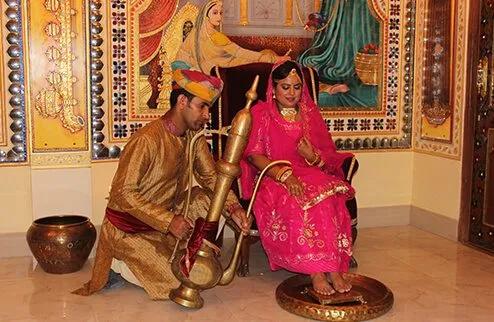
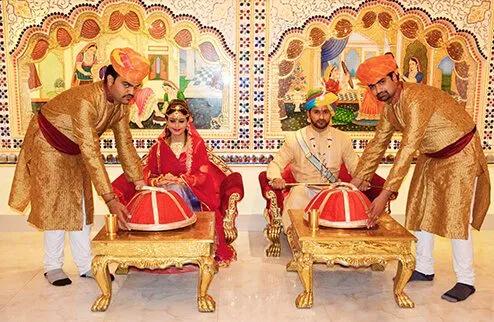
recalls a court. Virasat's Swarn Mahal offers a royal welcome and darbar
hall setting for family dinners and celebrations, where food, music, dress
and the Atithi Devo Bhava spirit come together at one table.
Living heritage for students
Traditions are
easier to remember when children experience them. The Royal Educational Trip
gives school groups a first-hand introduction to Rajasthani food, etiquette and
heritage, so classroom lessons on history and culture become something students
can see and taste.
FAQs
What is the culture of
Rajasthan known for?
The culture of
Rajasthan is known for royal Rajput and Marwari heritage, colourful dress and
turbans, dry-climate and vegetarian cuisine, folk music and dance, vibrant
festivals and a strong tradition of hospitality called Atithi Devo Bhava.
What is the traditional food of
Rajasthan?
Dal baati
churma, gatte ki sabzi, ker sangri, laal maas, bajra roti, pyaaz kachori and
ghevar are the best known. Most dishes rely on ghee, gram flour, lentils and
dairy because fresh produce and water were scarce.
What is the traditional dress
of Rajasthan?
Women wear a
ghagra, choli and odhni, usually in bandhani, leheriya or block-printed fabric.
Men wear an angrakha or kurta with a dhoti or churidar and a safa (turban).
Colours and wraps vary by region and community.
What are the famous folk dances
of Rajasthan?
Ghoomar,
Kalbeliya, Kachchhi Ghodi, Chari, Terah Taali and Bhavai are the most widely
known. Kalbeliya songs and dances were inscribed on UNESCO's intangible
heritage list in 2010.
Which are the main festivals of
Rajasthan?
Teej, Gangaur
and Pushkar Fair are the most famous, along with Holi, Diwali, Makar Sankranti,
the Desert Festival in Jaisalmer and the Camel Festival in Bikaner. Dates
follow the lunar calendar and change each year.
What does Atithi Devo Bhava
mean?
It means
"the guest is equal to God." In Rajasthan it shows up as water
offered first, personal serving at meals, and gifts such as a turban or sweets
when a guest leaves.
What language do people speak
in Rajasthan?
Hindi is the
official language, and Rajasthani is widely spoken in dialects such as Marwari,
Mewari, Dhundhari and Hadoti. English is common in cities and tourist areas.
How can I experience the
culture of Rajasthan in Jaipur?
Visit the old
city bazaars and Sanganer craft workshops, time your trip around a festival,
and book a traditional meal with folk music at a heritage venue such as Virasat Heritage Restaurant.
Conclusion
The culture of
Rajasthan lives in small, everyday moments: a ghee-topped baati, a bright
turban, a folk song at dusk, a guest welcomed like family. These traditions are
old, but they are not frozen, because people keep cooking, dressing, singing
and hosting the way their families always have.
If you are
planning a trip to Jaipur, include at least one experience that lets you taste,
hear and feel this heritage instead of only looking at it. Book a traditional
dinner, plan a Royal
Educational Trip for students, or simply sit down at a heritage table and
let Atithi Devo Bhava do the rest.
Related reading
Royal Dining Experience in Jaipur: What Makes It Truly Special?
Royal dining in Jaipur is a heritage dining experience that combines a traditional welcome with teeka and aarti, palace-style ambience, authentic Rajasthani food and live folk music. Virasat Heritage Restaurant on the Jaipur–Delhi Highway, Kukas, offers all of this in a 100% pure vegetarian setting.
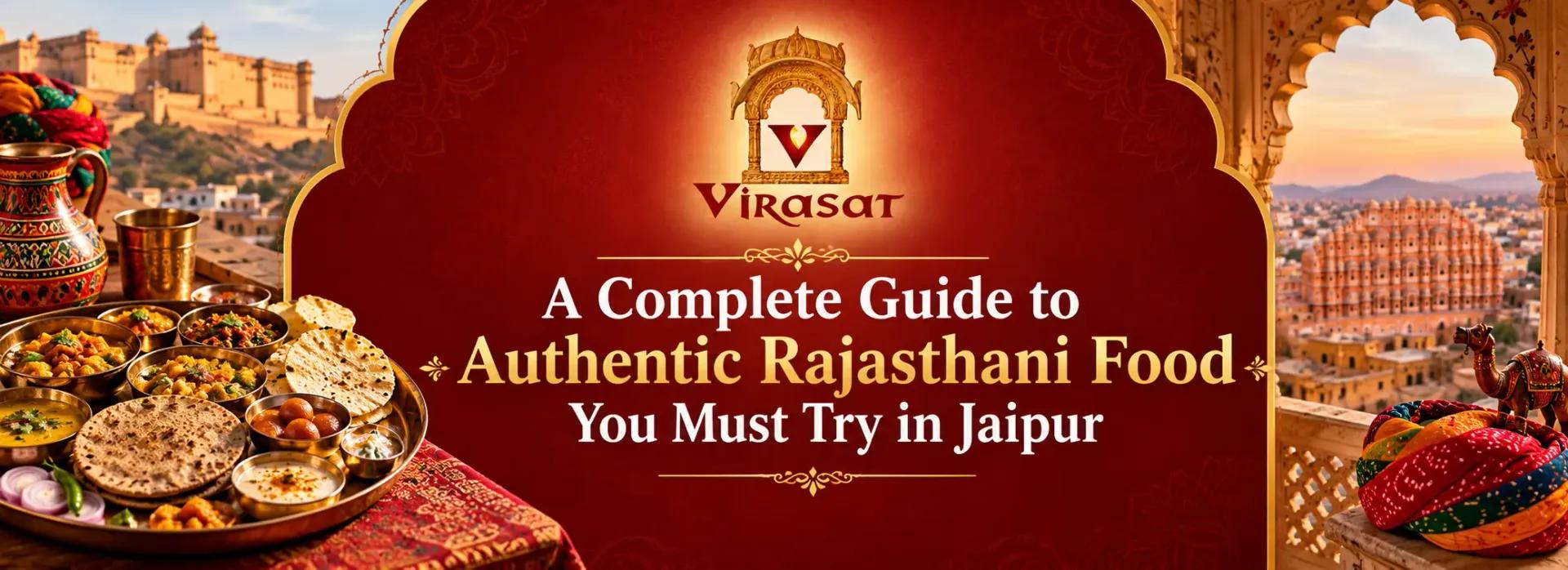
A Complete Guide to Authentic Rajasthani Food You Must Try in Jaipur
The must-try Rajasthani Food in Jaipur are Dal Baati Churma, Gatte ki Sabzi, Ker Sangri, a full Rajasthani thali and traditional sweets like Ghewar. You can taste all of them in one place at Virasat Heritage Restaurant, a 100% pure vegetarian heritage restaurant on the Jaipur–Delhi Highway, Kukas. Jaipur is famous for its royal palaces and vibrant culture, but one thing that truly defines the city is its authentic Rajasthani food. Rooted in tradition and shaped by history, Rajasthani cuisine reflects the royal lifestyle of Rajasthan: rich flavors, simple ingredients, and time-honored cooking methods.
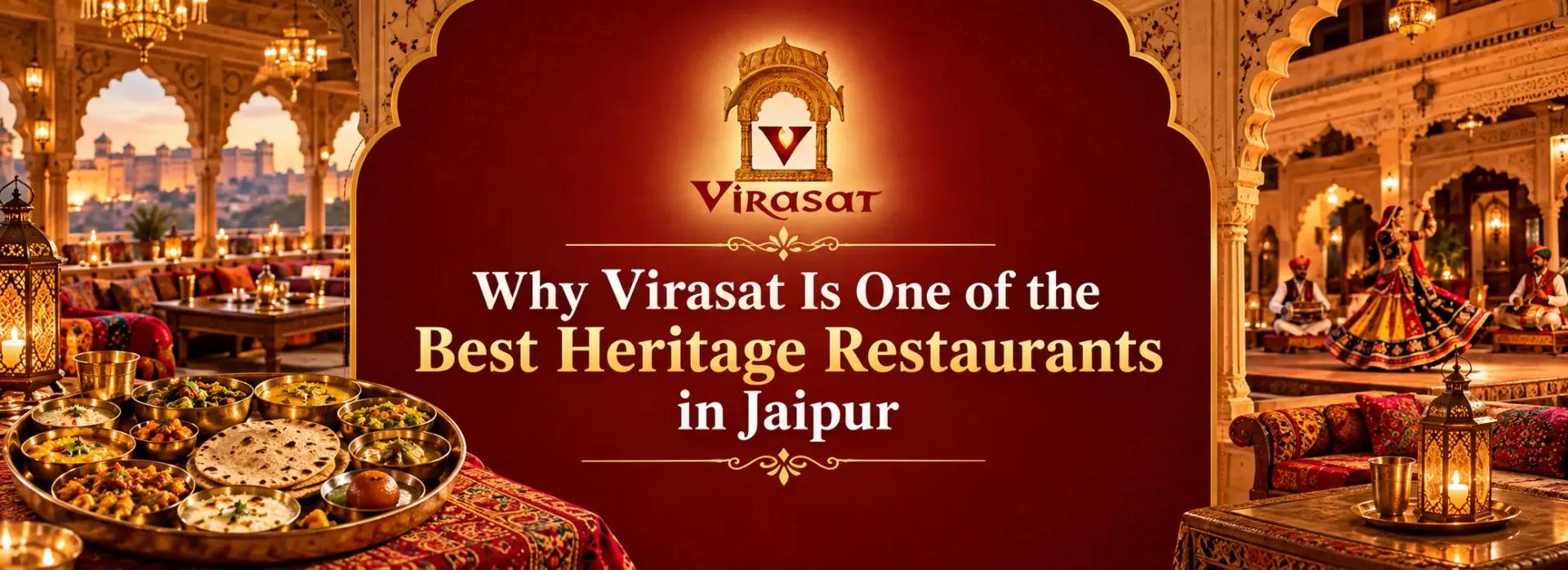
Why Virasat Is One of the Best Heritage Restaurants in Jaipur
Virasat Heritage Restaurant is a 100% pure vegetarian heritage restaurant in Jaipur, located on the Jaipur–Delhi Highway, Kukas. It serves authentic Rajasthani food like Dal Baati Churma, Gatte ki Sabzi and Ker Sangri, with a traditional royal welcome, live folk music and a palace-style ambience. It is ideal for families, tourists and group tours.
Visit Virasat Heritage Restaurant
Experience the royal dining we write about.