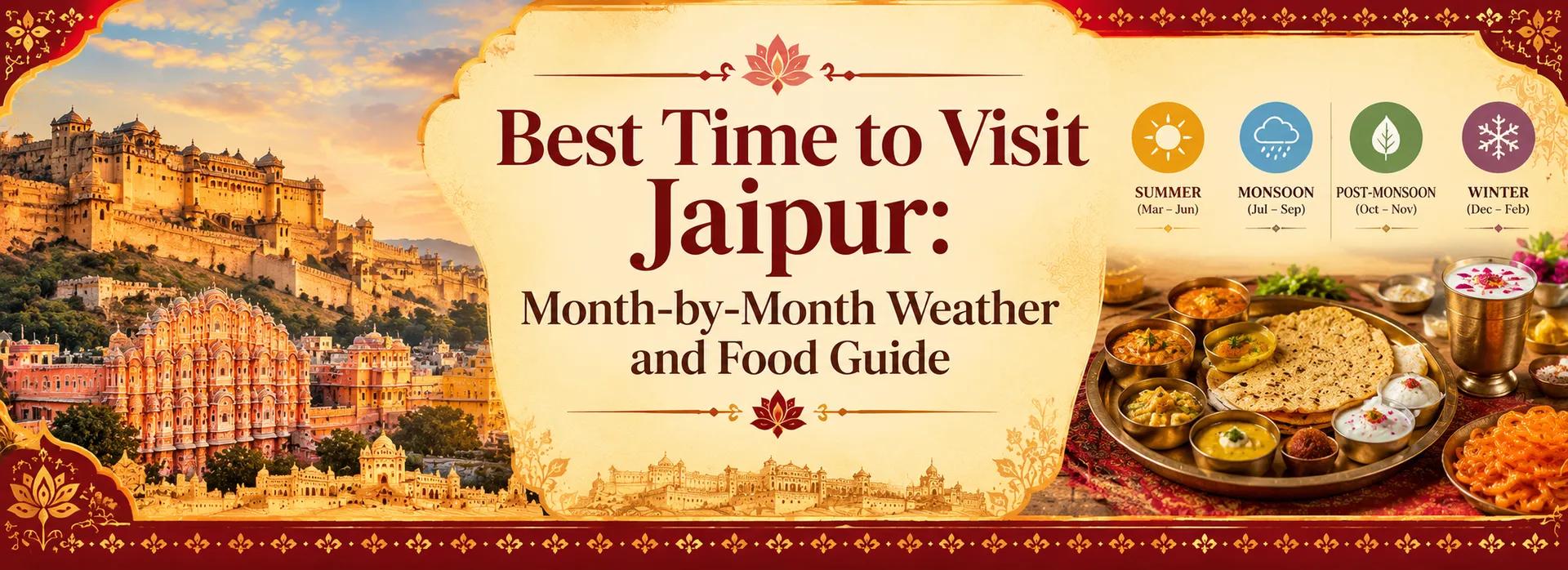
Best Time to Visit Jaipur: Month-by-Month Weather and Food Guide
The best time to visit Jaipur is October to March, when sunny days stay between 23°C and 35°C, nights turn cool, and almost no rain falls. November to February is the sweet spot for sightseeing, festivals and long Rajasthani dinners, while April to June brings 38°C to 42°C heat and July to September brings short, heavy monsoon showers and a greener, quieter Pink City. This guide covers weather, crowds, festival dates and what to eat in every season, so you can pick the right month for your trip.
Best Time to Visit Jaipur at a
Glance
Quick answer: The best
time to visit Jaipur is late October to February, when the weather is pleasant
and the big festivals fall. November and February are the best months for good
weather without the full peak-season crush. Choose March for Holi and Gangaur,
or July to September for green hills, lower prices and Teej.
Jaipur has a hot semi-arid climate,
so the year falls into three clear seasons:
•
Winter (October to February): Sunny, dry
days of 23°C to 35°C and cool nights, dipping to 9°C or 10°C in December and
January. This is peak season.
•
Summer (March to June): Hot and dry,
with highs of about 33°C in March climbing to 42°C in May. Fewest visitors and
lowest prices, apart from the Holi and Gangaur weeks.
•
Monsoon (July to September): Warm and
humid, with most of the year's rain in July and August. Green, uncrowded and
good value.
The extremes are
real. Records from the India Meteorological
Department show Jaipur touching 48.5°C in May 1980 and falling to 0°C in
December 1964.
How to choose your month
•
First visit and full sightseeing:
November or February.
•
Festivals and writers: January, for
Makar Sankranti and the Jaipur Literature Festival.
•
Colour and spring: March, for Holi and
Gangaur.
•
Budget and fewer crowds: July to
September.
Short on time in
any season? Our Jaipur
one-day itinerary fits every month, and the complete
3-day Jaipur itinerary goes deeper into forts, palaces and bazaars.
Winter (Oct-Feb)
Winter is the
best time to visit Jaipur for most travellers, and it is when the Pink City
looks its sunniest. It is also peak season, so book hotels, guides and
restaurant tables early, especially around Christmas and New Year.
Weather
Jaipur in winter
is dry and bright. October is a transition month, with afternoons still near
35°C. By November, highs settle around 30°C; in December, they ease to about
25°C, and in January they touch 23°C, with nights near 9°C to 10°C. Rain is
rare, and early mornings in January can be foggy and chilly.
That makes
Jaipur in December and January ideal for walking the forts and bazaars, though
you will want a light jacket after sunset. Sunrise at Amer Fort is at its best
in this cool, clear air.
Festivals
•
Diwali (Sunday, 8 November 2026): The
old city's bazaars glitter with lights, and sweet shops are at their busiest.
Dhanteras falls on 6 November, two days before the main Lakshmi Puja, according
to Drik Panchang.
•
Makar Sankranti (14 January 2027):
Rooftops across Jaipur fill with families flying kites, and the sky turns into
a patchwork of colour.
•
Jaipur Literature Festival (14 to 18 January 2027): The festival's 20th edition is scheduled at Hotel
Clarks Amer, with Nobel laureates among the first announced speakers.
Hotels near the venue sell out early.
•
New Year week: December is the busiest
month of all. If you plan a celebration dinner, our guide to New Year's Eve dinner in Jaipur 2027 explains why to reserve 7 to 10 days ahead.
Food to try
Cold days call
for rich, warming Rajasthani food. Think bajra and makki rotis with garlic
chutney, dal baati churma dunked in ghee, gatte ki sabzi, and hot pyaaz kachori
with masala chai on a foggy morning. For something sweet, order moong dal halwa
or malpua with rabri. Our guide to authentic
Rajasthani food lists the dishes worth ordering, and the post on what
to eat in Jaipur explains how each one is made.
Summer (Mar-Jun)
Summer is the
hardest season for sightseeing, but it is not impossible, and it is the
cheapest time for flights and hotels. March is still pleasant at about 33°C by
day, while April reaches 38°C, and May and June average 40°C to 42°C, with warm
nights near 27°C. A heatwave can push the mercury far higher.
Jaipur in summer: travel tips
•
Start at sunrise. Be at Amer Fort when
it opens at 8 AM, and finish outdoor sights by 11 AM.
•
Rest from noon to 4 PM. Use the hot
hours for a long lunch, a museum or your hotel pool.
•
Go out again at sunset. Jal Mahal, the
bazaars and evening dinners are far more comfortable after dark.
•
Drink early and often. Carry water, add
electrolytes, wear a hat and apply sunscreen.
Festivals
The best weeks
of the season come first. Holi follows Holika Dahan on 21 March 2027, with
Rangwali Holi on 22 March, according to the 2027
Hindu calendar. Gangaur then runs for about 18 days, ending on 9
April 2027. Women in bright clothes carry decorated idols of Gauri in
processions, and Jaipur's procession is one of the most photogenic events of
the year.
Food to try
Rajasthani
cooking was built for dry, hot weather. Dishes like ker sangri, made from dried
desert beans and berries, store well without refrigeration, which is part of
the story we tell in our guide to the culture
of Rajasthan. In summer, pair them with cooling drinks: masala chaas,
lassi, jaljeera and fresh lime. Finish with kulfi, and save heavy meals for the
evening, after the sun goes down.
Monsoon (Jul-Sep)
The monsoon is
the secret season for travellers who dislike crowds. Rain usually reaches
Jaipur around late June or early July. July and August are the wettest months,
with roughly 200 mm each, while September falls to about 65 mm. Showers tend to
come in short, heavy bursts rather than all-day drizzle, and highs sit near
33°C to 36°C with high humidity.
The upside is
the scenery. The Aravalli hills around Amer and Nahargarh turn green, the lakes
fill up, and Jal Mahal looks its best with water around it. Hotels discount
their rooms, and the monuments are far quieter. The downsides are muggy
afternoons, slippery stone floors and the occasional waterlogged street, so
build in some flexibility and keep rain-proof plans for the evening.
Teej and ghevar season
This is when
Jaipur celebrates Teej. Hariyali Teej, welcoming the rains, fell on 15 August
2026 and returns on 4
August 2027. Women wear green, swings hang from trees and balconies, and
the city fills with festive songs and fairs.
It is also
ghevar season. Ghevar is a honeycomb-shaped disc of flour fried in ghee, soaked
in sugar syrup and often topped with rabri, and Rajasthani sweet shops sell
piles of it around Teej. Virasat's menu
lists ghevar as a seasonal dessert, along with bhutte ka kees, a spiced
grated-corn dish that suits rainy evenings. Pair a hot pyaaz kachori or mirchi
vada with chai while the rain falls outside.
Jaipur Weather Month by Month:
The Table
Use this table
to match your travel dates to temperature, rain, crowds and food. Weather
figures are rounded long-term averages from Climates to Travel,
cross-checked against IMD records.
Rainfall is approximate.
|
Month |
High / low (°C) |
Rain (mm) |
Crowds |
What's on |
Eat this |
|
January |
23 / 9 |
7 |
Very high |
Makar
Sankranti (14 Jan 2027), Jaipur Literature Festival (14-18 Jan 2027) |
Bajra roti,
gatte ki sabzi |
|
February |
27 / 12 |
10 |
High |
Clear skies, a
calmer peak season |
Dal baati
churma, moong dal halwa |
|
March |
33 / 18 |
4 |
Medium |
Holi (21-22
Mar 2027), Gangaur begins |
Malpua with
rabri |
|
April |
38 / 23 |
5 |
Low |
Gangaur finale
(9 Apr 2027), heat builds |
Masala chaas,
lassi |
|
May |
42 / 27 |
18 |
Very low |
Hottest month,
record 48.5°C |
Chaas,
jaljeera, kulfi |
|
June |
40 / 28 |
60 |
Very low |
Humid,
pre-monsoon build-up |
Lassi, ker
sangri |
|
July |
36 / 26 |
215 |
Low |
Monsoon
arrives, hills turn green |
Pyaaz kachori,
pakoras |
|
August |
33 / 25 |
205 |
Low |
Hariyali Teej
(4 Aug 2027) |
Ghevar, malpua |
|
September |
35 / 24 |
66 |
Low to medium |
Rain eases,
skies clear |
Bhutte ka
kees, kadhi |
|
October |
35 / 20 |
15 |
Medium |
Festival
season begins, days still warm |
Mirchi vada,
kachori |
|
November |
30 / 15 |
5 |
High |
Diwali (8 Nov
2026), wedding season |
Festive
mithai, dal baati churma |
|
December |
25 / 10 |
3 |
Very high |
New Year week,
cold nights |
Unlimited
thali, moong dal halwa |
Jaipur festivals calendar: next
dates
•
Diwali: Sunday, 8 November 2026
•
Makar Sankranti: Thursday, 14 January
2027
•
Jaipur Literature Festival: 14 to 18
January 2027
•
Holi: Holika Dahan on 21 March 2027,
Rangwali Holi on 22 March 2027
•
Gangaur: ends Friday, 9 April 2027
•
Hariyali Teej: Wednesday, 4 August 2027
Festival dates
follow the lunar calendar and shift every year, so confirm them before you
book. This post was last updated on 16 October 2026.
What to Pack
Pack for the
season, but remember that Jaipur's forts and palaces involve a lot of walking
on stone, so comfortable shoes matter in every month.
•
Winter (October to February): Layers, a
light jacket or shawl for evenings, sunglasses, sunscreen and moisturiser for
dry air. In December and January, add a warm sweater for 9°C to 10°C nights.
•
Summer (March to June): Loose cotton or
linen, a wide-brimmed hat, UV-protective sunglasses, high-SPF sunscreen, a
reusable water bottle and electrolyte sachets. A scarf doubles as sun cover and
temple wear.
•
Monsoon (July to September): A compact
umbrella or light rain jacket, quick-dry clothes, shoes with good grip for wet
stone, a waterproof bag cover and mosquito repellent.
•
All year: A photo ID (some ticket
counters ask for one), a power bank, some cash for tuk-tuks and street food,
and modest clothing for temples.
Where to Eat Whatever the
Season
Whatever month
you pick, one meal belongs on every Jaipur trip: an unlimited Rajasthani thali
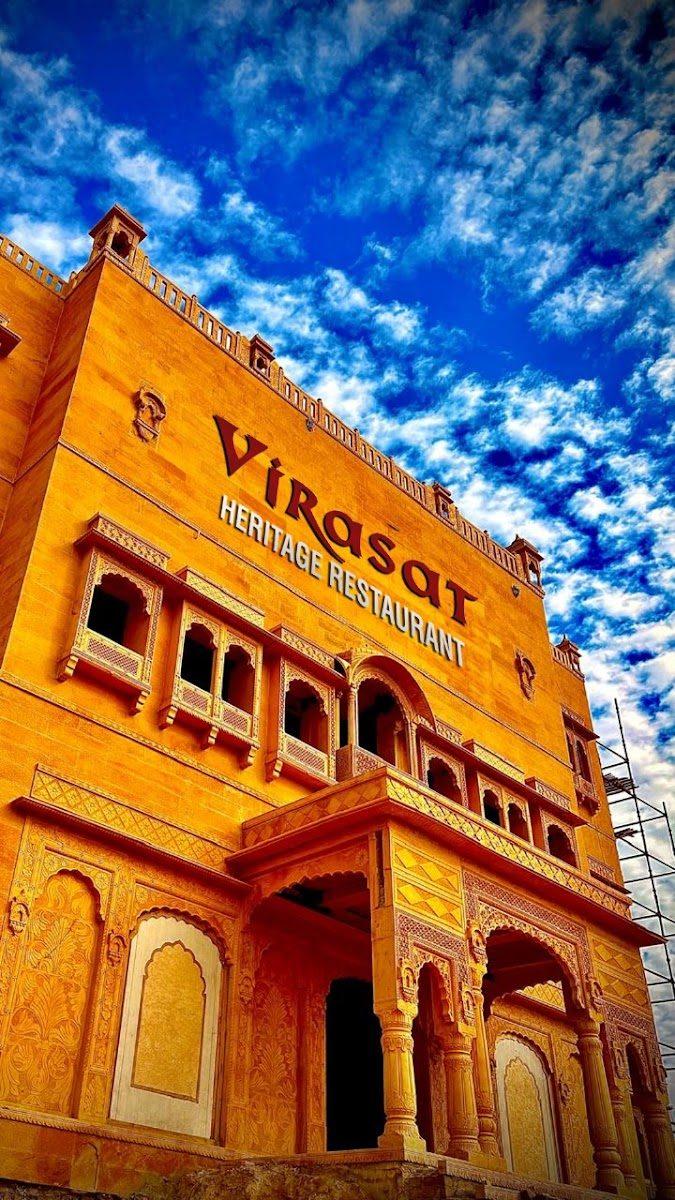
served the traditional way. Virasat
Heritage Restaurant on Delhi Road in Kukas serves it every day from 11 AM
to 11 PM. It is pure vegetarian, about 15 minutes from Amer Fort, and roughly
₹3,000 for two.
The thali stays
familiar, with dal baati churma, gatte ki sabzi, ker sangri, kadhi, rotis and
sweets, but the extras change with the season. Ghevar is listed as a seasonal
dessert on the menu, and chaas, lassi and jaljeera are on hand when it is hot.
The evening adds a royal welcome with tilak and a garland, plus live folk music
and dance. To see what makes that evening special, read about royal
dining in Jaipur.
Plan your table by season
•
Winter and festival weeks: December and
January are the busiest. Reserve a
table 7 to 10 days ahead for New Year week and weekends.
•
Summer: Sightsee at dawn, rest at midday
and plan dinner for the cool evening.
•
Monsoon: Fewer visitors make planning
easier, but still book for weekends. Ask about ghevar and other seasonal sweets
when you reserve.
•
Short on time: Fit dinner into a one-day
plan using our Jaipur
in one day itinerary, which ends with folk music and dance at Virasat.
FAQs
What is the best time to visit Jaipur?
The best time to
visit Jaipur is October to March, when days are sunny, nights are cool and rain
is rare. November to February is the peak, with the best sightseeing weather
and the biggest festivals, so book ahead.
What is the best month to visit Jaipur for
sightseeing?
November and
February are the best months. Highs sit around 30°C in November and 27°C in
February, skies are clear and crowds are smaller than in December and January.
Is Jaipur too hot in summer?
April to June is
very hot, with highs of 38°C to 42°C, so it suits visitors who start at sunrise
and rest at midday. Prices are lowest and monuments are quiet. March is milder
and has Holi and Gangaur.
Is the monsoon a good time to visit Jaipur?
Yes, if you can
handle humidity. July to September turns the Aravalli hills green, hotels cut
prices, and Hariyali Teej (4 August 2027) and ghevar season add festive colour.
Expect heavy showers in July and August.
What is Jaipur like in December?
Jaipur in
December has sunny days around 25°C and cool nights near 10°C. It is the
busiest month, with New Year events, so book hotels, guides and restaurant
tables well in advance.
Which festivals should I plan around?
The main dates
are Diwali (8 November 2026), Makar Sankranti (14 January 2027), the Jaipur
Literature Festival (14 to 18 January 2027), Holi (22 March 2027), Gangaur (9
April 2027) and Hariyali Teej (4 August 2027). Confirm dates before booking, as
lunar festivals move each year.
Where can I try seasonal Rajasthani food in Jaipur?
Virasat Heritage
Restaurant in Kukas serves an unlimited Rajasthani thali daily from 11 AM to 11
PM, with seasonal sweets such as ghevar and live folk music and dance in the
evening.
So, when is the
best time to visit Jaipur? Choose November or February for the perfect balance,
January for festivals, March for Holi and Gangaur, or the monsoon for green
hills and peace. Whichever month you pick, end a day of sightseeing with a
proper Rajasthani thali. When your dates are set, reserve a table at Virasat or call
+91 95877 77817.
Related reading
Best Restaurants Near Amer Fort and Where to Eat After Your Visit
rooftop cafes with fort views just across the road, and a full Rajasthani thali about 10 to 15 minutes away on Delhi Road in Kukas. Choose by how much time you have: a quick snack and a view, a palace setting at 1135 AD, or a leisurely thali lunch or dinner at Virasat. This guide compares each option honestly, with prices, distances and a half-day plan for lunch near Amer Fort.
Jaipur in One Day: A Perfect 1-Day Itinerary With Food Stops
The best Jaipur 1-day itinerary is Amer Fort at 8 AM, then Hawa Mahal, City Palace and Jantar Mantar, a Rajasthani thali lunch, Johari Bazaar, Jal Mahal at sunset, and dinner with folk music and dance at Virasat. Plan on 12 to 13 hours with a car and driver. Jaipur, the Pink City founded in 1727, has far more to see than one day allows, which is why one day in Jaipur needs a route, not a wish list. This plan follows the map: forts and lakes in the north, the walled city in the middle, and dinner back out on the northern Delhi Road. That means almost no backtracking and no hour lost to traffic.
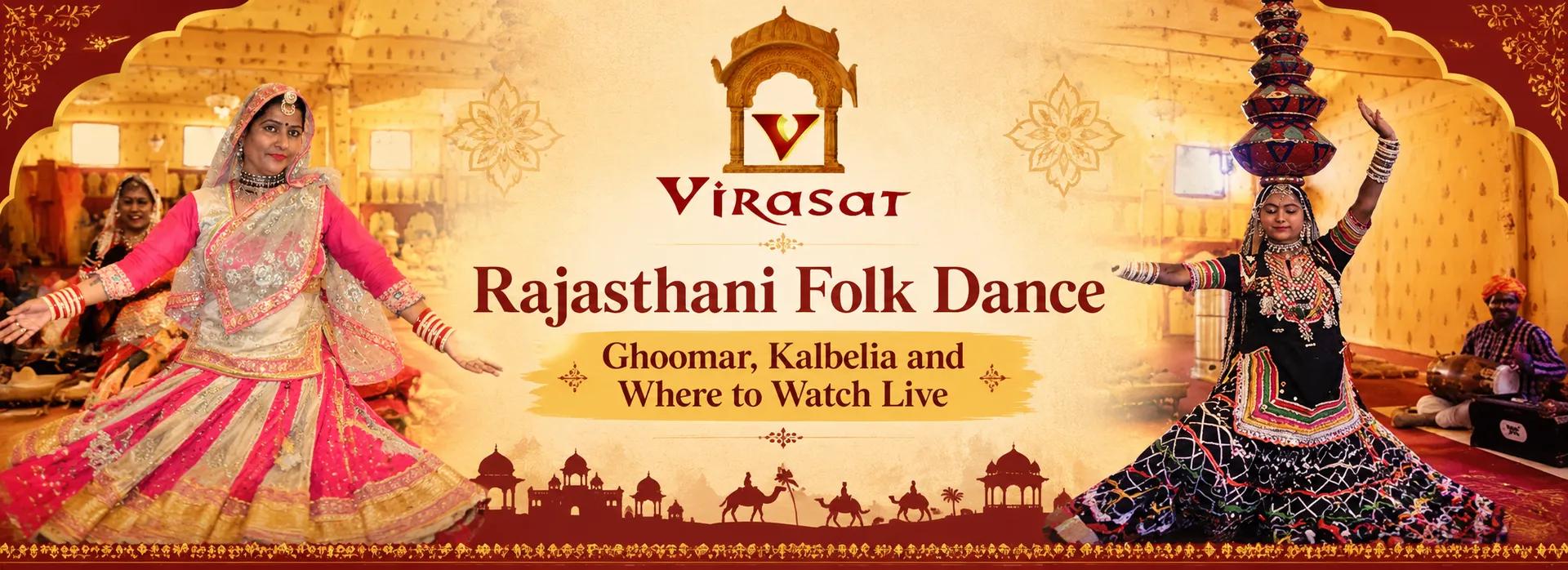
Rajasthani Folk Dance: Ghoomar, Kalbelia and Where to Watch Live
Rajasthani folk dance is a family of community performances, including Ghoomar, Kalbelia, Bhavai, Chari, Terah Taali, Kachchhi Ghodi and Gair, that began as rituals, festival customs and occupational skills in the villages of Rajasthan and is now watched across India and the world. Each dance belongs to a community, a place and an occasion, and almost all are performed with live folk music.
Visit Virasat Heritage Restaurant
Experience the royal dining we write about.