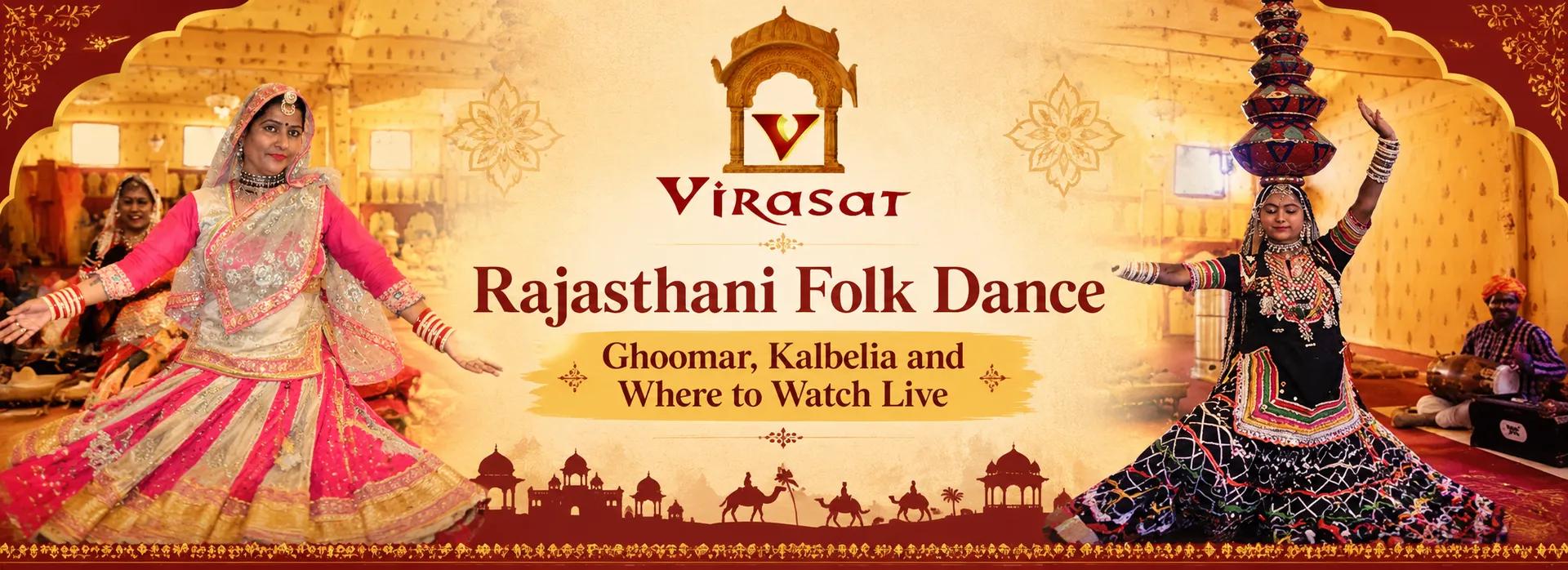
Rajasthani Folk Dance: Ghoomar, Kalbelia and Where to Watch Live
Rajasthani Folk Dance: An
Introduction
Rajasthani folk
dance is a family of community performances, including Ghoomar, Kalbelia,
Bhavai, Chari, Terah Taali, Kachchhi Ghodi and Gair, that began as rituals,
festival customs and occupational skills in the villages of Rajasthan and is
now watched across India and the world. Each dance belongs to a community, a
place and an occasion, and almost all are performed with live folk music.
Unlike classical
dance, these forms have no written syllabus. Children learn by watching their
mothers, aunts and fathers, which is why the costumes, songs and steps stay so
closely tied to families and regions. The dancers are often the same people who
farm, herd, weave or make music for a living, and the performance is a way of
carrying their story forward.
This guide
explains the main types of Rajasthani folk dance, what each one means, how folk
music supports them, and where to watch Rajasthani folk dance in Jaipur. For
the wider setting, see our guide to Rajasthani
traditions, food and hospitality. Last updated October 2026.
Rajasthani Folk Dance Names at
a Glance
|
Dance |
Community
or region |
When
it is performed |
What
to look for |
|
Ghoomar |
Bhil origin, adopted by Rajput households |
Weddings, Teej, Holi, Diwali |
Women spinning in wide ghagras, faces
veiled |
|
Kalbelia |
Kalbelia community of the Thar |
Celebrations and Holi |
Serpent-like movement in black
mirror-work skirts |
|
Bhavai |
Kalbelia, Jat, Meena, Bhil and Kumhar
women |
Fairs and ritual occasions |
Pots balanced on the head while dancing |
|
Chari |
Saini of Ajmer, Gujjar of Kishangarh |
Festivals and weddings |
Brass pot with a lit lamp on the head |
|
Terah Taali |
Kamad community |
Devotional gatherings for Baba Ramdev |
Cymbals tied to the body, played thirteen
ways |
|
Kachchhi Ghodi |
Shekhawati |
Weddings and celebrations |
Men in dummy horse costumes |
|
Gair |
Bhil community |
Holi and Janmashtami |
Men in a circle with sticks |
Ghoomar
What is the
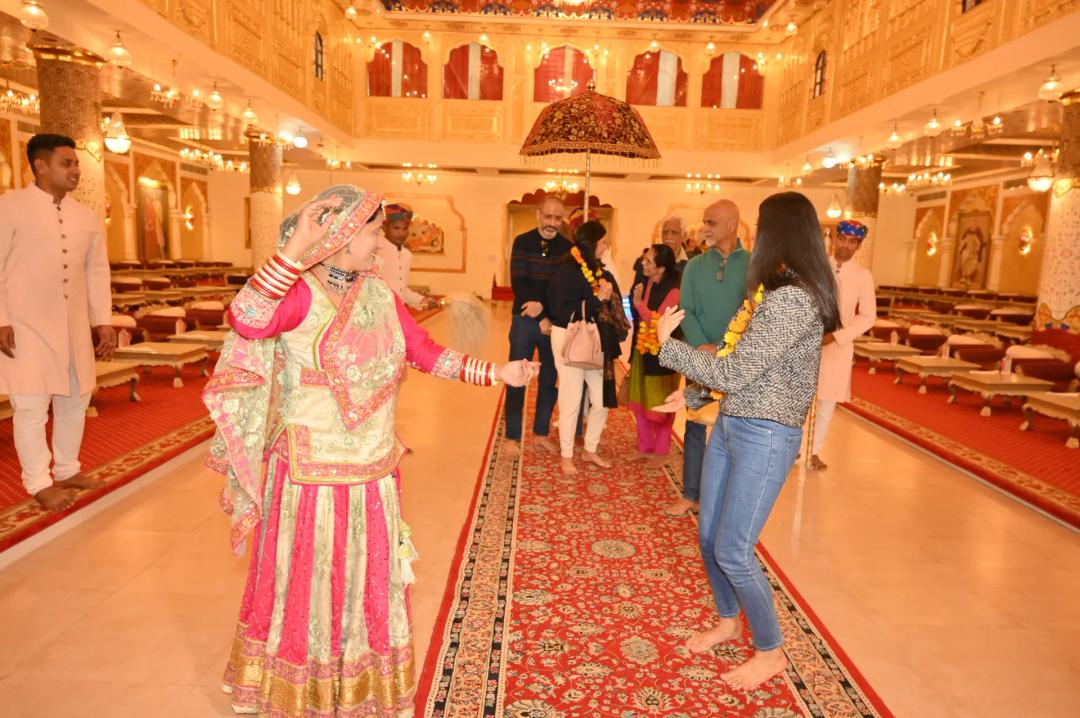
meaning of the Ghoomar dance? The name comes from ghoomna, which means to twirl or
spin, and the dance is a slow, circular performance by women in wide ghagras.
It is widely regarded as the best-known Rajasthani folk dance.
Ghoomar began
with the Bhil community of the Marwar region and was later adopted by the royal
households, which is how a tribal dance came to be performed inside palaces.
Today it is danced by women across communities on auspicious occasions such as
weddings, Teej, Holi and Diwali. In some places it also marks a girl's coming
of age.
The beauty is in
its simplicity. Dancers form a circle, clap in rhythm and turn slowly so that
the ghagra opens like a flower, while the odhni (veil) frames the face. The
steps are easy to follow, but the group must stay perfectly in time, and that
discipline is what makes a good performance look effortless. Songs, usually led
by a singer with a dholak and nagara, speak of the monsoon, marriage, home and
longing.
If you watch a
live show, Ghoomar is often the dance where guests are invited to join in, so
keep your phone aside and try a few steps.
Kalbelia
What is the
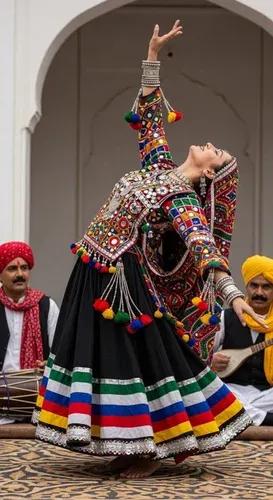
Kalbelia dance of Rajasthan? It is a sinuous dance by women of the Kalbelia
community, a former snake-handling people of the Thar Desert, whose swaying,
spinning movements imitate a serpent. It is one of the most recognised
Rajasthani folk dance forms worldwide.
Women perform in
flowing black skirts richly embroidered with small mirrors and silver thread,
wearing heavy jewellery, while men accompany them on the khanjari (a small
frame drum) and the poongi, a wind instrument traditionally used to charm
snakes. As the music speeds up, the dancers whirl faster and faster, bending
back and spinning in ways that look almost boneless. The songs are drawn from
folklore and mythology, and singers are known for improvising lyrics on the
spot.
Recognition as intangible
heritage
Kalbelia folk
songs and dances of Rajasthan were inscribed on UNESCO's
Representative List of the Intangible Cultural Heritage of Humanity in
2010. UNESCO notes that the tradition is oral, with no texts or training
manuals, and that it is both a source of pride and a marker of identity for a
community whose traditional travelling life has been shrinking.
That context
matters when you watch a performance. The dance is not only entertainment. It
is a living skill that a community is working to keep alive, and applause is
part of how it survives.
Bhavai, Chari, Terah Taali and
Others
Beyond Ghoomar
and Kalbelia, several other forms show how closely Rajasthani folk dance is
tied to daily life, ritual and skill.
•
Bhavai: a ritual and skill
dance, usually performed by women from Kalbelia, Jat, Meena, Bhil and Kumhar
communities, in which several pots are balanced on the head while the dancer
moves to quick drumming. At live shows you may hear it called matka dance.
•
Chari: women balance a brass
pot with a lit lamp on the head and dance with it. Associated with the Saini
community of Ajmer and the Gujjars of Kishangarh, it recalls the daily act of
carrying water.
•
Terah Taali: performed by the
Kamad community, mostly by women seated on the floor, with manjira cymbals tied
to the body and struck in thirteen different ways. It is a devotional tribute
to the folk hero Baba Ramdev, and this
report from the People's Archive of Rural India follows one family of
performers in Udaipur.
•
Kachchhi Ghodi: men in dummy
horse costumes act out the stories of local heroes and bandits from the
Shekhawati region, often to the beat of drums at weddings.
•
Gair: a group dance by the Bhil
community, performed in a circle during festivals such as Holi and Janmashtami.
•
Kathputli: not a dance but a
puppet tradition, closely linked with folk storytelling.
If you want to
learn more, this
overview of Rajasthan's folk dances is a useful companion read.
Rajasthani Folk Music and
Instruments
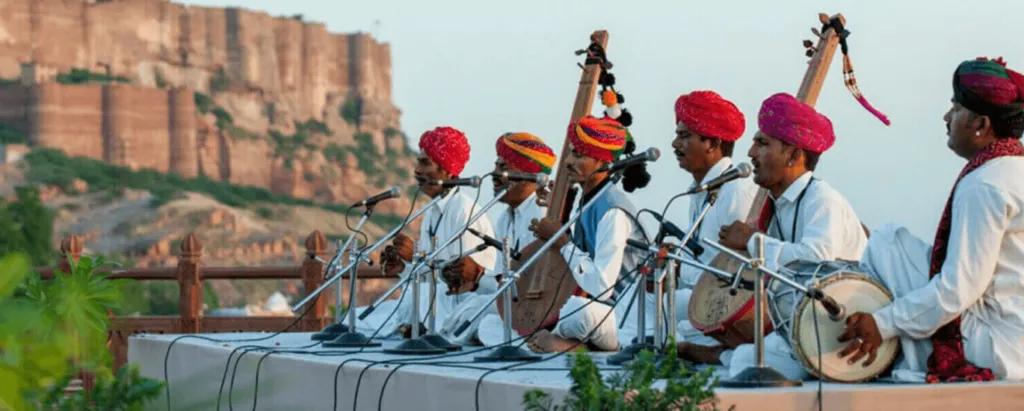
What is
Rajasthan folk music? It is an oral tradition of devotional songs, ballads of
heroes, wedding songs and work songs, kept alive by hereditary folk musicians
such as the Manganiyars and Langas of the western desert. Every dance above
depends on it, and in many cases the singer and the dancer are from the same
family.
Manganiyar and
Langa musicians, whose families have long performed for patrons and communities
in the Jaisalmer and Barmer region, are known for powerful voices, long melodic
phrases and rhythmic precision. Their songs travel from village gatherings to international
concert halls, and the Rajasthan International Folk Festival at Mehrangarh Fort
in Jodhpur, usually held in autumn, is one of the best-known stages for them.
The instruments
you are likely to hear include:
•
Dholak and nagara: hand drums
that carry the beat of Ghoomar and Bhavai
•
Khartal: wooden clappers played
in the fingers at high speed
•
Kamaicha and sarangi: bowed
string instruments with a deep, singing tone
•
Algoza: a double flute played
by two pipes at once
•
Morchang: a small metal jaw
harp
•
Khanjari and poongi: the frame
drum and snake-charmer's pipe used in Kalbelia
•
Manjira: brass cymbals, central
to Terah Taali
•
Harmonium: a hand-pumped reed
organ now common in devotional and folk singing
When you listen
closely, you will notice that the music leads. The singer sets the mood, the
percussion sets the speed, and the dancers follow.
Where to Watch Folk Dance Live
in Jaipur
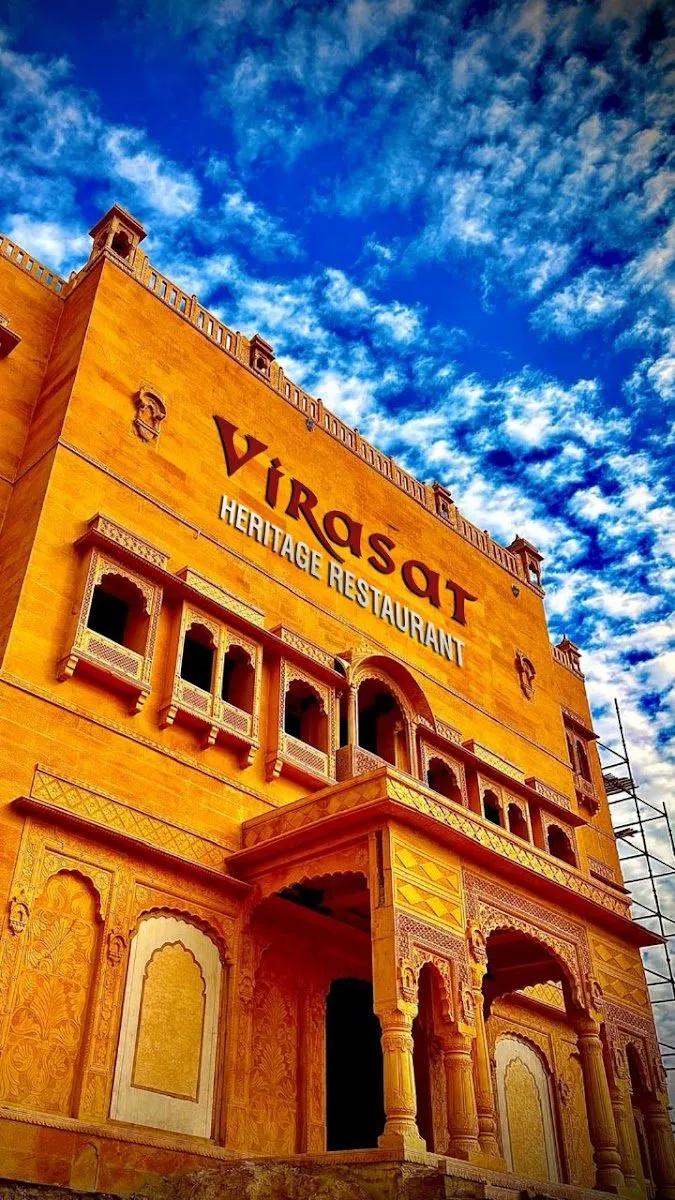
Where can you
watch Rajasthani folk dance in Jaipur? The most reliable options are heritage
restaurants that pair a traditional thali with live performances, cultural
centres and festival stages during Teej, Gangaur and Makar Sankranti, and
wedding or cultural events where community troupes perform. For a first visit,
a dinner with live folk performances is the easiest choice because food, music
and dance come together in one evening.
When you compare
options, look for three things: performers from folk families rather than
recorded music, a hall where the stage is close enough to see the footwork, and
a schedule that lets you eat without rushing. Travellers who want to see more
outside Jaipur can also try the evening shows at Bagore ki Haveli in Udaipur,
which is where the Terah Taali family featured above performs.
Dinner with folk performances at Virasat
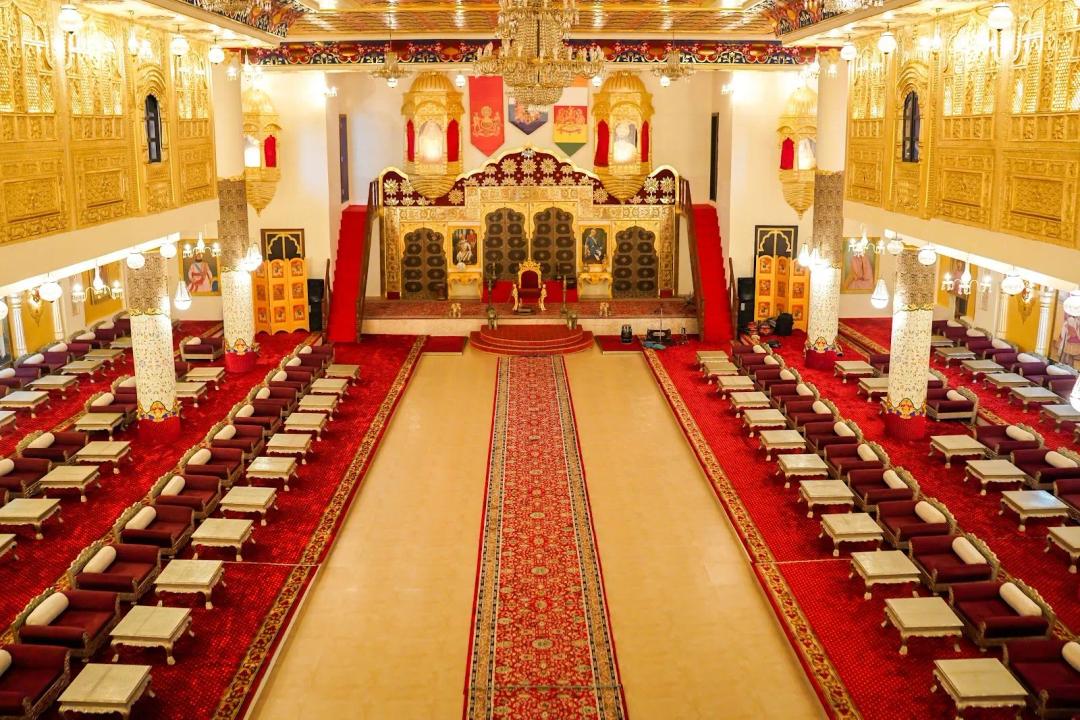
Virasat Heritage Restaurant on Delhi Road
in Kukas, Jaipur, is built around this idea of living heritage. At Swarn Mahal,
a gold-carved darbar hall with floor seating, guests are served an unlimited
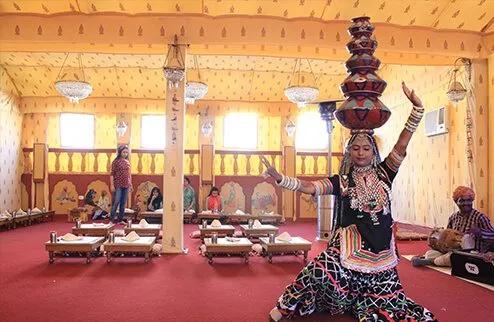
pure vegetarian Rajasthani thali while artists perform folk dance, Ghoomar and
Bhavai (matka dance). The evening begins with a royal welcome, and the venue
offers parking, air conditioning, family-friendly seating and wheelchair
access. You can read about the Swarn Mahal live
performances before you go.
To see how the
evenings look, browse the gallery
of performances. For a closer look at the experience itself, read about the
royal
dining experience at Virasat, or see the menu and the page on Rajasthani
restaurants in Jaipur. Performance timings can vary by day and season, so
confirm them when you reserve a
table.
Folk dance for students and
children
Schools and
families can also see Rajasthani culture in a learning format. The Royal Educational Trip
introduces students to heritage, etiquette and traditions, and the Royal Kids Program
offers a child-friendly version of the experience.
Etiquette and Tips for Visitors
A live folk
performance is a shared moment between artists and audience, and a few small
habits make it better for everyone:
•
Arrive on time, since the
opening songs often set the mood for the whole programme
•
Sit where you can see the
dancers' feet and hands, which carry much of the skill
•
Keep your phone on silent and
ask before filming close-ups, especially of children and older artists
•
Clap in rhythm with the music;
it is welcomed and often encouraged
•
Join in only when you are
invited, and follow the group's steps rather than leading
•
Do not touch dancers, costumes
or props, particularly the pots and lamps used in Bhavai and Chari
•
Book ahead for weekends,
festival weeks and school holidays
•
Carry light, comfortable
clothing, as floor seating is common in traditional venues
•
Confirm the performance
schedule with the venue before you go
If you are
visiting with children, it helps to tell them in advance what each dance means.
Kids tend to remember the story of the snake or the balancing pot long after
the dinner is over.
FAQs
What are the types of
Rajasthani folk dance?
The main types
of Rajasthani folk dance are Ghoomar, Kalbelia, Bhavai, Chari, Terah Taali,
Kachchhi Ghodi and Gair. Each is linked to a community, a region or an
occasion, such as a wedding, Teej or Holi.
Which is the most famous folk
dance of Rajasthan?
Ghoomar is the
most widely known, followed by Kalbelia. Ghoomar is a graceful group dance by
women in wide ghagras, while Kalbelia is a serpent-inspired dance in black
skirts.
What is the meaning of Ghoomar
dance?
The name comes
from ghoomna, meaning to twirl. Ghoomar began with the Bhil community and was
later adopted by Rajput households. It is performed at weddings and festivals.
Why is Kalbelia dance famous?
Kalbelia dance
is famous for its fluid, snake-like movements and its mirror-embroidered black
costumes. UNESCO inscribed Kalbelia folk songs and dances on its intangible
heritage list in 2010.
Who performs Terah Taali?
Terah Taali is
performed by the Kamad community, mainly women. Dancers sit on the floor with
manjira cymbals tied to their bodies and play them in thirteen ways as a
tribute to Baba Ramdev.
Which instruments are used in
Rajasthan folk music?
Common
instruments are the dholak, nagara, khartal, kamaicha, sarangi, algoza,
morchang, khanjari, poongi, manjira and harmonium.
Where can I watch Rajasthani
folk dance in Jaipur?
Heritage
restaurants, cultural centres and festival stages are the main options. At Virasat Heritage Restaurant in Kukas,
live folk dance, Ghoomar and Bhavai are performed alongside an unlimited
Rajasthani thali. You can reserve a
table in advance.
Conclusion
Rajasthani folk
dance is best understood by watching it: the slow spin of Ghoomar, the serpent
curves of Kalbelia, the balance of Bhavai and Chari, and the rhythm of Terah
Taali, all carried by folk musicians whose songs have never needed a written
page. In Jaipur, the simplest way to meet all of it is to sit down to a
traditional dinner with live performances.
To experience it
yourself, reserve a table at
Virasat, look through the gallery
of performances, or plan a Royal Educational Trip
for students and let the dancers tell the story.
Related reading
Birthday Party Places in Jaipur: Venues for Kids and Families
The best birthday party places in Jaipur match your guest count, age mix, food needs, and budget, while giving the birthday person a moment worth remembering. For children, that usually means safety, space and something to do. For families, it means comfort, parking and a menu everyone can eat. For milestone birthdays, it means atmosphere.
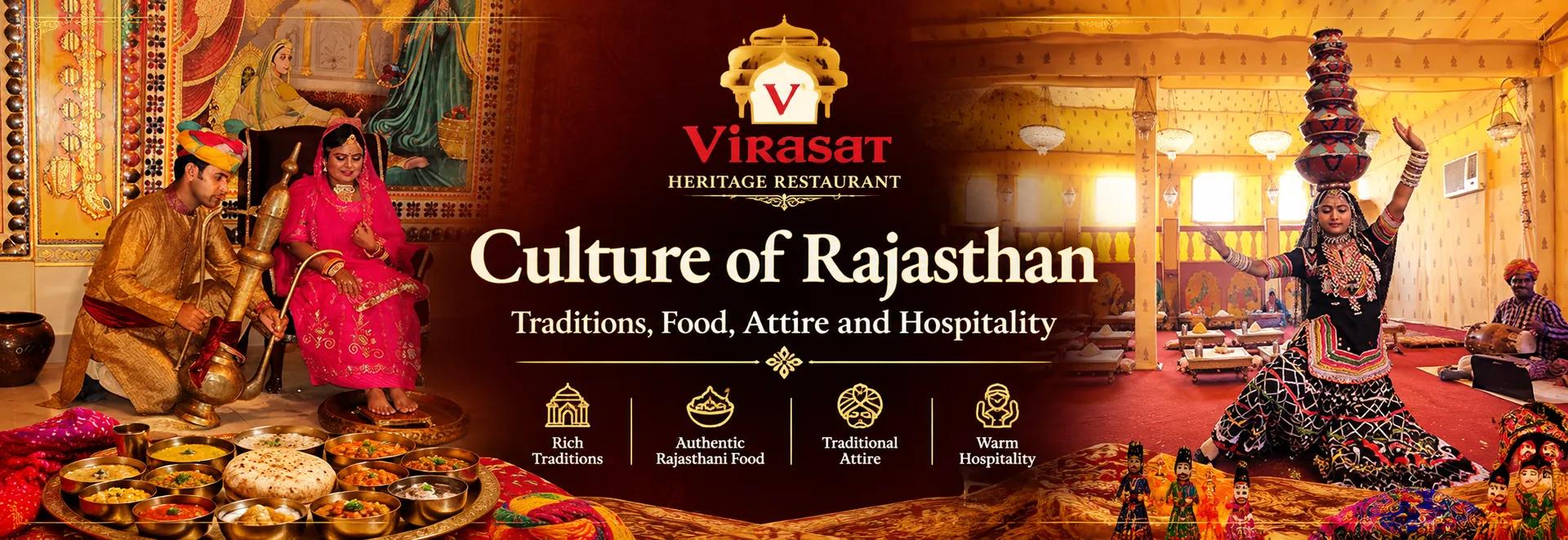
Culture of Rajasthan: Traditions, Food, Attire and Hospitality
The culture of Rajasthan is the way of life of India's desert and Aravalli heartland: royal Rajput and Marwari heritage, a cuisine built for dry weather, bright turbans and ghagras, folk music kept alive by hereditary musicians, festivals such as Teej, Gangaur and Pushkar Fair, and a guest-first code of hospitality known as Atithi Devo Bhava. Geography explains most of it. With little water, long summers and trade caravans crossing the Thar, communities learned to cook with ghee and gram flour instead of fresh vegetables, wear colours that stand out against sand, and treat every traveller as someone to feed and protect. That practical logic is why Rajasthani culture feels so consistent, whether you meet it in a Jodhpur lane, a Jaisalmer haveli or a Jaipur kitchen.
Royal Dining Experience in Jaipur: What Makes It Truly Special?
Royal dining in Jaipur is a heritage dining experience that combines a traditional welcome with teeka and aarti, palace-style ambience, authentic Rajasthani food and live folk music. Virasat Heritage Restaurant on the Jaipur–Delhi Highway, Kukas, offers all of this in a 100% pure vegetarian setting.
Visit Virasat Heritage Restaurant
Experience the royal dining we write about.