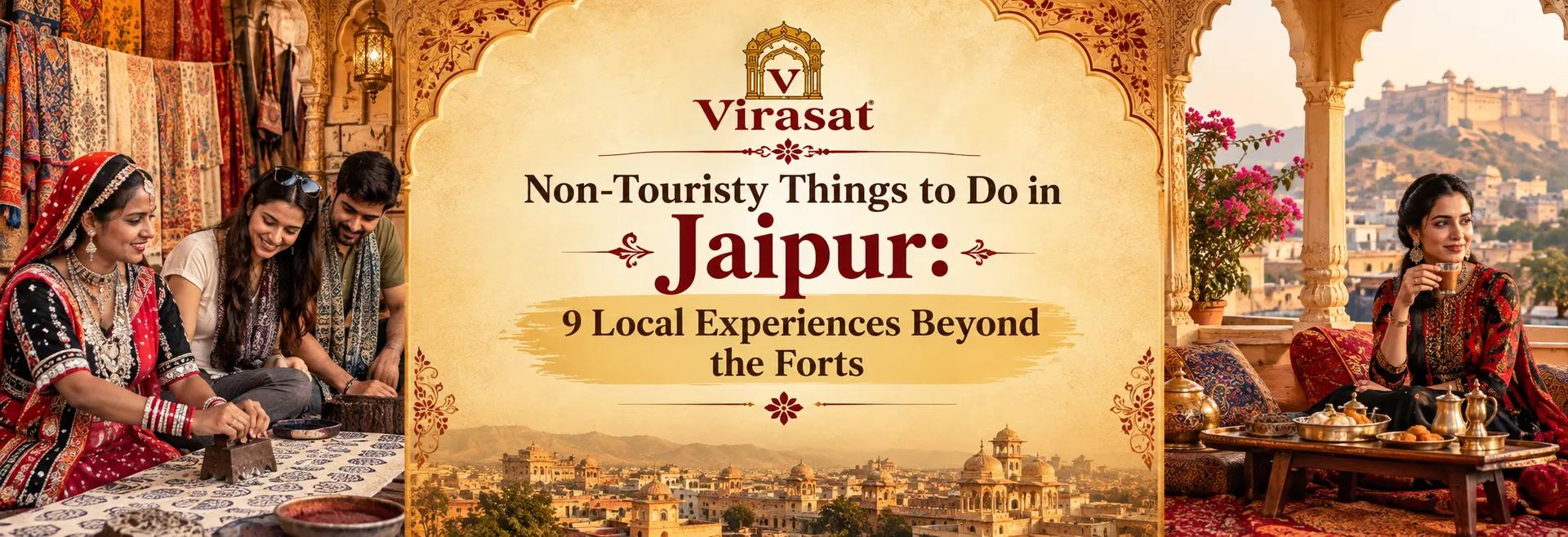
Non-Touristy Things to Do in Jaipur: 9 Local Experiences Beyond the Forts
Everyone sees Hawa Mahal and Amer. Far fewer travellers see how Jaipur
actually celebrates: where families take visiting relatives for dinner, which
sweets they carry home, how a guest is welcomed at the door.
Non-touristy things to do in Jaipur start the moment you leave the
fort circuit. They include a village-style Rajasthani dinner on the
Kukas side where locals celebrate, folk music evenings, early-morning Amer back
roads, neighbourhood sweet shops, stepwells without crowds, and traditional
welcome rituals done for you rather than watched from a distance. Virasat Heritage Restaurant in
Kukas is one of the places where many Jaipur families host their own
celebrations.
This guide focuses on local, participatory experiences, with practical
notes on where each one is, when to go and how to fit it into your trip. It
works as a second chapter after the classics, so see it as an add-on to the
usual sights, not a replacement.
In short: the best non-touristy things to do in Jaipur are
a family-style royal Rajasthani Thali dinner at Virasat in Kukas, a live
folk music evening, Panna Meena ka Kund stepwell at sunrise, the Kukas to Amer
back roads, ghevar
from a local sweet shop, a feet-wash and tilak welcome, the printing villages
of Sanganer and Bagru, Galta Ji at dusk, and heritage classes for children.
What Counts as "Non-Touristy" in Jaipur?
It does not mean avoiding Jaipur's famous places. It means choosing
experiences that locals choose for themselves: where Jaipur families take
visiting relatives, what they eat on celebrations, and which rituals they
perform for guests. These experiences share three traits. They are participatory
(you take part rather than watch), they are local (made for residents,
not coaches) and they usually happen outside the walled city.
If you have already ticked off the Instagrammable
places in Jaipur, this list is what to do next.
9 Non-Touristy Experiences
1. Celebrate Like a Jaipur
Family at Virasat, Kukas
Locals book Virasat Heritage
Restaurant for birthdays, anniversaries and welcoming relatives, and
the evening follows a familiar pattern: a warm welcome, a royal thali served
and refilled, a live folk show, and a floor-seating option for those who like
to sit the traditional way. In the winter lawn season, from October to March,
dinner moves under the sky.
Good to know: Virasat is open daily from 11 AM to 11 PM, is 100% pure
vegetarian, and fills up on weekends, so book ahead. If you are visiting
with family, see Virasat as a family
restaurant in Jaipur.
2. A Live Folk Music Evening
Hear Maand and desert folk music live, not recorded. Listen for the
sarangi, the khartal and the dhol, and watch how the musicians trade phrases
with the dancers. A folk dinner is the easiest way to enjoy this, because the
music plays while you eat. Read more about a folk performance with dinner.
3.
Panna Meena ka Kund at Sunrise
This stepwell near Amer is a geometric pattern of staircases, and it is
at its best at sunrise before the tour groups arrive. Entry is generally free,
but please confirm current access locally as rules can change. Wear shoes with
a good grip, since the steps are steep and can be slippery.
4.
The Kukas to Amer Back Roads
Drive the roads between Kukas and Amer for Aravalli
views, small roadside temples and the Sai Baba Temple near Kukas. Go by car
or cab, early in the morning, and stop wherever the view invites you. It pairs
naturally with the stepwell, and the whole Amer to Kukas side of town is
quieter than the old city.
5.
Ghevar and Feeni from a Neighbourhood Sweet Shop
Skip the hotel dessert menu. Ghevar, a lattice-textured sweet soaked in
syrup, is especially associated with the Teej season. Feeni and mawa kachori
are other Jaipur favourites. Buy from a neighbourhood sweet shop, ask what is
freshly made, and eat it the way locals do: with a cup of tea and no rush.
6.
A Feet-Wash and Tilak Welcome
This is Rajasthani
Royal hospitality done for you. At Virasat, welcome rituals such as
tilak, aarti and the feet wash are offered to guests, whether you arrive with
family or on your own. It is a quiet, personal moment that no stage show can
match. To understand what each ritual means, read about the royal traditions
of Jaipur.
7.
Sanganer and Bagru Printing Villages
See block printing where it is made. Sanganer is known for hand block
printing, and Bagru for its mud-resist dabu printing. Visit on a weekday, when
workshops are working, and ask before photographing artisans. If you buy, buy
directly from the workshop, since that is where your money goes straight to the
craft.
8.
Galta Ji at Dusk
Galta Ji, also called the Monkey Temple, is a temple complex in the hills
east of the city. Go at dusk for softer light and cooler air. Dress modestly,
wear sturdy shoes and keep food and small items in your bag, since the monkeys
are bold.
9.
Heritage Classes for Children
For families, the Royal
Kids Program turns children into little kings and queens with costumes and
heritage classes, and school groups can book the Royal Educational Trip.
It is learning that does not feel like a lesson.
Why Does a Local-Style Dinner Beat a Tourist Show?
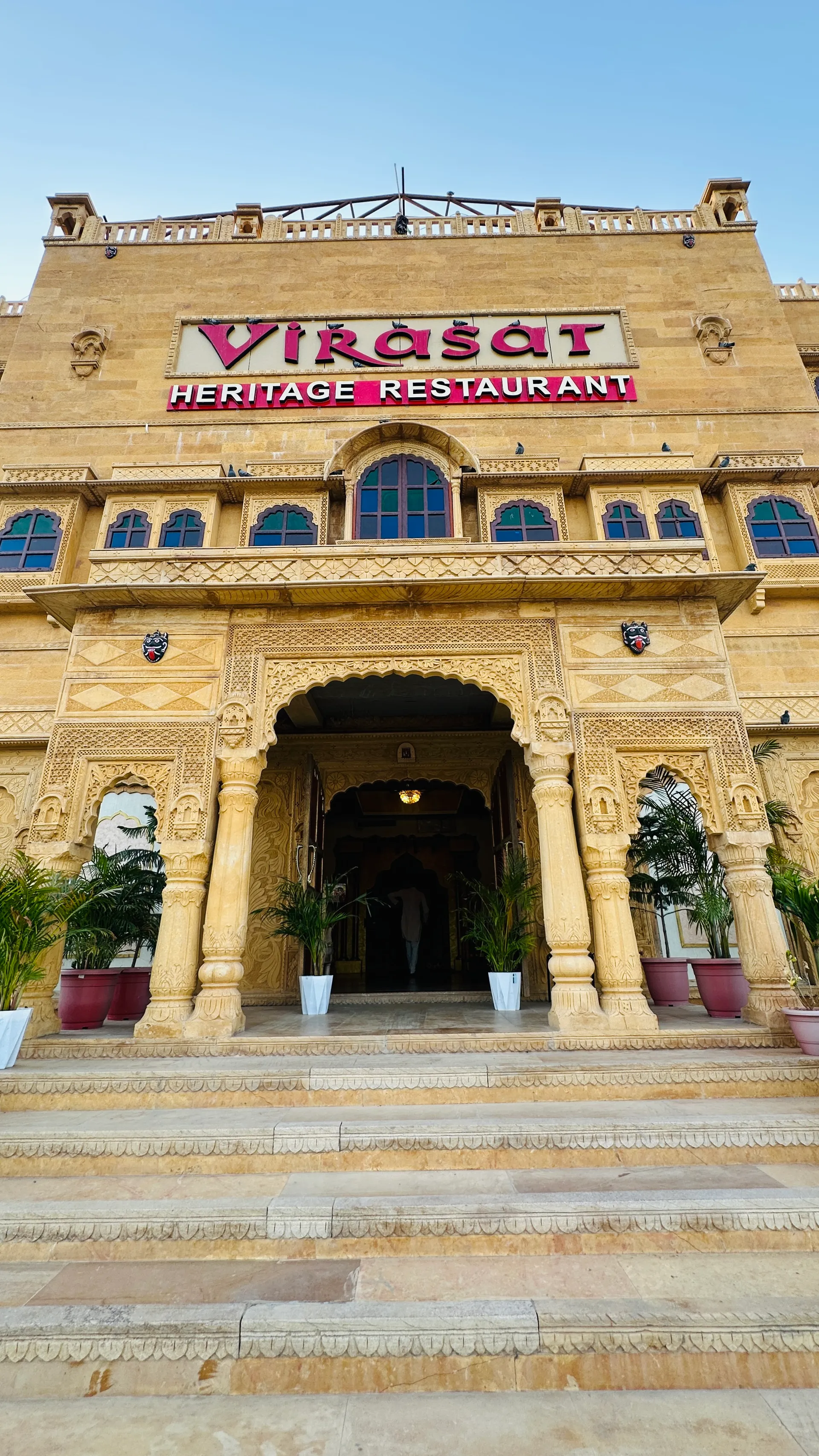
Of all the non-touristy things to do in Jaipur, a local-style
dinner is the easiest to fit into a trip, because it is the real thing. The
thali, the music and the rituals are the same ones Jaipur families choose for
their own celebrations, in a venue that has served them since 2006 rather than
a show built for coaches. You are a guest at a celebration, not a spectator at
a performance.
That difference shows up in small ways: dishes are refilled until you say
stop, performers play close to the tables, and the welcome is for you
personally. For a closer look at how the evening works, read about the cultural dinner
show in Jaipur and the unlimited
Rajasthani thali. If you want the full royal version, try the Indian royal
culture experience or the live like a king in
Jaipur evening.
Where Are These Experiences?
Most are on the Amer to Kukas side: the stepwell, the back roads and
Virasat on Delhi Road near Sai Baba Temple, about 15 minutes from Amer Fort.
The rest are around the city: Sanganer to the south, Bagru on the Ajmer side
and Galta Ji to the east. Virasat is about 20 km and 30 to 40 minutes by car
from the old city.
Tip: base yourself in Amer or Kukas for a quieter trip, and hire a cab or
driver for the day, because several of these places are not on main tourist
routes.
When to Go
|
Experience |
Best
time |
|
Stepwells and back roads |
Early morning |
|
Folk dinner and welcome rituals |
Evening; lawn season October to
March |
|
Printing villages |
Weekdays |
|
Galta Ji |
Dusk |
|
Sweet shops |
Mornings and festival weeks,
especially Teej for ghevar |
How to Plan a Non-Touristy Day
A day on the Amer to Kukas side:
1.
Sunrise: Panna Meena ka Kund, then a drive on
the Kukas road.
2.
Morning: Bagru or Sanganer printing.
3.
Afternoon: rest, and buy ghevar locally.
4.
Evening: royal thali, folk music and welcome
rituals at Virasat. Book here.
A second day: spend the afternoon at Galta Ji and end with a
relaxed dinner. For more evening ideas, see our guide to the things
to do in Jaipur at night.
How to Be a Respectful Visitor
•
Dress modestly at temples and in villages.
•
Ask before photographing people, especially artisans
and performers.
•
Buy directly from craftspeople where you can.
•
Keep belongings secure at Galta Ji, where monkeys roam.
Frequently Asked Questions
Where do Jaipur locals go
for a celebration dinner?
Many families choose heritage venues on the Kukas side, such as Virasat
Heritage Restaurant, for birthdays, anniversaries and welcoming relatives.
Is Kukas touristy?
Kukas has resorts but far fewer day-trippers than the old city. Evenings
are relaxed and local.
Is Virasat only for
tourists?
No. It hosts Jaipur families, weddings, school trips and corporate groups
as well as travellers. See the banquet
and wedding spaces.
Can I experience
the feet-wash welcome as a solo traveller?
Yes. The welcome rituals are offered to all guests at Virasat.
Is Panna Meena ka Kund free
to visit?
Generally yes. Please confirm current access locally, as rules can
change.
What local sweet should I
try?
Ghevar, especially in the Teej season, and feeni or mawa kachori.
What are some offbeat things
to do in Jaipur at night?
A village-style folk dinner, a live music evening and a welcome ritual at
a heritage venue in Kukas are good starting points.
Is Virasat vegetarian?
Yes. Virasat is 100% pure vegetarian. See traditional
vegetarian Rajasthani food.
How many days do I need for
the non-touristy side of Jaipur?
Two half-days are enough: one on the Amer to Kukas side and one around
the city.
Plan Your Visit to Virasat
If you want the non-touristy things to do in Jaipur that locals actually
know, start with an evening at the table. Virasat
Heritage Restaurant is on Delhi Road, Kukas, Jaipur, about 15 minutes
from Amer Fort. Book a table
for the royal thali and live folk performances, send a banquet enquiry for weddings and
group events, or contact us on
WhatsApp at +91 73749 99951Related reading
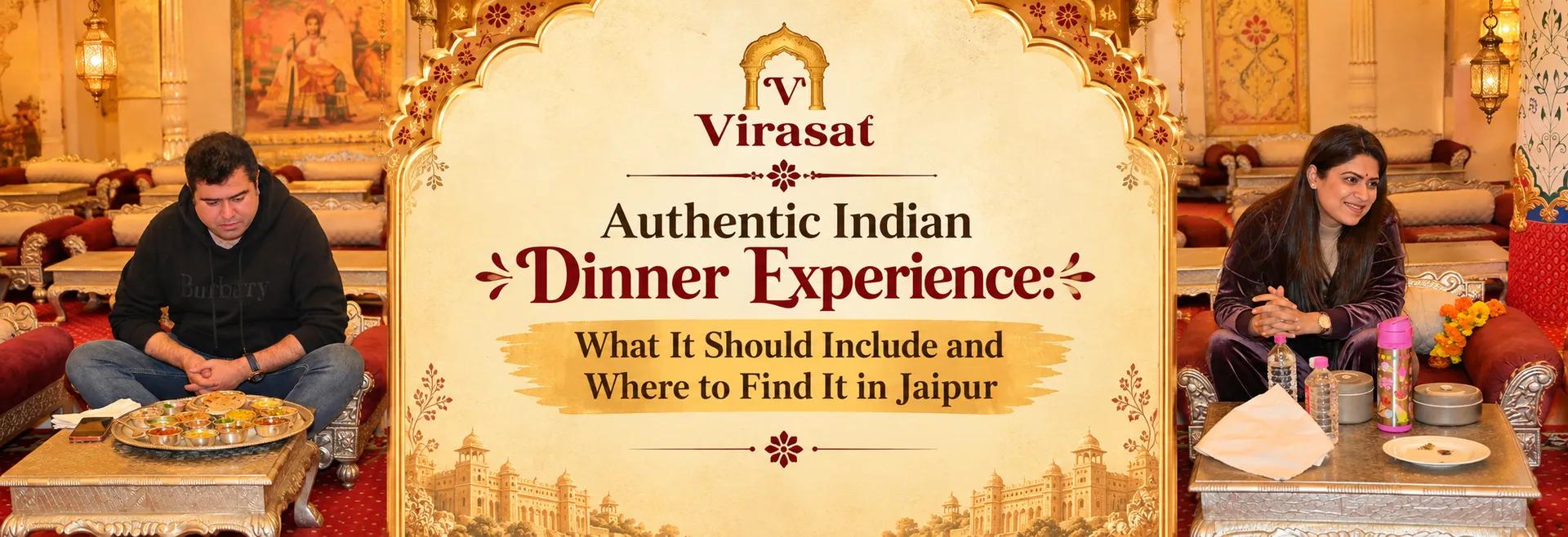
Authentic Indian Dinner Experience: What It Should Include and Where to Find It in Jaipur
an authentic Indian dinner experience includes dishes from one regional cuisine (such as Rajasthani dal baati churma, gatte ki sabzi and ker sangri), traditional thali service in brass or silver, a hospitality welcome (tilak, aarti), eating with your hands if you wish, and live regional music or dance. Virasat Heritage Restaurant in Kukas, Jaipur offers this nightly in a heritage darbar hall.
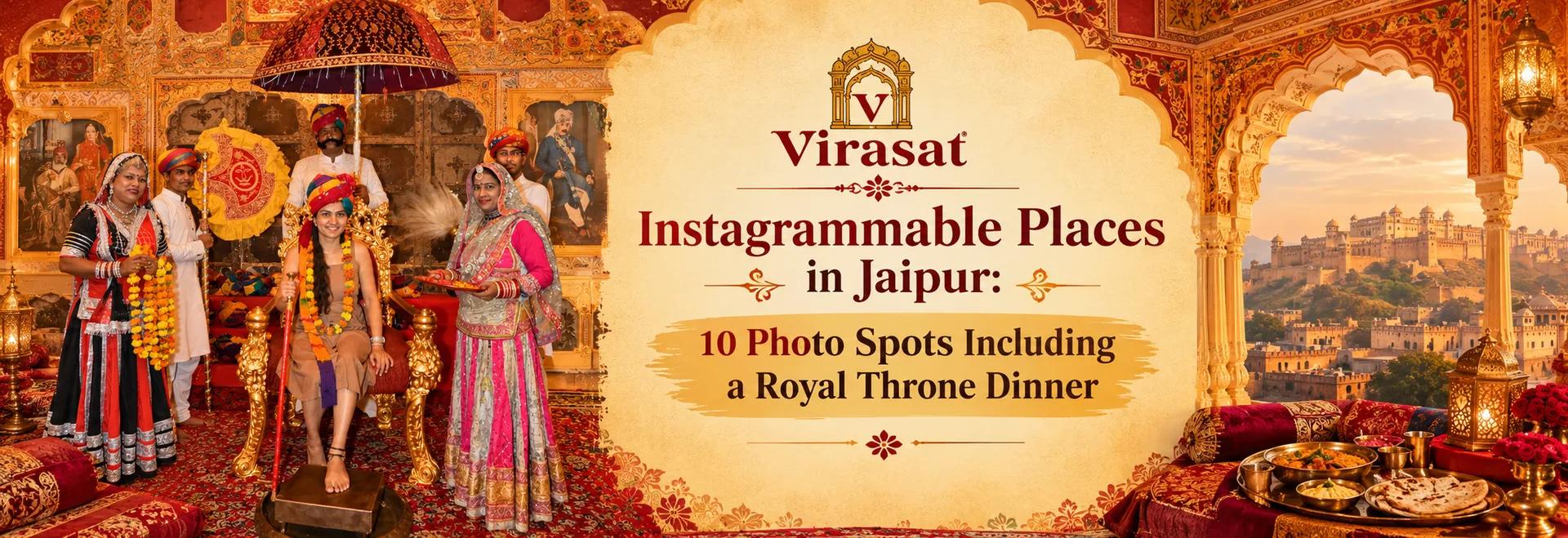
Instagrammable Places in Jaipur: 10 Photo Spots Including a Royal Throne Dinner
the most Instagrammable places in Jaipur are Hawa Mahal from the opposite café, Patrika Gate, Amer Fort's Ganesh Pol and Sheesh Mahal, Jal Mahal at golden hour, Panna Meena ka Kund, the City Palace blue room, Nahargarh at sunset, Johari Bazaar, the Jaigarh ramparts and, for a portrait most travellers never get, a royal throne dinner at Virasat Heritage Restaurant in Kukas.
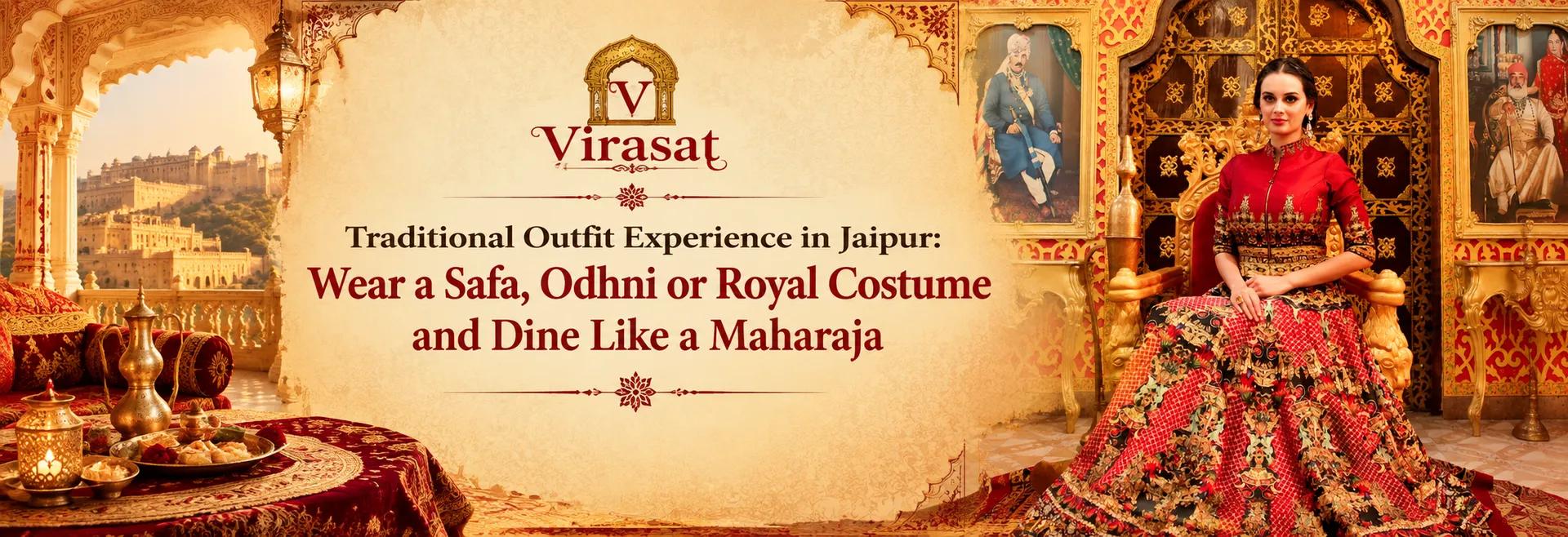
Traditional Outfit Experience in Jaipur: Wear a Safa, Odhni or Royal Costume and Dine Like a Maharaja
That small moment is the heart of a traditional outfit experience in Jaipur. You put on Rajasthani dress: a hand-tied safa (turban), a leheriya or bandhani odhni, lac bangles and, for children, a full king-or-queen costume. Then you sit down in a heritage darbar hall to a live folk performance and a long, generous dinner. At Virasat Heritage Restaurant in Kukas, dress-up is part of the evening programme and of the Royal Kids Program, about 15 minutes from Amer Fort.
Visit Virasat Heritage Restaurant
Experience the royal dining we write about.