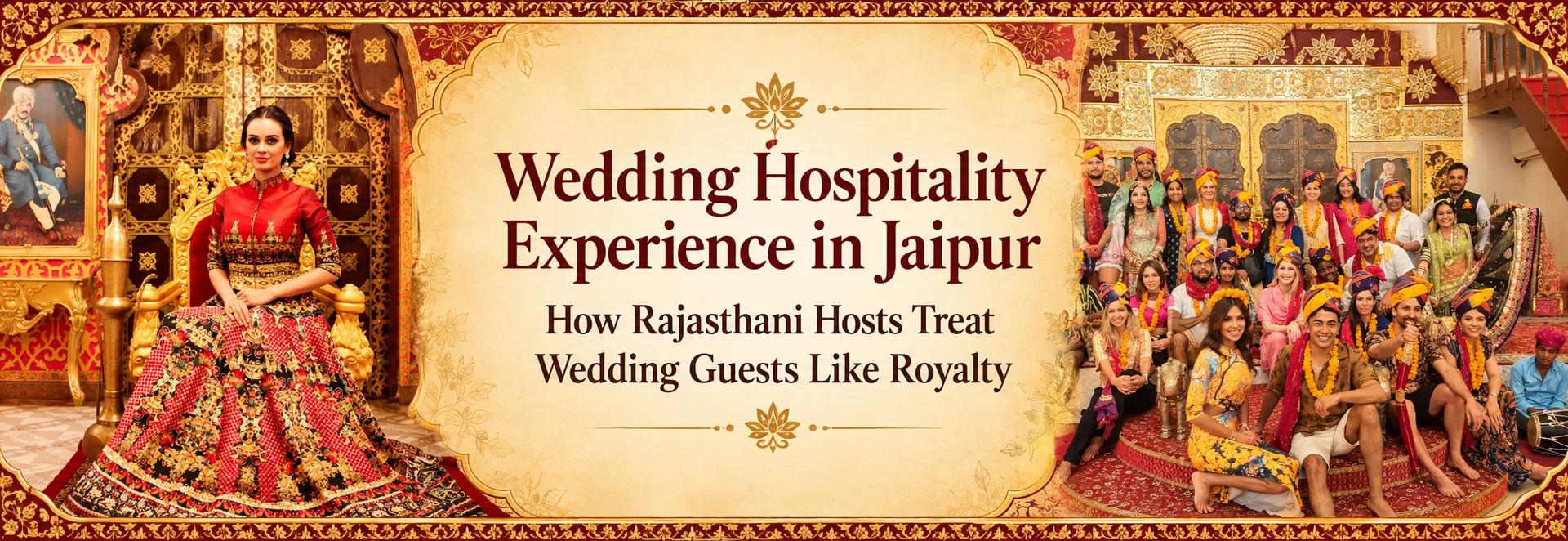
Wedding Hospitality Experience in Jaipur: How Rajasthani Hosts Treat Wedding Guests Like Royalty
Ask a guest what they remember about a destination wedding and the answer
is rarely the stage design. It is how they were received: who greeted them at
the door, who looked after their parents, whether the meal felt like a gift.
A wedding hospitality experience in Jaipur is rooted in
"Atithi Devo Bhava", which means the guest is God. Rajasthani hosts
welcome wedding guests with dhol and tilak, wash elders' feet, tie safas, seat
guests in a darbar hall, feed them an unlimited royal thali, and entertain them
with live folk performances. Virasat
Heritage Restaurant in Kukas offers this hospitality to wedding parties
as a hosted evening.
Hospitality is the part of a wedding that guests feel but rarely see
planned. In Rajasthan it is a formal art, with centuries of rules about
welcoming, seating, serving and sending off a guest. This guide explains what Rajasthani
wedding hospitality includes, why it matters for destination weddings,
where to experience it near Jaipur's resorts and how to build it into your
schedule.
In short: a Rajasthani wedding hospitality experience
includes a musical welcome (dhol, shehnai, "Padharo Mhare Des"),
tilak and aarti, a feet wash for elders, safa and odhni, honoured seating, an
unlimited royal thali served at the table, live folk performances, personal
attention to elders and children, and a sweet farewell gift. Virasat on Delhi
Road, Kukas delivers this for wedding groups of 30 to 500.
What Is Rajasthani Wedding Hospitality?
It is a sequence of honours, and each step tells the guest they are
valued.
|
Step |
What
happens |
What
it tells the guest |
|
Swagat |
Dhol, shehnai and a musical
welcome |
"We have been waiting for
you" |
|
Tilak and aarti |
A vermilion mark and a lamp at
the door |
"You are blessed and
welcome" |
|
Charan dhulai |
Washing the feet of elders |
"We honour your age and
respect" |
|
Safa bandhai |
Tying the turban |
"You are part of the
family" |
|
Aasan |
Honoured seating in the darbar
hall |
"Your place is
special" |
|
Bhojan |
A meal served personally, never
self-served |
"You will not have to ask
for anything" |
|
Manoranjan |
Live folk entertainment |
"Celebrate with us" |
|
Vidaai |
A farewell with a gift |
"Come back soon" |
You can see how these rituals work in everyday life in our guide to the royal
traditions of Jaipur.
Why Does It Matter for a Destination Wedding?
Guests who travelled far judge the wedding by how they were treated, not
by the stage design. Rajasthani hospitality is visible, participatory and
photogenic, and it works across generations and nationalities. It also gives
families a dignified way to honour elders. The feet-wash and safa rituals are
often the most emotional moments of the wedding week.
For a destination wedding in Jaipur, this has a practical benefit too.
Guests arrive tired and unsure of customs, and a well-planned welcome tells
them what to do, where to sit and what is next, without anyone having to
explain.
Where to Experience It in Jaipur
For a wedding hospitality experience in Jaipur close to the resorts, look
at Virasat Heritage Restaurant on Delhi Road, Kukas, which has hosted wedding
parties from the Kukas and Amer resorts since 2006. The darbar hall, the
mirrored Sheesh Mahal
lounge, the Parampara
Banquet Hall and the lawns,
together with in-house ritual staff and folk performers, make the full sequence
possible in one evening.
If you are comparing options, see Virasat as a wedding venue in
Jaipur and browse the best banquet hall
in Jaipur page. The gallery
shows each space.
When to Schedule a Hospitality Evening
The welcome night is ideal, followed by the mehendi dinner. Some families
also host a farewell lunch with a lighter thali and a gift of churma or ghevar
for departing guests.
A simple three-part plan works well:
1.
Welcome night: the full sequence, from dhol and
tilak to the royal thali and a folk finale.
2.
Mehendi dinner: a relaxed evening with table
service and folk performers.
3.
Farewell lunch: a lighter thali and a sweet gift
for the journey home.
How Virasat Delivers It
•
At the gate: dhol and shehnai; tilak, aarti and
petals for each family.
•
Rituals: feet wash and safa tying for elders and
the groom's party.
•
In the hall: welcome drinks in kulhads, then
throne photos in the darbar hall.
•
At the table: the royal thali served personally,
with live Maand singing.
•
Entertainment: Ghoomar, Kalbeliya, Bhavai and a
puppet show, with guest participation.
•
Farewell: sweet boxes and coordination with
coaches back to the resort.
For the full evening in detail, read about the Indian royal culture
experience and the cultural dinner
show in Jaipur. Guests who want the dressing part can try the traditional
outfit experience in Jaipur, or the live like a king in Jaipur evening.
How to Plan It with Your Wedding Planner
A hospitality evening runs best when the details are shared early. When
you contact the team, have these ready:
•
Dates and timing of the welcome night, mehendi
dinner or farewell lunch.
•
Guest count, including children and the number
of elders for the feet-wash ritual.
•
Resort and transport, so coaches can be timed in
both directions.
•
Menu preferences, such as Jain, mild spice or
vegetarian options. Virasat is 100% pure vegetarian.
•
Ritual preferences, such as whether the feet
wash is for elders only, extended to all guests or kept symbolic.
Virasat's banquet team works directly with planners on timings,
transport, menus and performances. Send
your dates for a proposal.
Who Is This For?
Couples and families hosting destination weddings, NRI families
reconnecting guests with Rajasthani tradition, and planners looking for a
reliable hospitality partner. It also suits guests who will not remember a
stage but will remember the evening they were treated like royalty. For a more
everyday taste of Jaipur dining, see our guide to an authentic Indian dinner
experience and the best things
to do in Jaipur at night.
Frequently Asked Questions
What is a wedding hospitality experience in Jaipur?
A hosted evening that welcomes wedding guests with Rajasthani rituals
such as dhol, tilak, aarti, feet wash and safa tying, followed by a royal thali
and live folk performance.
What does "Atithi Devo Bhava" mean in wedding hospitality?
"The guest is God." It is the principle behind Rajasthani
welcome rituals, honoured seating and personally served meals.
Is the feet-wash ritual appropriate for all guests?
It is traditionally offered to elders and the groom's party. It can be
extended to all guests or kept symbolic, as the family prefers.
Can hospitality rituals be done for 300+ guests?
Yes, with additional ritual staff and performers working in batches at
the entrance.
Do you serve the thali at the table for large groups?
Yes. Table service of the royal thali is standard. Buffets and live
counters can be added.
Can you coordinate with our wedding planner?
Yes. Virasat's banquet team works directly with planners on timings,
transport, menus and performances.
Is Virasat near the main Jaipur wedding resorts?
Yes. It is on Delhi Road in Kukas, 10 to 20 minutes from most Kukas and
Amer resorts and 15 minutes from Amer Fort.
What is a welcome dinner for destination wedding guests in Jaipur?
A hosted evening that welcomes guests with music, tilak and aarti, seats
them in a darbar hall and serves a royal thali with live folk performance.
What size of wedding group can Virasat host?
Wedding groups from 30 to 500 guests.
Plan Your Visit to Virasat
If you want your guests to remember the welcome as much as the wedding, a
wedding hospitality experience in Jaipur at Virasat is a good place to start. Virasat Heritage Restaurant is on
Delhi Road, Kukas, Jaipur, about 15 minutes from Amer Fort. Book a table for the royal
thali and live folk performances, send a banquet enquiry for weddings and
group events, or contact us on
WhatsApp at +91 73749 99951.
Related reading
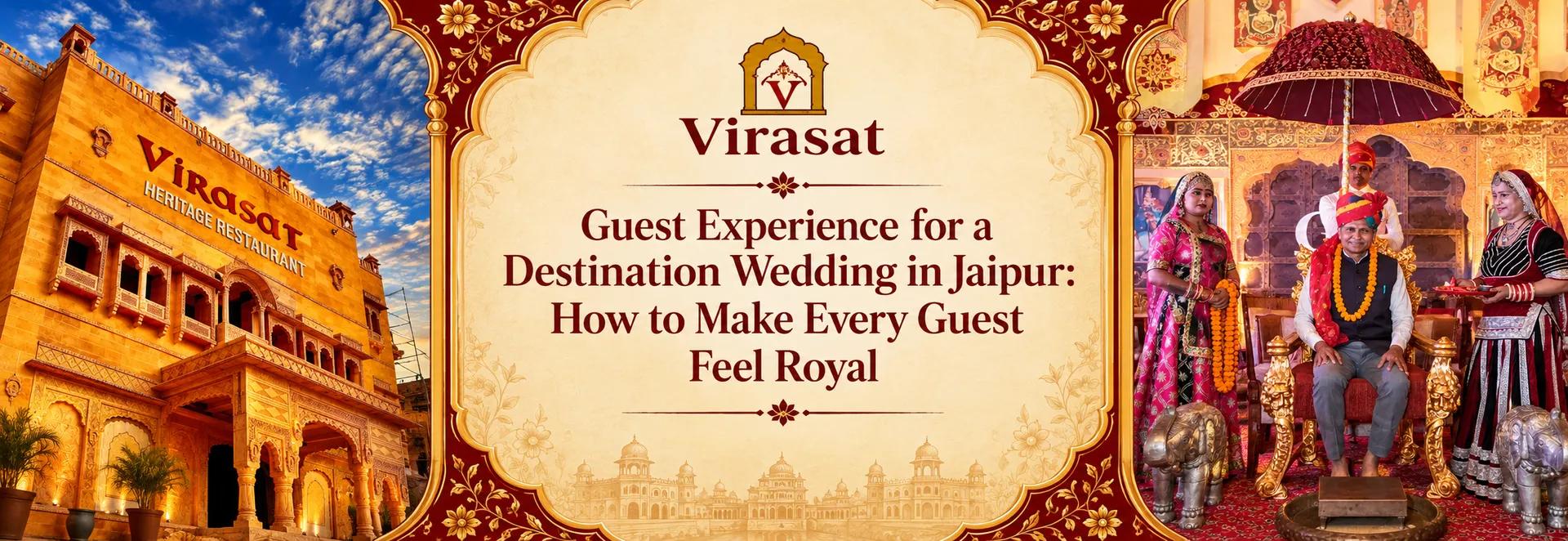
Guest Experience for a Destination Wedding in Jaipur: How to Make Every Guest Feel Royal
Guest experience for a destination wedding is the sum of small hosted moments — how guests are welcomed, what they eat, whether they experience the destination's culture and how smoothly they move between events. In Jaipur, one hosted heritage dinner with a royal welcome, folk performances and a Rajasthani thali does more for guest satisfaction than any décor upgrade. Virasat Heritage Restaurant in Kukas specialises in exactly that evening.
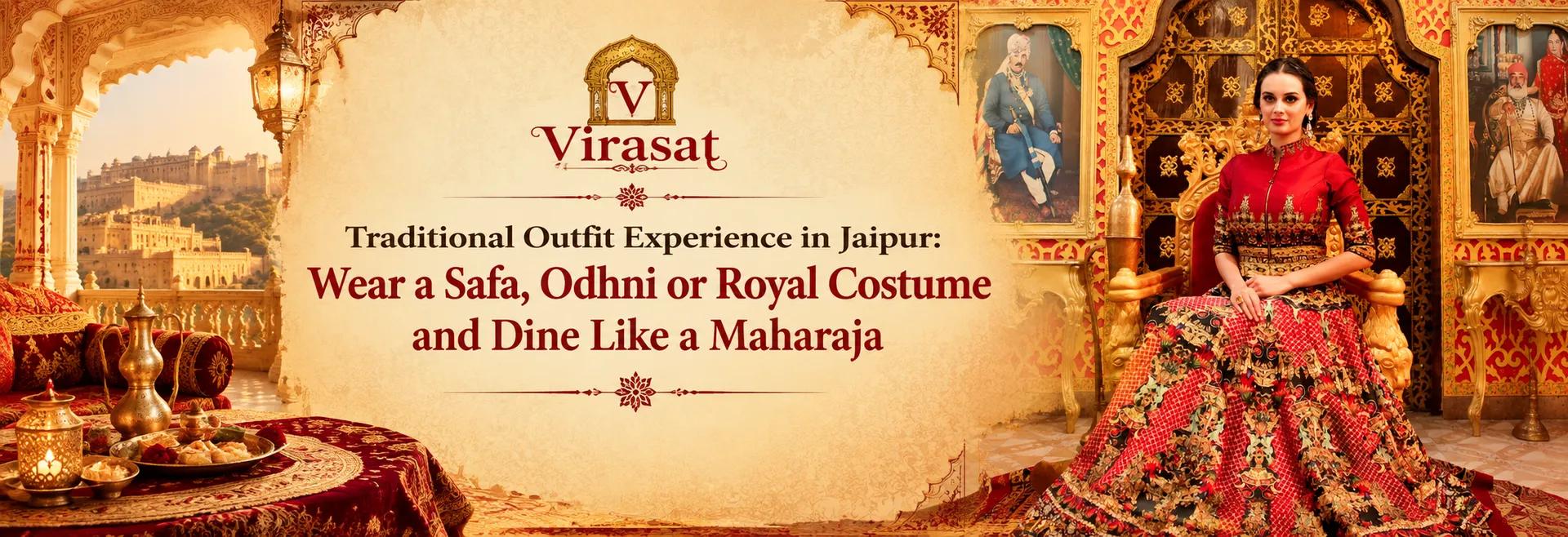
Traditional Outfit Experience in Jaipur: Wear a Safa, Odhni or Royal Costume and Dine Like a Maharaja
That small moment is the heart of a traditional outfit experience in Jaipur. You put on Rajasthani dress: a hand-tied safa (turban), a leheriya or bandhani odhni, lac bangles and, for children, a full king-or-queen costume. Then you sit down in a heritage darbar hall to a live folk performance and a long, generous dinner. At Virasat Heritage Restaurant in Kukas, dress-up is part of the evening programme and of the Royal Kids Program, about 15 minutes from Amer Fort.
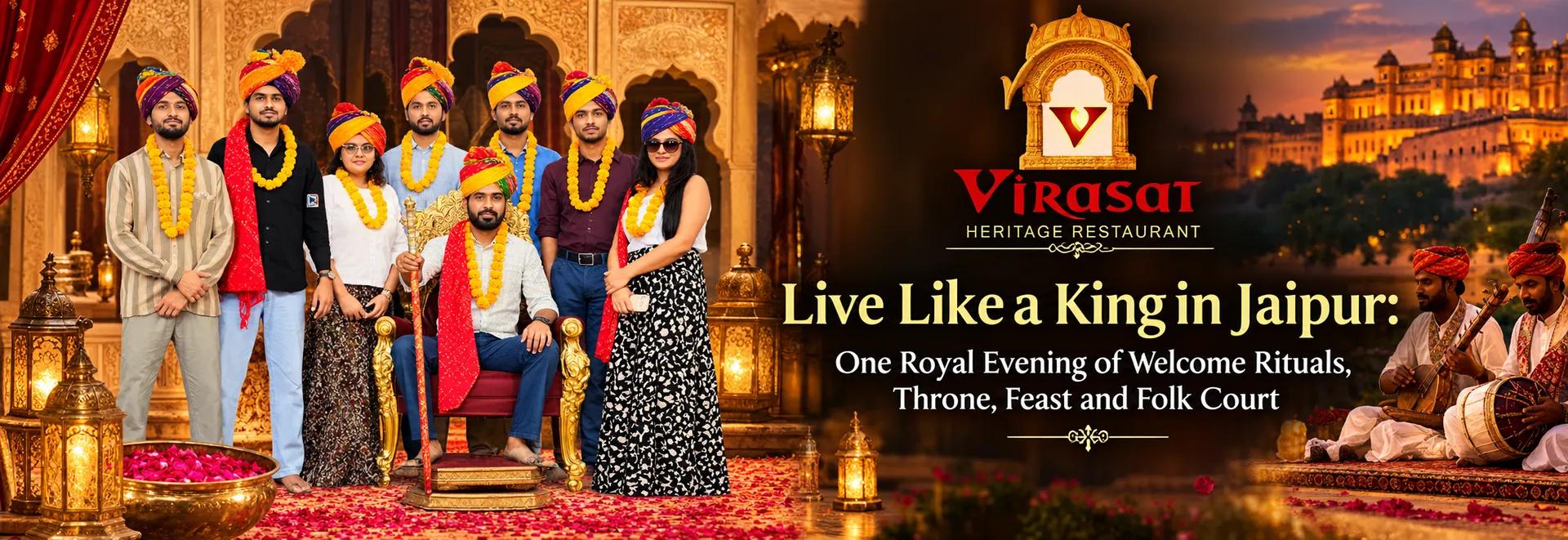
Live Like a King in Jaipur: One Royal Evening of Welcome Rituals, Throne, Feast and Folk Court
In Rajput courts the evening followed a ritual order. The ruler and guests were received with music and tilak, honoured with charan dhulai (feet wash), seated in the darbar on gaddis and thrones, entertained by court musicians and dancers, and served a multi-course meal on silver, with attendants refilling each katori. The menu included dal baati churma, gatte ki sabzi, ker sangri and ghevar. Virasat's evening follows the same order.
Visit Virasat Heritage Restaurant
Experience the royal dining we write about.