Royal Traditions of Jaipur: Welcome Rituals, Court Music, Dress and Dining Explained
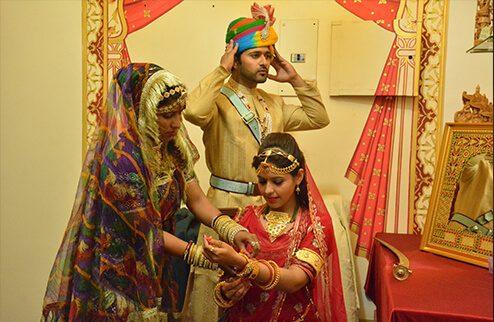
The royal traditions of Jaipur are a living set of customs from the Kachwaha court: swagat with dhol and 'Padharo Mhare Des', tilak and aarti at the threshold, charan dhulai (feet wash), safa tying, darbar seating by rank, Maand court music, Ghoomar at celebrations, and the royal thali served in silver. Virasat Heritage Restaurant in Kukas performs these traditions for guests every evening.
Jaipur was founded in 1727 by Maharaja Sawai Jai Singh II, and its court shaped manners that still govern Rajasthani celebrations. Understanding them turns a dinner or wedding from pretty to meaningful.
This explainer covers what each tradition is, why it exists, where you can experience it today and how to take part respectfully.
Quick Answer
Key royal traditions of Jaipur: swagat (musical welcome), tilak and aarti, charan dhulai (feet wash for honoured guests), safa/pagdi tying (the Jaipuri turban), darbar seating on gaddis and thrones, Maand court singing (e.g. 'Kesariya Balam'), Ghoomar dance, Kathputli puppetry, and the royal thali served personally in silver and brass. All of these are part of the evening at Virasat Heritage Restaurant, Delhi Road, Kukas.
What are Jaipur's main royal traditions?
| Tradition | What it is | Why |
|---|---|---|
| Swagat | Dhol, shehnai, welcome song | Announce and honour the guest |
| Tilak & aarti | Vermilion mark and lamp | Blessing at the threshold |
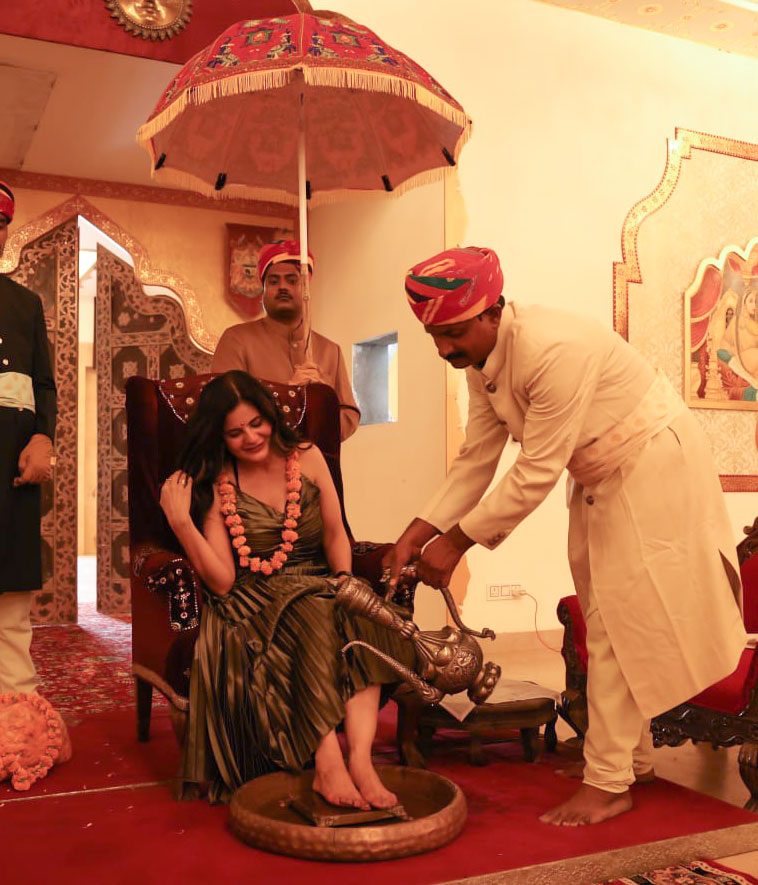
| Charan dhulai | Washing the guest's feet | Humility of the host |
| Safa bandhai | Tying the Jaipuri turban | Dignity and identity |
| Darbar | Seating on gaddi/throne | Court etiquette |
| Maand | Semi-classical court singing | Entertainment of the court |
| Ghoomar | Women's circular dance | Celebration and welcome |
| Royal thali | Served, refilled, in silver | Generosity of the host |
Why do these traditions still matter?
They are the grammar of every Rajasthani wedding, festival and family welcome today. For visitors they are the quickest way to understand Rajasthani values — honour, generosity, hospitality — and for Jaipur families they are identity. Heritage venues keep them alive outside palaces and private homes.
Where can you experience royal traditions in Jaipur?
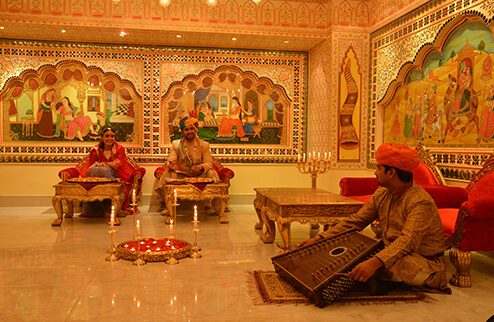
City Palace and Amer Fort display the settings; Virasat Heritage Restaurant on Delhi Road, Kukas performs the traditions — welcome, feet wash, safa, darbar seating, Maand and Ghoomar, royal thali — for guests nightly, and in grand form for weddings. See our Indian royal culture experience guide and the gallery.
When are the traditions most visible?
Wedding season (November–February) and festivals: Gangaur (March–April) for Ghoomar and processions, Teej (July–August) for leheriya and ghevar, Diwali for lights and sweets. Virasat adds seasonal songs and sweets at these times.
How to take part respectfully
- Receive tilak and aarti with folded hands.
- Accept the feet wash seated and relaxed; it honours both host and guest.
- Keep the safa on through photos and dinner.
- Stand for the Ghoomar invitation and join the circle.
- Thank performers and hosts — 'dhanyavaad' or 'khamma ghani'.
Who should learn about these traditions?
Travellers, wedding guests, students on a Royal Educational Trip (where heritage classes explain each custom) and families introducing children to their culture through the Royal Kids Program.
Frequently Asked Questions
What is the most important royal tradition in Jaipur?
The welcome sequence — swagat, tilak, aarti and feet wash — because it expresses the core value of 'Atithi Devo Bhava'.
What does 'khamma ghani' mean?
A traditional Rajasthani greeting of respect, roughly 'many salutations'; it is a polite way to greet hosts.
Is Ghoomar a royal dance?
Ghoomar was performed by Rajput women at celebrations and became associated with royal households; it is now Rajasthan's signature dance.
Why is the thali served rather than buffet?
Personal service and refilling express the host's generosity — a royal thali is never self-served.
Can visitors experience these traditions without attending a wedding?
Yes — Virasat Heritage Restaurant performs the full sequence for dinner guests every evening.
Where is Virasat?
Delhi Road, near Sai Baba Temple, Kukas, Jaipur — 15 minutes from Amer Fort.
Plan Your Visit to Virasat
Virasat Heritage Restaurant is on Delhi Road, Kukas, Jaipur — about 15 minutes from Amer Fort. Book a table for the royal thali and live folk performances, send a banquet enquiry for weddings and group events, or contact us on WhatsApp at +91 95877 77817.
Related reading
Cultural Dinner Show in Jaipur: What to Expect, Where to Go and How to Book
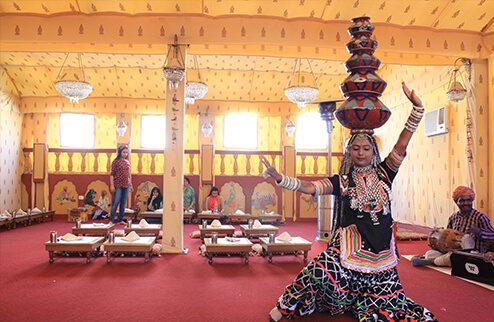
A cultural dinner show in Jaipur combines a traditional Rajasthani meal with live folk music, dance and royal hospitality rituals in one evening. At Virasat Heritage Restaurant on Delhi Road, Kukas, guests are welcomed with tika and aarti, seated in a heritage-style darbar hall and served a royal thali while Kalbeliya, Ghoomar and Bhavai performers take the floor.
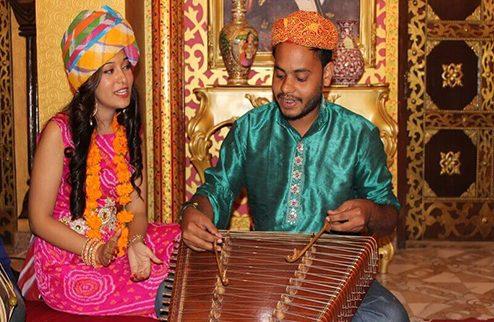
Traditional Dance Dinner in Jaipur: Ghoomar, Kalbeliya and Bhavai with a Royal Thali
A traditional dance dinner in Jaipur pairs an unlimited Rajasthani thali with live Ghoomar, Kalbeliya, Bhavai and Chari dance performances. At Virasat Heritage Restaurant in Kukas, the dancers perform between the tables of a heritage darbar hall, so guests watch, photograph and finally join the dance.
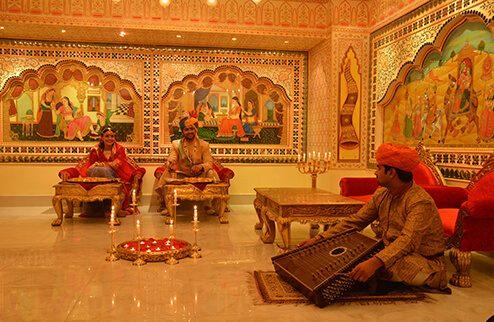
Folk Performance with Dinner in Jaipur: A Complete Guide for Travellers and Groups
Folk performance with dinner in Jaipur means eating a traditional Rajasthani meal while Manganiyar and Langa musicians, Kalbeliya dancers, puppeteers and fire or pot-balancing artists perform around you. Virasat Heritage Restaurant in Kukas runs this format every evening in a heritage darbar hall and on open lawns.